Difference Between Stainless Steel And Alloy Steel Manufacturer | Precision CNC Guide

Engineering Guide: Difference Between Stainless Steel And Alloy Steel

difference between stainless steel and alloy steel manufacturing

Engineering Insight Precision Material Selection Stainless Steel vs Alloy Steel

Material selection is a foundational decision in precision manufacturing where micron-level tolerances and environmental resilience directly impact product lifecycle and performance. At Wuxi Lead Precision Machinery we routinely observe that misjudging the distinction between stainless steel and alloy steel compromises structural integrity machining efficiency and long-term reliability. Stainless steel prioritizes corrosion resistance through chromium content typically exceeding 10.5% forming a passive oxide layer. Alloy steel instead optimizes mechanical properties like tensile strength hardness and fatigue resistance via strategic additions of elements such as chromium molybdenum nickel or vanadium often without sufficient chromium for inherent corrosion protection. This fundamental divergence dictates suitability for mission-critical applications.

The machining implications are profound. Stainless steel grades especially austenitic types like 304 work-harden aggressively during CNC operations demanding precise toolpath strategies coolant management and rigid machine setups to avoid dimensional drift. Alloy steels such as 4140 or 8620 while generally more machinable in annealed states require strict thermal control during hardening to prevent distortion at tight tolerances. Selecting the wrong material invites scrap rates tool wear and assembly failures even with advanced CNC equipment. Our experience fabricating components for Olympic-grade timing systems and military-grade actuators underscores this reality: a 0.02mm tolerance deviation in a stainless steel sensor housing can disrupt nanosecond synchronization while inadequate alloy steel hardness in armor components risks catastrophic field failure.

Below summarizes critical engineering specifications guiding precision manufacturing decisions

Material Type Key Alloys Corrosion Resistance Machinability (Relative) Typical High-Precision Applications
Stainless Steel 304 316 17-4PH Excellent Moderate to Difficult Medical implants marine hardware aerospace sensors
Alloy Steel 4140 8620 4340 Poor (requires coating) Good to Moderate Axles gears shafts military vehicle components

Precision manufacturing transcends mere part production it demands anticipating how material behavior interacts with CNC processes under operational stress. Stainless steel excels where environmental exposure is unavoidable but demands aggressive machining protocols to counter work hardening. Alloy steel delivers superior strength-to-weight ratios yet necessitates post-machining treatments like nitriding or plating to combat corrosion—adding process complexity. At Wuxi Lead our 15-year specialization in mil-spec and Olympic infrastructure projects means we engineer solutions around these nuances. For instance we deploy high-pressure coolant through spindle systems when machining 316L stainless to suppress heat-induced warpage achieving ±0.005mm tolerances consistently. Similarly for alloy steel components we integrate stress-relieving cycles between semi-finishing and hardening stages to maintain geometric accuracy post-heat treatment.

Choosing between these materials requires more than datasheet review—it demands partners who understand how metallurgy translates to CNC reality. Wuxi Lead Precision Machinery combines deep metallurgical expertise with proven execution in the world’s most demanding applications ensuring your material choice becomes a competitive advantage not a liability. Let our precision engineering team validate your specifications against real-world manufacturability.


Precision Specs & Tolerances

difference between stainless steel and alloy steel manufacturing

Understanding the difference between stainless steel and alloy steel is essential when selecting materials for precision-engineered components in high-performance industries such as aerospace, automotive, and medical device manufacturing. At Wuxi Lead Precision Machinery, our expertise in custom metal manufacturing enables us to optimize material selection and machining processes for superior part performance and reliability.

Stainless steel is primarily defined by its chromium content, typically exceeding 10.5%, which forms a passive oxide layer that provides excellent corrosion resistance. This makes stainless steel ideal for applications exposed to moisture, chemicals, or high temperatures. Common grades like 304 and 316 are widely used in sanitary and marine environments. While stainless steel offers good strength and weldability, it can present machining challenges due to work hardening and lower thermal conductivity, requiring precise toolpath strategies and rigid setups.

Alloy steel, in contrast, refers to carbon steel enhanced with elements such as chromium, molybdenum, nickel, or vanadium to improve mechanical properties like strength, hardness, and wear resistance. These steels, including grades like 4140 and 4340, are commonly used in structural, automotive, and tooling applications where high tensile strength and fatigue resistance are critical. Unlike stainless steel, alloy steel typically lacks inherent corrosion resistance and often requires protective coatings or post-processing treatments.

At Wuxi Lead Precision Machinery, we leverage advanced 5-axis CNC machining centers to handle both stainless and alloy steel with exceptional precision. Our multi-axis capabilities allow for complex geometries to be machined in a single setup, reducing cumulative tolerances and improving dimensional accuracy. High-speed spindles, adaptive toolpaths, and real-time tool wear compensation ensure optimal surface finish and repeatability, particularly important when machining harder or galling-prone materials.

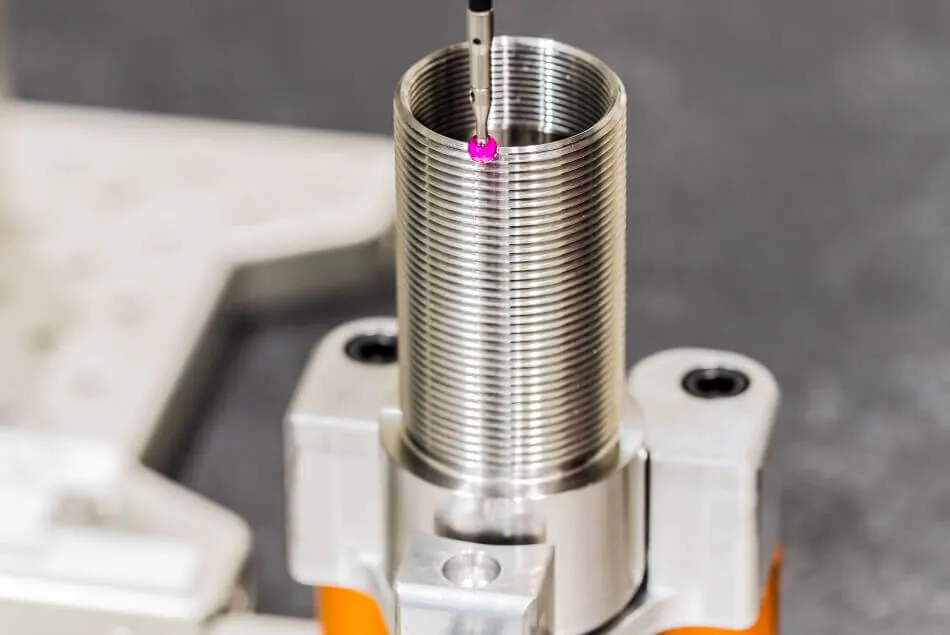
Quality control is integral to our process. Every component undergoes comprehensive inspection using our Coordinate Measuring Machine (CMM), ensuring compliance with tight tolerances and geometric specifications. Our inspection protocols follow international standards, providing traceable, repeatable results for every production run.

The following table outlines our typical machining capabilities and achievable tolerances for stainless and alloy steel components:

Specification Value
Positional Accuracy ±0.005 mm
Linear Dimensional Tolerance ±0.01 mm
Surface Roughness (Ra) 0.8 – 3.2 µm (adjustable)
Maximum Work Envelope (5-axis) 1200 × 800 × 750 mm
Angular Tolerance ±0.02°
Repeatability ±0.003 mm
Materials Processed Stainless Steel (303, 304, 316, 17-4PH), Alloy Steel (4140, 4340, 8620)

With decades of experience in high-precision manufacturing, Wuxi Lead Precision Machinery delivers engineered solutions that balance material performance, geometric complexity, and quality assurance. Our technical capabilities ensure that whether you require corrosion-resistant stainless steel or high-strength alloy steel components, your parts meet the most demanding specifications.


Material & Finish Options

difference between stainless steel and alloy steel manufacturing

Material Selection: Stainless Steel vs. Alloy Steel in Precision Manufacturing

Selecting the correct steel variant is fundamental to part performance, longevity, and cost-effectiveness in demanding industrial applications. At Wuxi Lead Precision Machinery, we frequently guide clients on the critical distinction between stainless steel and alloy steel. While both fall under the broad steel category, their compositional differences drive vastly different behaviors in machining, service environments, and final part functionality. Understanding these nuances prevents costly material mismatches and ensures optimal component reliability.

Stainless steel derives its primary characteristic—corrosion resistance—from a minimum chromium content of 10.5%, which forms a passive oxide layer. Nickel is often added to enhance this resistance and improve formability. Common grades like 304 and 316 dominate applications requiring exposure to moisture, chemicals, or food processing environments. However, this corrosion resistance comes with machining trade-offs. Stainless steels, particularly austenitic grades, work-harden rapidly during CNC operations, generate significant heat, and exhibit higher tool wear rates compared to many carbon or alloy steels. They are generally non-magnetic in the annealed state and cannot be hardened through conventional heat treatment like through-hardening steels.

Alloy steel, conversely, encompasses a wide range of steels where elements like chromium, molybdenum, nickel, vanadium, or manganese are intentionally added beyond carbon steel levels, primarily to enhance hardenability, strength, toughness, or wear resistance. Crucially, alloy steels lack sufficient chromium to form the self-repairing passive layer, making them inherently susceptible to corrosion without protective coatings. Grades such as 4140 or 8620 are heat-treatable, allowing precise control over mechanical properties like tensile strength and fatigue resistance through quenching and tempering. This makes them ideal for high-stress structural components, gears, shafts, and tooling where ultimate strength and wear performance outweigh corrosion concerns. Machinability is typically superior to stainless steel when in the annealed condition, though it decreases significantly after hardening.

The following table summarizes key comparative specifications relevant to precision manufacturing decisions:

Property Stainless Steel (e.g., 304) Alloy Steel (e.g., 4140)
Key Alloying Elements Chromium (18-20%), Nickel (8-10.5%) Chromium (0.8-1.1%), Molybdenum (0.15-0.25%)
Corrosion Resistance Excellent (Passive Layer) Poor (Requires Coating)
Typical Tensile Strength (Annealed) 505-725 MPa 655 MPa
Hardenability Not Hardenable by Heat Treat High (Through Hardening)
Machinability (Annealed) Moderate to Poor (3-4/10) Good (6-7/10)
Primary Applications Medical, Food Processing, Marine, Chemical Automotive Axles, Gears, Tooling, Heavy Machinery

Choosing between these materials hinges on the dominant service requirement: prioritize stainless steel where environmental corrosion resistance is non-negotiable. Opt for alloy steel when maximizing mechanical strength, hardness, and wear resistance in protected or coated environments is paramount, accepting the need for corrosion mitigation strategies. The machining strategy must also adapt significantly—stainless demands slower speeds, rigid setups, and specialized tooling to manage work hardening, while alloy steel machining focuses on managing heat and chip control, especially post-heat treatment. Wuxi Lead Precision Machinery leverages deep material science expertise and advanced CNC capabilities to optimize processing parameters for both material families, ensuring your critical components meet exacting performance and dimensional standards. Consult our engineering team early in your design phase to select and machine the optimal material for your specific application.


Manufacturing Process & QC

difference between stainless steel and alloy steel manufacturing

Design, prototyping, and mass production form the backbone of precision manufacturing at Wuxi Lead Precision Machinery. When working with critical materials such as stainless steel and alloy steel, each phase is engineered for maximum accuracy, repeatability, and zero-defect output. Our process begins with a detailed design phase, where material properties directly influence engineering decisions.

During design, engineers evaluate the mechanical and environmental demands of the component. Stainless steel, known for its chromium content and corrosion resistance, is selected for applications exposed to moisture, chemicals, or high sanitation standards. Alloy steel, enhanced with elements like chromium, molybdenum, or nickel, is chosen when superior strength, hardness, and heat resistance are required, particularly in high-stress environments such as automotive or aerospace systems. The choice between these materials impacts machining parameters, tooling selection, and thermal treatment strategies. Finite element analysis (FEA) and 3D modeling ensure optimal geometry, stress distribution, and manufacturability before any metal is cut.

Prototyping follows, serving as a physical validation of the design. At Wuxi Lead, prototypes are produced using CNC machining centers with tight process controls. This phase confirms dimensional accuracy, surface finish, and material behavior under real machining conditions. For stainless steel, we adjust feed rates and tool geometry to manage work hardening, while alloy steel may require pre-tempering or controlled cooling to prevent cracking. Each prototype undergoes full inspection using coordinate measuring machines (CMM) and metallurgical testing to verify compliance with international standards. Any deviations are analyzed and corrected in real time, ensuring the design is production-ready.

Mass production leverages the data validated during prototyping. Our automated CNC cells operate under strict statistical process control (SPC), monitoring key parameters such as tool wear, cutting temperature, and dimensional drift. Every batch is traceable, with material certificates and inspection reports archived for full transparency. In-process gauging and post-production 100% visual and dimensional checks guarantee zero defects. Automated sorting and packaging systems maintain part integrity and streamline logistics.

The table below summarizes key differences between stainless steel and alloy steel relevant to our production process.

Property Stainless Steel Alloy Steel
Primary Alloying Element Chromium (≥10.5%) Cr, Mo, Ni, Mn, or V
Corrosion Resistance High Moderate to Low
Tensile Strength Moderate to High High to Very High
Machinability Moderate (work hardens) Good to Moderate
Heat Treatment Response Limited (except martensitic) Excellent
Typical Applications Medical, Food, Marine Automotive, Tooling, Defense

At Wuxi Lead Precision Machinery, we combine material expertise with advanced manufacturing systems to deliver defect-free components at scale, ensuring performance and reliability in every application.


Why Choose Wuxi Lead Precision

Strategic Material Selection: Optimizing Your Precision Components with Stainless Steel vs. Alloy Steel

Material selection is not merely a technical specification; it is a strategic decision impacting component performance, lifecycle cost, and manufacturing efficiency. At Wuxi Lead Precision Machinery, we understand that navigating the critical differences between stainless steel and alloy steel is fundamental to achieving optimal results in demanding industrial applications. Confusing these materials can lead to premature failure, unexpected machining challenges, and significant cost overruns. Our engineering team provides the deep metallurgical insight required to match your exact functional requirements with the ideal material solution, ensuring your precision components perform flawlessly under operational stress.

Stainless steel’s defining characteristic is its chromium content, typically exceeding 10.5%, which forms a passive oxide layer providing inherent corrosion and oxidation resistance. This makes it indispensable for medical devices, food processing equipment, marine hardware, and chemical environments where exposure to moisture or aggressive substances is unavoidable. Common grades like 304 and 316 offer varying levels of protection, with molybdenum additions in 316 enhancing resistance to chlorides. However, this corrosion resistance comes with machining trade-offs. Stainless steels, particularly austenitic grades, work-harden rapidly during cutting, generating significant heat and accelerating tool wear. Achieving tight tolerances and fine surface finishes demands specialized tooling, precise speed/feed control, and experienced CNC programming – capabilities inherent to our high-precision machining centers.

Alloy steels, conversely, prioritize mechanical strength and hardenability through intentional additions of elements like chromium, molybdenum, nickel, and vanadium, but without sufficient chromium to form a stable passive layer. Grades such as 4140, 4340, and 8620 excel in structural applications requiring high tensile strength, fatigue resistance, and wear performance under heavy loads or impact – think aerospace landing gear, automotive drivetrain components, and heavy machinery shafts. They generally machine more readily than stainless steel, especially in normalized or annealed conditions, allowing for higher metal removal rates. However, they require protective coatings or controlled environments to prevent rust, adding complexity to the final product lifecycle. Heat treatment is often critical to unlock their full mechanical potential, necessitating tight process control during manufacturing.

The optimal choice hinges on your specific operational environment and performance priorities. Selecting incorrectly risks catastrophic failure or unnecessary expenditure. Below is a concise comparison of key manufacturing-relevant properties:

Property Stainless Steel (e.g., 304) Alloy Steel (e.g., 4140)
Primary Alloying Chromium (18-20%), Nickel (8-10.5%) Chromium (0.8-1.1%), Molybdenum (0.15-0.25%)
Corrosion Resistance Excellent (Passive Layer) Poor (Requires Coating/Environment Control)
Typical Machinability Moderate to Poor (Work-hardens) Good to Very Good
Key Strength Driver Cold Work Hardening Heat Treatment (Quench & Temper)
Common Applications Medical, Food, Marine, Chemical Aerospace, Automotive, Heavy Machinery

Partnering with Wuxi Lead Precision Machinery means leveraging our 15+ years of expertise in precision CNC machining for both material families. We don’t just cut metal; we analyze your application’s core stresses, environmental exposure, and lifecycle demands to recommend the most cost-effective, manufacturable solution. Our advanced Swiss-type lathes, multi-axis mills, and stringent quality control protocols are calibrated for the unique challenges of each material, ensuring dimensional accuracy, surface integrity, and repeatability you can rely on. Stop compromising component performance due to suboptimal material choices. Contact our engineering team today to schedule a confidential material consultation. Email [email protected] to discuss your specific project requirements and discover how our precision manufacturing partnership delivers superior component performance and value. Let Lead Precision be your strategic advantage.


⚙️ Precision Cost Estimator

Estimate relative manufacturing effort based on tolerance.

Difference Between Stainless Steel And Alloy Steel Manufacturer | Precision CNC Guide

Contents of Table

Contact [email protected] Whatsapp 86 15951276160