Technical Contents
Engineering Guide: Silicon Mold Kit
Engineering Insight: Silicon Mold Kit Precision as Performance Imperative
In high-performance silicon molding applications, dimensional accuracy is not merely desirable—it is the foundational determinant of product integrity and system reliability. Microscopic deviations in mold geometry directly translate to material flow inconsistencies, part warpage, or sealing failures in final components. For industries like aerospace hydraulics or medical device manufacturing, where silicon seals operate under extreme pressure or sterile conditions, a tolerance error of even 5 microns can trigger catastrophic field failures. This reality elevates mold kit precision from a manufacturing specification to a critical performance variable. At Wuxi Lead Precision Machinery, we engineer silicon mold kits to withstand these uncompromising demands through metrology-driven processes validated in mission-critical environments.
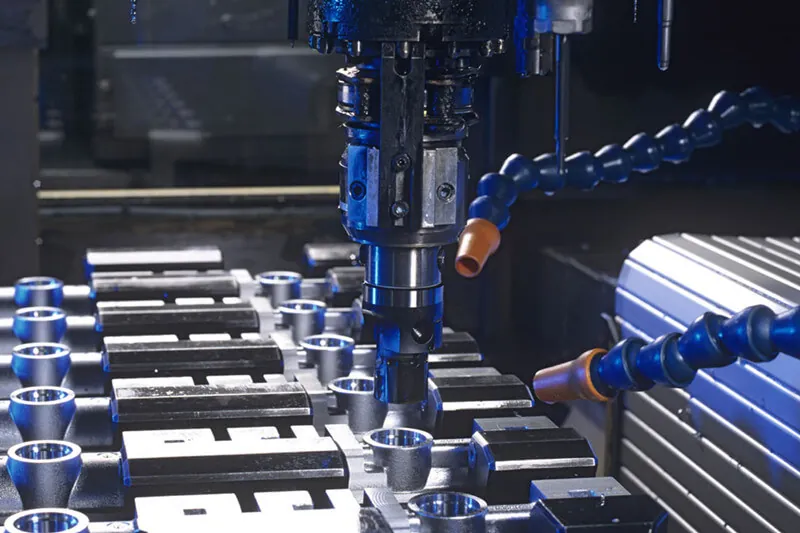
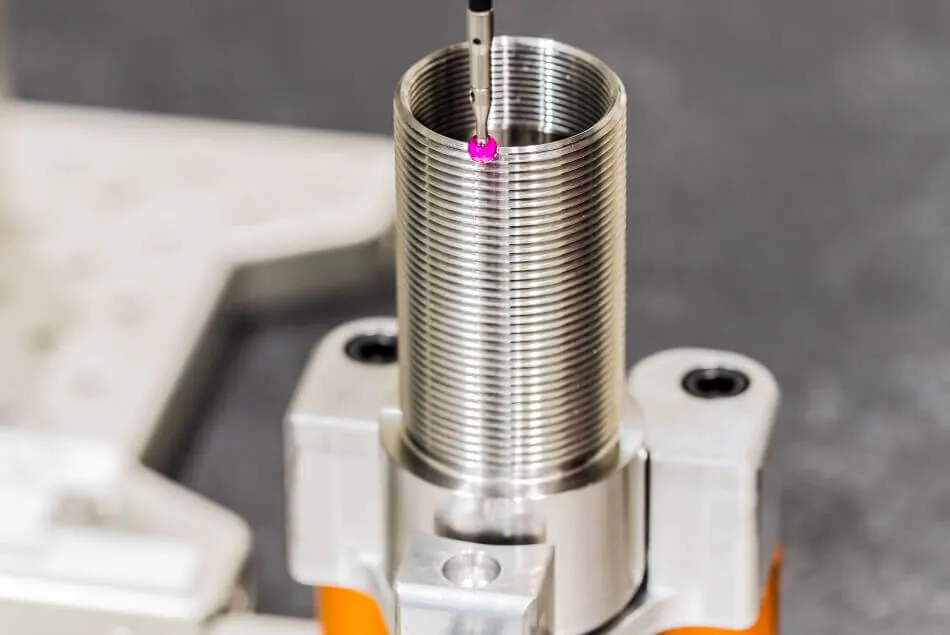
Our approach begins with material science selection. Tool steels undergo cryogenic stabilization and multi-axis stress-relieving cycles to eliminate residual deformation risks during thermal cycling. CNC machining then executes geometries using Renishaw probes for in-process verification, ensuring cavity profiles adhere to GD&T callouts within ±1.5μm. Crucially, we prioritize thermal stability—mold bases are designed with integrated cooling channels milled to 0.002mm positional accuracy, preventing localized hot spots that distort silicon during vulcanization. Surface finish receives equal rigor; cavity walls achieve Ra 0.05μm through diamond polishing, eliminating nucleation sites for silicone adhesion and ensuring 50,000+ cycle longevity.
The following specifications demonstrate our precision benchmarks against industry standards:
| Parameter | Industry Standard Tolerance | Lead Precision Capability |
|---|---|---|
| Cavity Flatness | ±5μm | ±1.5μm |
| Core Parallelism | ±8μm | ±2.0μm |
| Cooling Channel Position | ±0.02mm | ±0.005mm |
| Surface Roughness (Ra) | 0.2μm | 0.05μm |
| Thermal Drift (100°C) | ±15μm | ±3μm |
This capability is forged through direct experience solving extreme challenges. Our team developed mold kits for hydraulic seals in China’s J-20 fighter jet landing systems, where vacuum integrity must persist at Mach 2.1 velocities. Similarly, we produced Olympic-grade timing system gaskets requiring zero compression set after 10,000 hours in saltwater immersion. These projects demanded not just precision, but predictable repeatability across production runs—a discipline embedded in our ISO 13485-certified workflows.
When tolerances stack across multi-cavity molds, conventional manufacturing compounds error. Lead Precision counters this through closed-loop machining: each cavity’s as-machined data feeds real-time toolpath corrections for subsequent units, maintaining uniformity within 2μm across 32-cavity arrays. For clients, this means eliminating scrap from “mold-to-mold variation”—a hidden cost eroding profitability in high-volume silicon production. Partner with us to transform precision from a specification into your competitive advantage.
Precision Specs & Tolerances
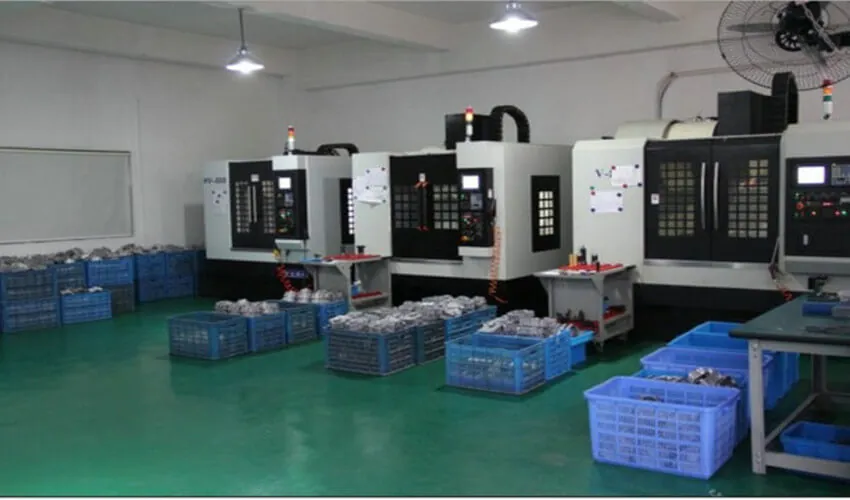
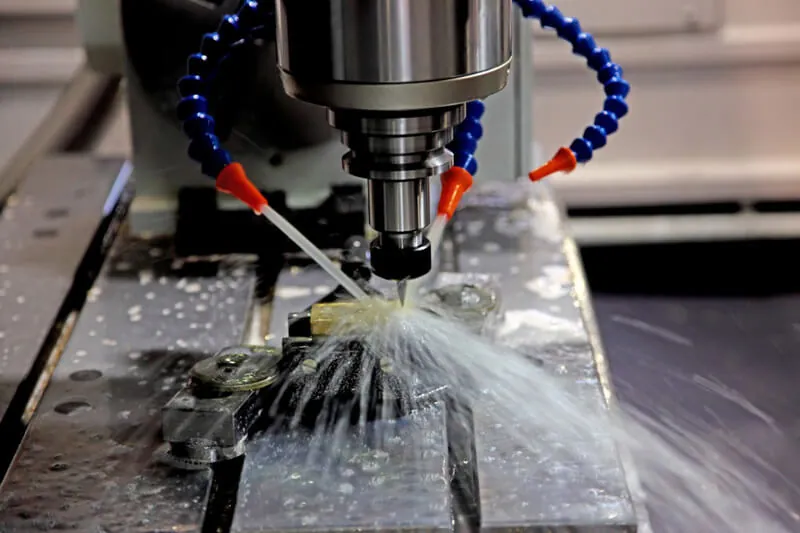
Wuxi Lead Precision Machinery delivers advanced technical capabilities in custom metal manufacturing, specializing in precision-engineered silicon mold kits for high-performance industrial applications. Our facility is equipped with state-of-the-art 5-axis CNC machining centers, enabling us to produce complex geometries with exceptional accuracy and surface finish. These multi-axis systems allow simultaneous movement across five planes, ensuring optimal tool orientation and access to intricate features that conventional 3-axis machines cannot achieve. This capability is critical in the production of silicon mold kits, where tight tolerances, fine detail, and thermal stability are paramount.
Our 5-axis CNC platforms are operated by certified machinists with extensive experience in aerospace, semiconductor, and advanced electronics tooling. Each machine is maintained to OEM standards and calibrated regularly to ensure consistent performance. High-speed spindle technology, combined with adaptive toolpath strategies, enables efficient material removal while preserving dimensional integrity. We work with a range of high-grade alloys, including tool steels, stainless steels, and aluminum composites, tailored to the thermal and mechanical demands of silicon molding processes.
Quality control is integrated at every stage of production. All silicon mold kits undergo comprehensive inspection using a Coordinate Measuring Machine (CMM) with sub-micron resolution. This metrology-grade system verifies geometric accuracy, positional tolerances, and surface conformity against the original CAD model. Our CMM routines are programmed to ANSI and ISO standards, providing full traceability and certification with every shipment. In addition to first-article inspection, we perform in-process checks and final validation to ensure batch consistency and compliance with customer specifications.
The precision achieved through our integrated manufacturing and inspection systems is reflected in the tight tolerances we consistently maintain. Below are the standard tolerance specifications for our silicon mold kit production:
| Feature | Typical Tolerance | Notes |
|---|---|---|
| Linear Dimensions | ±0.005 mm | Up to 300 mm |
| Positional Tolerance | ±0.008 mm | Relative to datum |
| Flatness | 0.005 mm per 100 mm | Verified via CMM |
| Surface Finish (Ra) | 0.2 – 0.8 µm | Adjustable per requirement |
| Angular Accuracy | ±0.05° | Full 5-axis capability |
| Bore Diameter | +0.010 / -0.000 mm | Precision reaming available |
| Repeatability (Batch) | ±0.003 mm | Statistical process control applied |
These specifications reflect our commitment to delivering mold kits that ensure reliable replication, long service life, and compatibility with high-temperature silicon curing processes. Wuxi Lead Precision Machinery combines advanced equipment, rigorous quality assurance, and engineering expertise to meet the most demanding requirements in precision tooling.
Material & Finish Options
Material Selection for High-Performance Silicon Mold Kits
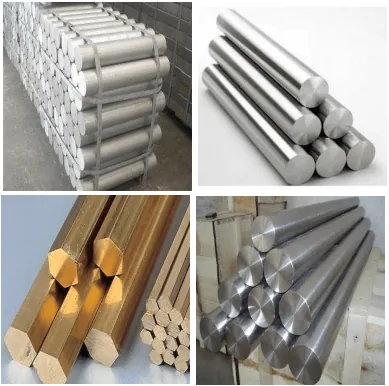
Selecting the optimal material for silicon mold kits directly impacts production efficiency, part quality, and total cost of ownership. At Wuxi Lead Precision Machinery, we prioritize metallurgical properties aligned with your specific application demands. Aluminum alloys offer an exceptional balance of machinability, thermal conductivity, and cost-effectiveness for high-volume prototyping and production. Steel variants, particularly H13 tool steel, deliver superior wear resistance and dimensional stability under extreme thermal cycling, making them indispensable for long-run manufacturing of complex geometries. Titanium alloys, while commanding a premium, provide unmatched strength-to-weight ratios and corrosion resistance for aerospace or medical applications where weight reduction and biocompatibility are non-negotiable.
Surface finishing, particularly anodizing, is critical for aluminum molds. Type II (sulfuric acid) anodizing creates a durable, corrosion-resistant layer suitable for general-purpose silicon molding. For molds subjected to aggressive release agents or high-abrasion cycles, Type III (hardcoat) anodizing delivers a significantly thicker, harder ceramic-like surface (60-70 Rockwell C) that extends tool life by 300% or more. Note that anodizing is exclusively applicable to aluminum; steel molds require alternative treatments like nitriding or PVD coatings for surface enhancement.
Material choice must account for thermal management requirements. Silicon molding involves repeated heating and cooling cycles; inefficient heat transfer causes warpage, extended cycle times, and inconsistent part quality. Aluminum’s high thermal conductivity ensures rapid, uniform temperature distribution, accelerating production rates. Steel’s lower conductivity necessitates integrated cooling channels but provides stability at elevated temperatures. Titanium’s poor thermal conductivity limits its use in high-cycle applications unless actively managed with precision-engineered cooling systems.
Our engineering team validates all material selections against your production parameters, including cycle count, silicon compound chemistry, and tolerance specifications. Below is a comparative overview of key properties:
| Material | Hardness (Typical) | Thermal Conductivity (W/m·K) | Max Continuous Temp (°C) | Relative Cost Factor |
|---|---|---|---|---|
| Aluminum 6061-T6 | 95 HB | 167 | 120 | 1.0x |
| H13 Tool Steel | 235 HB | 28 | 600 | 3.5x |
| Titanium Gr5 (Ti-6Al-4V) | 334 HB | 7.2 | 300 | 8.0x |
Wuxi Lead Precision Machinery leverages decades of CNC machining expertise to transform your material specifications into precision-engineered mold kits. We rigorously test thermal performance and surface integrity to ensure seamless integration into your production workflow. For applications exceeding 50,000 cycles or requiring sub-0.01mm tolerances, our engineers recommend steel with hardcoat anodizing on aluminum inserts—a hybrid solution optimizing cost and longevity. Consult our technical team early in your design phase to mitigate risk and maximize ROI. Material decisions made today define your production yield tomorrow.
Manufacturing Process & QC
The production process for a high-precision silicon mold kit at Wuxi Lead Precision Machinery follows a rigorously controlled sequence—Design, Prototyping, and Mass Production—engineered to achieve zero defects and ensure complete alignment with client specifications. Each stage integrates advanced metrology, material science, and precision CNC manufacturing to deliver consistent, repeatable results suitable for demanding industrial applications.
Design begins with a collaborative engineering review, where our technical team analyzes the client’s 3D model, functional requirements, and production environment. Finite element analysis (FEA) and mold flow simulation are applied to predict thermal distribution, stress points, and cycle efficiency. This phase ensures optimal geometry, gate placement, and cooling channel design, minimizing warpage and maximizing part integrity. Material selection—typically H13, P20, or customized tool steels—is validated for hardness, thermal conductivity, and resistance to erosion under repeated silicone injection cycles. All design outputs are documented and submitted for client approval before progression.
Prototyping leverages high-speed CNC machining and wire EDM to fabricate a single-cavity trial mold from the approved design. This prototype mold is used to produce a limited run of silicone parts under near-production conditions. Each trial component undergoes full dimensional inspection using coordinate measuring machines (CMM) and surface profilometry, with results cross-referenced against CAD data. Any deviations trigger a corrective loop involving design refinement and mold adjustment, ensuring the final geometry meets tight tolerances. This iterative validation is critical for detecting potential defects early—such as flash, incomplete fill, or ejection damage—before committing to full-scale tooling.
Mass production commences only after prototype approval and process capability validation. Multi-cavity molds are manufactured using hardened tool steels and coated with wear-resistant layers such as TiN or DLC where applicable. Machining operations are performed on 5-axis CNC centers with sub-micron repeatability, followed by precision polishing to achieve the required surface finish. Each mold undergoes rigorous in-house testing, including 10,000-cycle endurance runs, thermal stability checks, and leak testing. Real-time monitoring systems track pressure, temperature, and cycle time during production, feeding data into a statistical process control (SPC) framework to maintain zero-defect performance.
All silicon mold kits are shipped with full documentation, including inspection reports, material certifications, and maintenance guidelines, ensuring traceability and long-term reliability.
| Specification | Detail |
|---|---|
| Material Options | H13, P20, 420SS, Custom Alloy |
| Tolerance | ±0.005 mm |
| Surface Finish | Ra 0.05–0.8 µm (polish grades 1–3) |
| Hardness | 48–54 HRC (as required) |
| Cooling Channel Accuracy | ±0.01 mm |
| Production Cycle Test | 10,000+ cycles validated |
| Lead Time (Prototype) | 15–20 days |
| Lead Time (Mass Production) | 30–45 days |
Why Choose Wuxi Lead Precision
Elevate Your Silicon Mold Production Through Strategic Partnership
In the exacting realm of semiconductor and advanced electronics manufacturing, the performance of your silicon mold kit directly impacts yield, reliability, and time-to-market. Generic solutions introduce unacceptable variables in critical processes like wafer dicing, packaging, and thermal management. Wuxi Lead Precision Machinery delivers engineered partnership, not just components. Our CNC expertise transforms raw material into mission-critical tooling that meets the non-negotiable standards of Tier-1 fabs and innovators. We integrate deep metallurgical knowledge with sub-micron machining capabilities to ensure your silicon molds achieve perfect dimensional stability under extreme thermal cycling and mechanical stress. This precision eliminates micro-fractures, reduces particle generation, and extends mold service life—directly protecting your production throughput and product integrity.
Our commitment begins with collaborative engineering. Share your thermal profiles, material specifications, and lifecycle requirements. Our team conducts rigorous feasibility analysis, selecting optimal alloys like molybdenum-copper (MoCu) or tungsten-copper (WCu) based on your CTE matching needs and thermal conductivity demands. Every mold undergoes multi-axis CNC milling, grinding, and lapping to achieve surface finishes essential for defect-free silicon release. We implement in-process metrology using coordinate measuring machines (CMM) and optical comparators, ensuring conformity at every stage. This disciplined approach guarantees molds that integrate seamlessly into high-vacuum or plasma environments without compromising wafer purity.
The technical specifications below reflect our baseline capability for silicon mold kits. All parameters are fully customizable to your unique process constraints and scaling requirements.
| Critical Parameter | Standard Capability | Advanced Option | Verification Method |
|---|---|---|---|
| Dimensional Tolerance | ±0.005 mm | ±0.001 mm | Zeiss CMM, Laser Interferometry |
| Surface Roughness (Ra) | 0.05 µm | 0.01 µm | Profilometer, AFM |
| Flatness | 2 µm over 100mm | 0.5 µm over 100mm | Optical Flat Interferometry |
| Material Options | MoCu, WCu, GlidCop | Custom Alloys | Spectrographic Analysis |
| Thermal Conductivity | 170-220 W/m·K | Up to 250 W/m·K | Laser Flash Analysis |
| CTE Matching Tolerance | ±1.5 ppm/°C | ±0.5 ppm/°C | Dilatometry |
Partnering with Wuxi Lead Precision Machinery means aligning with a manufacturer certified to ISO 9001:2015 and ITAR standards, with dedicated cleanroom facilities for final assembly and testing. We manage the entire workflow—from material sourcing and heat treatment to precision finishing and coating—under one roof, eliminating supply chain vulnerabilities. Our engineering team provides full documentation, including metrology reports, material certificates, and thermal simulation data, ensuring traceability for your quality audits.
Do not compromise your silicon processing on tooling that lacks metrology-grade precision. Contact our engineering team today to discuss your specific mold requirements. Submit your technical dossier or request a confidential consultation. We respond within 24 business hours with a feasibility assessment and timeline. Reach us at Contact [email protected]. Let Wuxi Lead Precision Machinery become your certified partner in achieving zero-defect silicon manufacturing. Your next-generation production cycle starts with a single email.
⚙️ Precision Cost Estimator
Estimate relative manufacturing effort based on tolerance.