Best Steel For Sheet Metal Bending Manufacturer | Precision CNC Guide

Engineering Guide: Best Steel For Sheet Metal Bending

best steel for sheet metal bending manufacturing

Engineering Insight: Selecting the Best Steel for Sheet Metal Bending

Precision in sheet metal bending is not merely a manufacturing objective—it is a requirement for structural integrity, dimensional accuracy, and long-term performance across aerospace, defense, and high-load industrial applications. At Wuxi Lead Precision Machinery, we understand that the foundation of precision begins with material selection. Among the various metals used in fabrication, steel remains a dominant choice due to its strength, availability, and versatility. However, not all steels are equally suited for bending operations. The optimal steel must balance ductility, tensile strength, and consistency to achieve clean bends without cracking, warping, or springback.

The most effective steels for sheet metal bending are low-carbon variants such as ASTM A36, AISI 1008, and AISI 1010. These grades offer high formability and weldability, critical for complex geometries and tight bend radii. For applications demanding enhanced corrosion resistance or structural performance, AISI 4130 (chromoly steel) and ASTM A516 (pressure vessel steel) are preferred, though they require precise control of bending parameters due to increased hardness. High-strength low-alloy (HSLA) steels like ASTM A572 and A606 are also used where weight reduction and durability are priorities, but they necessitate advanced tooling and process calibration.

Material consistency is paramount. Variations in grain structure, thickness tolerance, or yield strength can lead to inconsistent bend angles and compromised part quality. At Wuxi Lead, our decades of experience—backed by precision fabrication for Olympic infrastructure projects and military-grade equipment—have reinforced the necessity of sourcing certified materials and validating mechanical properties before processing. Our CNC-controlled press brakes, equipped with real-time feedback systems, ensure angular accuracy within ±0.2°, but even the most advanced machinery cannot compensate for suboptimal material behavior.

We emphasize a holistic approach: material selection, tooling design, bend sequence planning, and in-process inspection. This integrated methodology enables us to deliver components that meet stringent international standards, including ISO 9001 and MIL-STD-810.

The following table outlines key steel grades commonly used in precision bending, along with their mechanical properties and typical applications:

Steel Grade Yield Strength (MPa) Tensile Strength (MPa) Elongation (%) Typical Applications
ASTM A36 250 400–550 20 Structural frames, brackets
AISI 1008 285 340–410 30 Automotive panels, enclosures
AISI 1010 300 365–500 28 Ductwork, hardware components
AISI 4130 460 560–690 18 Aerospace fittings, military mounts
ASTM A516 Gr70 260 485–620 21 Pressure vessels, boilers
ASTM A572 Gr50 345 450–600 21 Bridges, crane booms

At Wuxi Lead Precision Machinery, our expertise in handling these materials—combined with state-of-the-art forming technology—ensures that every bent component meets the highest standards of engineering excellence. Precision begins with the right steel, and we are committed to delivering nothing less.


Precision Specs & Tolerances

best steel for sheet metal bending manufacturing

Technical Capabilities: Precision Steel Bending Execution

Selecting the optimal steel grade is foundational for successful sheet metal bending, yet material choice alone cannot guarantee precision without matching manufacturing expertise. At Wuxi Lead Precision Machinery, we integrate deep metallurgical understanding with advanced CNC capabilities to overcome inherent challenges in steel bending—such as springback, cracking, and grain orientation effects. Our engineers analyze each project’s mechanical requirements, bend radii, and end-use environment to specify the most suitable steel, whether low-carbon AISI 1008 for cost-sensitive applications, high-strength AISI 4130 for structural integrity, or corrosion-resistant 304 stainless steel for demanding environments. This material-first approach ensures the steel’s yield strength, ductility, and thickness align perfectly with the geometric complexity of your component.

Our fleet of 5-axis CNC press brakes delivers the repeatability and force control essential for high-tolerance steel bending. Unlike conventional machines, our 5-axis systems dynamically adjust backgauging and crowning in real-time, compensating for material inconsistencies and minimizing springback—critical for high-strength steels like 4140 or tool steels. Each machine operates under strict thermal and calibration protocols, maintaining positional accuracy within ±0.01mm across the entire bending length. This capability allows us to achieve complex geometries, including acute angles, offset bends, and multi-stage forms, without secondary operations. Crucially, our CNC programming leverages finite element analysis (FEA) simulations to predict material behavior, ensuring first-article success and reducing scrap rates for expensive alloys.

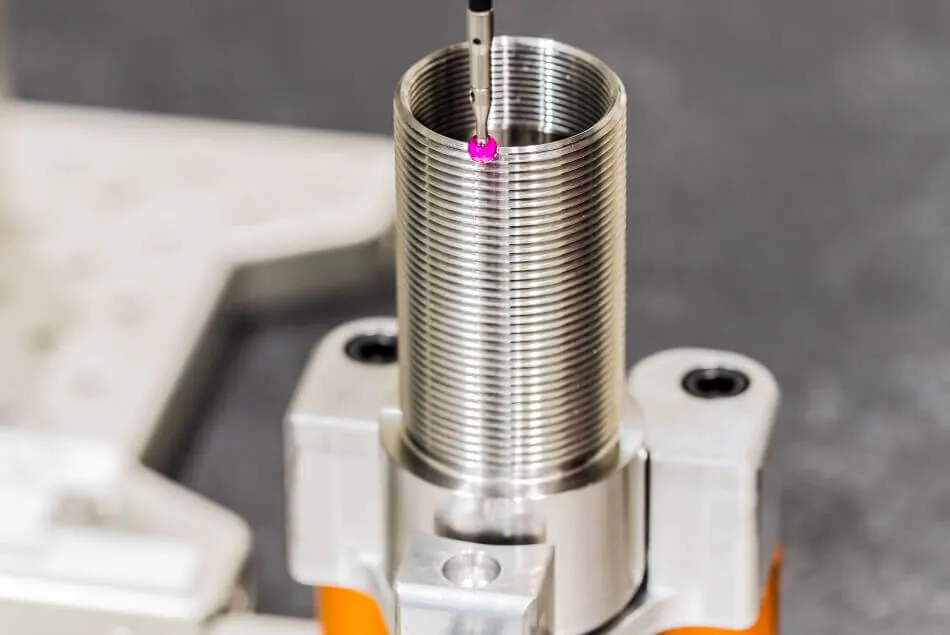
Quality control is non-negotiable in precision steel fabrication. Every bent component undergoes rigorous inspection using Zeiss CONTURA CMM systems, verifying critical dimensions including bend angles, leg lengths, and radii against ISO 2768-mK standards. Our inspection protocol extends beyond dimensional checks; we validate surface integrity to prevent micro-cracking in high-hardness steels and measure residual stresses where required. This data is documented in comprehensive first-article inspection reports (FAIRs), providing full traceability from raw material certification to final part validation. Such scrutiny ensures that every component meets aerospace, automotive, or medical device specifications without compromise.

The table below outlines achievable bending tolerances across common steel grades, reflecting our process capability under controlled conditions. Note that tolerances tighten with optimized material selection and our adaptive CNC strategies.

Steel Grade Thickness Range (mm) Angular Tolerance (±°) Linear Tolerance (±mm) Critical Notes
AISI 1008 (Mild Steel) 0.5 – 6.0 0.2 0.1 Minimal springback; ideal for tight radii
AISI 4130 (Alloy) 1.0 – 8.0 0.3 0.15 Requires pre-bend compensation for springback
AISI 304 Stainless 0.8 – 5.0 0.5 0.2 Higher springback; grain direction critical
AISI 4140 (Tool Steel) 2.0 – 10.0 0.4 0.25 Pre-heat often required; strict surface checks

Wuxi Lead’s technical edge lies in harmonizing material science with machine intelligence. We transform steel’s inherent properties from a fabrication challenge into a precision advantage, delivering components that perform reliably in the most demanding applications. Partner with us to convert complex steel bending requirements into engineered reality.


Material & Finish Options

best steel for sheet metal bending manufacturing

When selecting the best steel for sheet metal bending in high-precision manufacturing, engineers must balance mechanical properties, formability, and post-processing requirements. At Wuxi Lead Precision Machinery, we understand that material choice directly impacts bend accuracy, tool wear, and final product performance. While steel remains a dominant choice due to its strength and cost efficiency, aluminum and titanium also play critical roles in specialized applications. Each material brings distinct advantages and challenges to the bending process.

Low-carbon steels, such as ASTM A36 and AISI 1008, are widely used for their excellent formability and weldability. These steels offer a favorable strength-to-ductility ratio, making them ideal for complex bends without cracking. For enhanced corrosion resistance, galvanized or cold-rolled steel (CRS) variants are recommended, though increased surface hardness may require adjusted tooling clearance. High-strength low-alloy (HSLA) steels provide greater structural performance but demand precise control over bend angles due to higher springback.

Aluminum alloys, particularly 5052-H32 and 6061-T6, are preferred in lightweight and corrosion-sensitive applications such as aerospace and transportation. While aluminum is softer and easier to bend than steel, it is more prone to surface tearing and requires polished tooling to prevent marking. Its lower modulus of elasticity results in greater springback, necessitating overbending or adaptive CNC press brake programming to achieve tight tolerances.

Titanium, especially Grade 2 and Grade 5 (Ti-6Al-4V), offers exceptional strength-to-density ratio and corrosion resistance, making it suitable for high-performance sectors like medical devices and defense. However, titanium’s high springback and work hardening rate require slower bending speeds, larger bend radii, and robust tooling. It is also more abrasive, accelerating tool wear and increasing operational costs.

Surface finishes further influence both performance and aesthetics. Anodizing is primarily applied to aluminum, creating a durable, non-conductive oxide layer that enhances corrosion and wear resistance. Type II (sulfuric acid) anodizing is common for general use, while Type III (hardcoat) offers superior hardness for industrial components. Anodized parts must be masked at bend lines to prevent coating fracture during forming.

Below is a comparative overview of key materials used in sheet metal bending:

Material Typical Alloys Tensile Strength (MPa) Bend Radius (min. recommended) Springback Characteristics Common Applications
Low-Carbon Steel ASTM A36, AISI 1008 300–500 0.5–1.0 × thickness Moderate Enclosures, Frames
Galvanized Steel ASTM A653 350–550 1.0 × thickness Moderate to High HVAC, Construction
Aluminum 5052-H32, 6061-T6 200–310 0.8 × thickness High Aerospace, Automotive
Titanium Grade 2, Ti-6Al-4V 345–900 3.0–6.0 × thickness Very High Medical, Defense, Racing

Selecting the optimal material requires a holistic approach that considers design intent, environmental exposure, and production capabilities. At Wuxi Lead Precision Machinery, we support clients in matching material properties with advanced CNC bending technologies to achieve repeatable, high-tolerance results.


Manufacturing Process & QC

best steel for sheet metal bending manufacturing

Precision Steel Selection for Zero-Defect Sheet Metal Bending

Material integrity defines the success of any sheet metal bending operation. At Wuxi Lead Precision Machinery, we initiate every project with rigorous material science analysis during the design phase. Selecting the optimal steel grade is non-negotiable for achieving precise bend angles, minimizing springback, and preventing cracking or surface defects. Factors including yield strength, tensile strength, elongation percentage, and material homogeneity directly impact tooling wear, required tonnage, and achievable internal radii. Our engineering team utilizes advanced finite element analysis (FEA) software to simulate bending behavior under actual production conditions, ensuring the chosen steel grade—such as low-carbon AISI 1008 for deep draws or stainless 304 for corrosion resistance—aligns perfectly with geometric complexity and functional requirements before any physical work begins. This foundational step eliminates costly material-related failures downstream.

Prototyping transitions validated design into tangible reality under controlled conditions. We produce initial samples using the exact steel coil lot designated for mass production, bending on the same CNC press brakes programmed for final run. Every prototype undergoes stringent metrology: coordinate measuring machines (CMM) verify dimensional accuracy to ±0.05mm, optical comparators inspect bend angles and edge quality, and micro-hardness testing confirms material consistency. Crucially, we perform destructive bend tests per ASTM E290 to validate minimum bend radii without fracture. Client sign-off on these fully documented prototypes is mandatory. This phase identifies subtle interactions between specific coil batches and tooling, allowing micro-adjustments to machine parameters before committing to volume production, ensuring the process is inherently defect-proofed.

Mass production executes the perfected process with unwavering consistency. Wuxi Lead implements closed-loop quality control systems where laser micrometers continuously monitor sheet thickness pre-bend, feeding real-time data to the CNC controller to dynamically compensate for material variation. Statistical Process Control (SPC) charts track critical dimensions like bend angle and leg length from every 50th part, with automatic machine lockout if trends approach tolerance limits. All operators follow standardized work instructions verified through First Article Inspection (FAI), and 100% of critical bends undergo automated vision inspection. Our integrated ERP system traces every component back to its specific steel heat number and machine setup log, enabling rapid root-cause analysis should any anomaly occur. This systematic fusion of material science, validated prototyping, and real-time process control guarantees zero-defect output at scale.

Key Steel Properties for Bending Performance

Steel Grade Typical Yield Strength (MPa) Elongation (%) Max Recommended Thickness (mm) Critical Bending Consideration
AISI 1008 170 – 240 35 – 40 3.0 Minimal springback; excellent formability
AISI 304 Stainless 210 – 300 40 – 50 2.5 Higher springback; requires larger radii
Aluminum 5052-H32 190 – 225 12 – 14 4.0 Low yield strength; prone to scratching
AISI 4130 360 – 560 20 – 25 1.5 High springback; requires overbending

Why Choose Wuxi Lead Precision

When it comes to precision sheet metal bending, selecting the right steel is only half the battle. The other half lies in partnering with a manufacturer that understands the nuances of material behavior, tooling dynamics, and long-term performance under real-world conditions. At Wuxi Lead Precision Machinery, we don’t just supply equipment—we deliver engineered solutions tailored to your production demands.

Our expertise spans decades of refining CNC press brake technology for global industrial applications. Whether you’re working with low-carbon steels like ASTM A36 or high-strength alloys such as AISI 4140, our machines are calibrated to handle yield strengths, elongation rates, and springback characteristics with micron-level accuracy. We recognize that the best steel for sheet metal bending isn’t a one-size-fits-all answer—it depends on your required bend radius, fatigue resistance, weldability, and end-use environment. That’s why our engineering team collaborates directly with clients to match machine specifications to material properties, ensuring optimal forming results every time.

Beyond machine design, we integrate advanced control systems like Delem DA66T and Cybelec DNC 9, enabling real-time feedback and adaptive correction during bending cycles. This level of precision minimizes material waste, reduces rework, and increases throughput—critical factors in high-mix, low-volume production environments common in aerospace, energy, and transportation sectors.

We build our press brakes using hardened C-frame and O-frame structures with finite element analysis-verified rigidity, ensuring consistent tonnage distribution across the entire bed length. Paired with segmented tooling options and backgauges capable of 0.01 mm repeatability, our systems maintain tight tolerances even under continuous operation.

Below are key specifications from our most widely deployed models, engineered specifically for demanding steel bending applications:

Model Max Bending Force (kN) Working Length (mm) Stroke Depth (mm) Repeatability (mm) Control System
LPB-100T 1000 3200 120 ±0.01 Delem DA66T
LPB-150T 1500 4000 130 ±0.01 Cybelec DNC 9
LPB-200T 2000 5000 140 ±0.01 Delem DA66T
LPB-250T 2500 6000 150 ±0.01 Cybelec DNC 9

Each machine is built to order, with options for automatic tool changers, multi-axis backgauges, laser angle measurement systems, and IoT-enabled monitoring platforms. Our in-house R&D team continuously tests new material grades under full-load conditions, allowing us to provide data-driven recommendations on tooling setup, clamping pressure, and bend sequencing.

If you’re looking to elevate your sheet metal fabrication capability with machines designed for the most challenging steels, now is the time to connect. Partner with Wuxi Lead Precision Machinery to gain more than equipment—you gain a technical ally committed to your operational success.

Contact us today at [email protected] to discuss your specific application requirements, request a live demo, or receive a detailed technical proposal. Let’s build precision together.


⚙️ Precision Cost Estimator

Estimate relative manufacturing effort based on tolerance.

Best Steel For Sheet Metal Bending Manufacturer | Precision CNC Guide

Contents of Table

Contact [email protected] Whatsapp 86 15951276160