Technical Contents
Engineering Guide: Moldeo Por Inyeccion
Engineering Insight: Precision in Injection Molding for High-Performance Applications
In the realm of custom metal manufacturing, injection molding—particularly metal injection molding (MIM)—has emerged as a critical process for producing complex, high-strength components with exceptional dimensional accuracy. At Wuxi Lead Precision Machinery, we recognize that precision is not merely a quality objective; it is a foundational requirement for industries where failure is not an option. From aerospace systems to defense equipment and Olympic-grade athletic technology, the demand for parts that perform under extreme conditions has elevated the importance of micron-level tolerances, material consistency, and process repeatability.
Metal injection molding integrates the design flexibility of plastic injection molding with the structural integrity of sintered metal. However, the process demands a far higher degree of engineering control. Variations in feedstock homogeneity, thermal gradients during debinding, and shrinkage during sintering must all be predicted, monitored, and corrected through precision tooling and advanced process simulation. At Lead Precision, our engineering team employs finite element analysis (FEA) and mold flow simulation to anticipate deformation and optimize gate placement, ensuring that every component meets exacting specifications before the first shot is molded.
Our experience in delivering mission-critical components for Olympic-level sports equipment and military applications underscores our commitment to precision. For instance, components used in high-speed track cycling mechanisms or compact firearm triggers require not only tight tolerances—often within ±0.02 mm—but also consistent mechanical properties across large production runs. These applications demand a level of reliability that can only be achieved through rigorous process validation and real-time in-process metrology.
Wuxi Lead Precision Machinery has invested heavily in closed-loop control systems, automated inspection protocols, and cleanroom molding environments to ensure that every part conforms to international standards such as ISO 9001 and AS9100. Our facility integrates coordinate measuring machines (CMM), optical comparators, and X-ray density analysis to verify internal integrity and dimensional stability, especially for safety-critical components.
The following table outlines key performance specifications achievable through our advanced metal injection molding process:
| Parameter | Typical Capability | High-Precision Capability |
|---|---|---|
| Dimensional Tolerance | ±0.3% of nominal dimension | ±0.02 mm (for critical features) |
| Surface Roughness (Ra) | 1.6 – 3.2 μm | <0.8 μm (with polishing) |
| Minimum Wall Thickness | 0.5 mm | 0.3 mm (with optimized design) |
| Material Density | >98% of theoretical density | >99.5% (with controlled sintering) |
| Production Batch Consistency | Cp/Cpk ≥ 1.33 | Cp/Cpk ≥ 1.67 (military-grade) |
Precision in injection molding is not an incremental advantage—it is a strategic necessity. At Wuxi Lead Precision Machinery, we combine decades of metallurgical expertise with cutting-edge manufacturing technology to deliver components that meet the highest standards of performance and reliability. Whether supporting national defense initiatives or enabling world-record athletic achievements, our engineering philosophy remains unchanged: precision defines performance.
Precision Specs & Tolerances
Technical Capabilities: Precision Metal Components for Injection Molding Systems
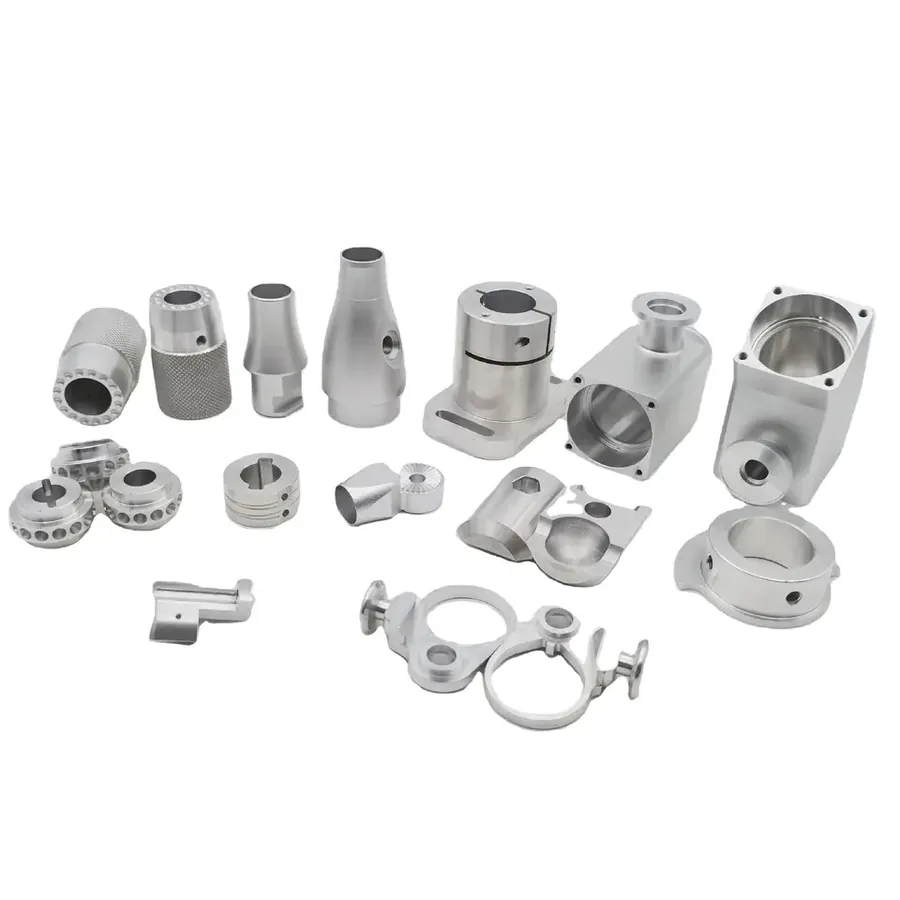
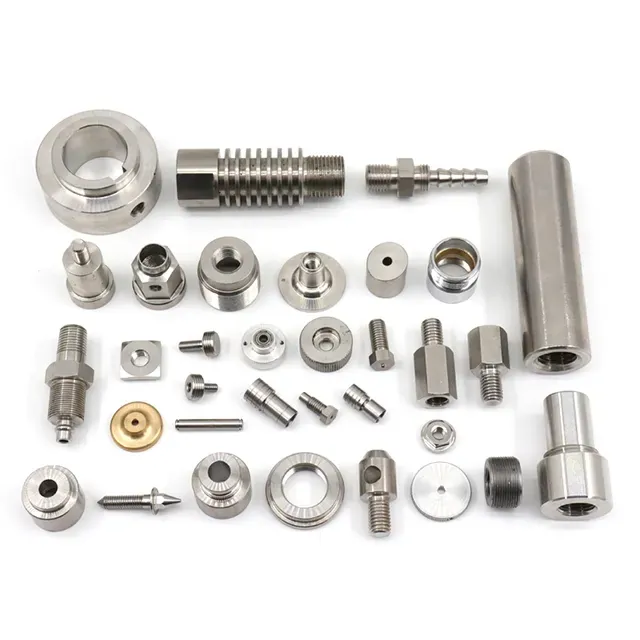
Wuxi Lead Precision Machinery delivers mission-critical metal components engineered specifically for the demanding requirements of high-performance injection molding machinery. Our core expertise lies in producing complex, high-tolerance parts where dimensional stability, surface integrity, and absolute repeatability directly impact mold longevity, part quality, and production efficiency. We bridge the gap between advanced CNC manufacturing and the stringent needs of the injection molding industry, ensuring your molds perform optimally under sustained cyclic loads and thermal conditions.
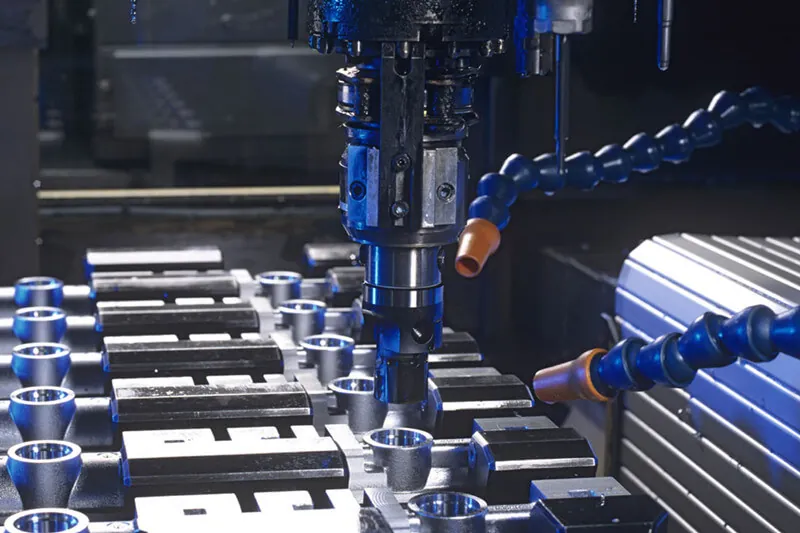
Central to our capability is a modern fleet of multi-axis CNC machining centers, prominently featuring state-of-the-art 5-axis simultaneous machining systems from leading OEMs like DMG MORI and Makino. This technology is not merely an asset; it is fundamental to addressing the intricate geometries inherent in mold bases, cavities, cores, slides, lifters, and precision alignment components. 5-axis machining eliminates the need for multiple setups, significantly reducing cumulative error potential while enabling the production of undercuts, complex contours, and tight internal features in a single operation. Our processes incorporate rigorous thermal stability compensation protocols and utilize high-rigidity machine platforms specifically selected for maintaining micron-level accuracy during extended production runs, essential for components subjected to the thermal cycling of injection molding.
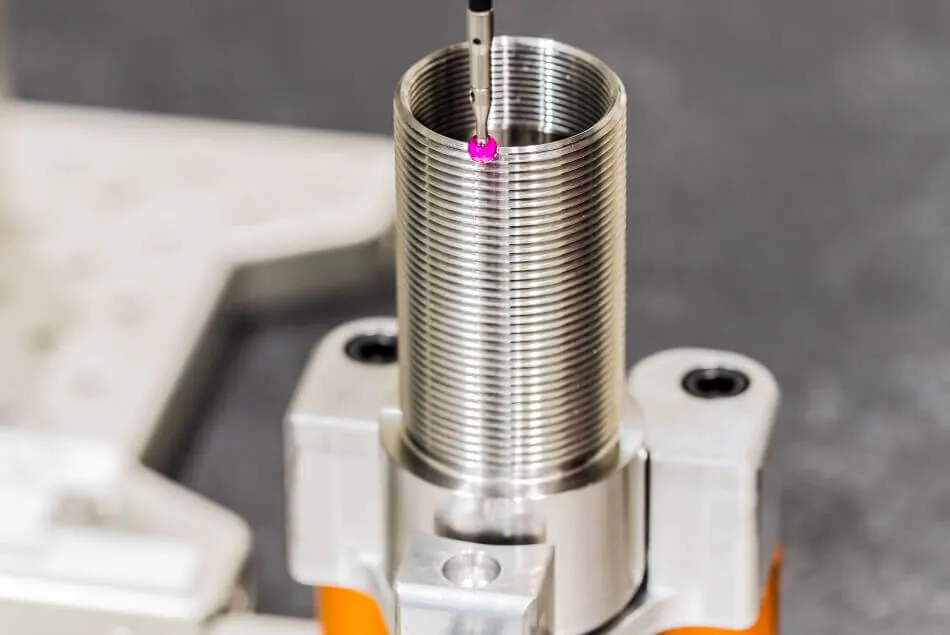
Quality assurance is seamlessly integrated into every manufacturing phase, not an endpoint. Our dedicated metrology laboratory is anchored by multiple high-precision Coordinate Measuring Machines (CMMs), including bridge-type and optical CMMs calibrated to international standards. Every critical feature undergoes comprehensive CMM inspection against the original CAD model, providing full geometric dimensioning and tolerancing (GD&T) verification. This includes first-article inspection reports, in-process checks for critical dimensions during extended runs, and final batch certification. Statistical Process Control (SPC) data is actively monitored, ensuring process capability and providing traceable documentation for full component lifecycle management. This systematic approach guarantees that every part shipped meets the exacting specifications required for flawless integration into your injection molding systems, minimizing downtime and maximizing mold lifespan.
The following table details our standard achievable tolerance capabilities for machined metal components, reflecting the precision delivered through our integrated CNC and CMM processes. Specific tolerances are always project-dependent, considering material, geometry complexity, and feature size, but consistently meet or exceed industry benchmarks for high-end mold construction.
| Feature Type | Standard Capability (Metric) | Standard Capability (Imperial) | Notes |
|---|---|---|---|
| Linear Dimensions | ±0.005 mm | ±0.0002 in | Up to 300 mm / 12 in; tighter achievable |
| Angular Dimensions | ±0.005° | ±0.005° | Verified via CMM vector measurement |
| Positional Tolerance | ±0.008 mm | ±0.0003 in | Includes hole patterns & critical loci |
| Surface Roughness (Ra) | 0.4 µm | 16 µin | Typical machined finish; finer grind/polish available |
| Flatness | 0.010 mm / 100 mm | 0.0004 in / 4 in | Critical for parting line & sealing surfaces |
Wuxi Lead Precision Machinery provides the precision-engineered metal foundation your injection molding operations require. Our fusion of advanced 5-axis CNC manufacturing, uncompromising CMM-based quality control, and deep process expertise ensures components that contribute directly to superior mold performance, extended service life, and consistent production of high-quality molded parts. We partner with you to transform complex design requirements into reliable, high-precision reality.
Material & Finish Options
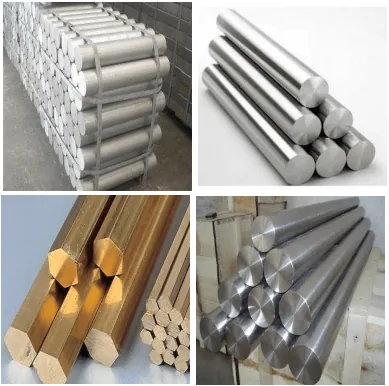
Material selection is a critical step in the design and production of high-performance injection molding tools and precision components. At Wuxi Lead Precision Machinery, we specialize in custom metal manufacturing for demanding industrial applications, where material properties directly influence tool longevity, dimensional stability, and surface finish quality. The most commonly used materials in our injection molding solutions are aluminum, steel, and titanium—each offering distinct advantages depending on production volume, part complexity, and environmental conditions.
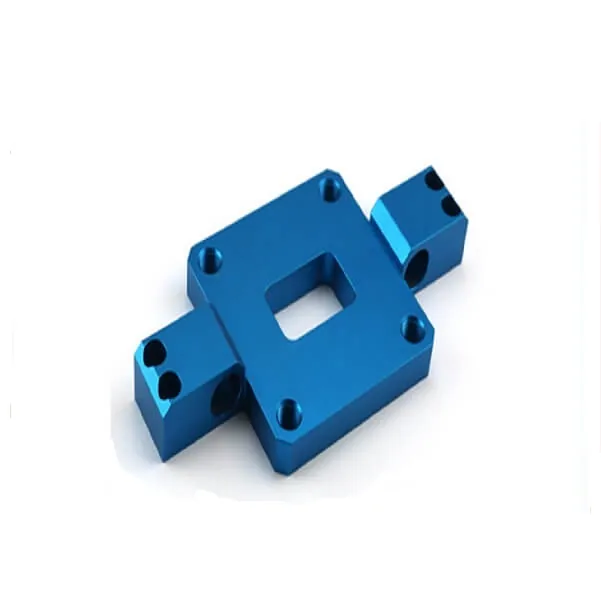
Aluminum alloys, particularly 7075 and 6061, are favored for rapid tooling and low-to-medium volume production. Their excellent machinability allows for faster lead times and reduced manufacturing costs. Aluminum’s high thermal conductivity ensures efficient cooling cycles in injection molds, improving cycle times. While not as wear-resistant as steel, aluminum molds are ideal for prototyping and bridge tooling. When enhanced surface durability is required, anodizing provides a hard, corrosion-resistant layer that improves wear performance without compromising precision.
Steel remains the standard for high-volume injection molding due to its superior strength, hardness, and resistance to abrasion. Tool steels such as P20, H13, and S136 are commonly used for mold bases, cavities, and cores. These grades offer excellent polishability and can withstand thousands of cycles under high pressure and temperature. Hardened steels are especially suitable for engineering plastics with glass or mineral fillers that accelerate wear. For corrosive environments or molds exposed to moisture, stainless variants like 420 or S136 stainless provide enhanced resistance to rust and pitting.
Titanium alloys, such as Ti-6Al-4V, are employed in specialized applications requiring extreme strength-to-density ratios and exceptional corrosion resistance. While less common in standard mold construction due to cost and machining challenges, titanium is used in critical mold components exposed to aggressive environments or where weight reduction is essential. Its biocompatibility and non-magnetic properties also make it suitable for medical and electronic molding applications.
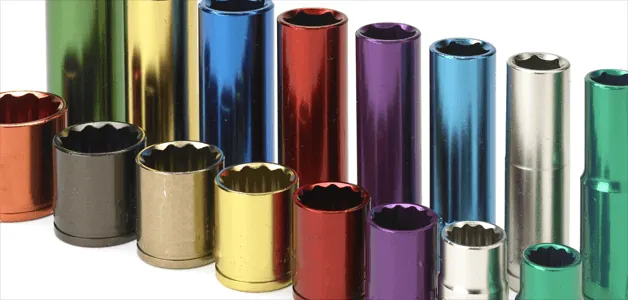
Surface treatment plays a vital role in extending mold life and ensuring part quality. Anodizing, particularly Type II (sulfuric acid) and Type III (hardcoat), is widely applied to aluminum components. This electrochemical process increases surface hardness up to 60 HRC, enhances wear resistance, and allows for color coding for part identification. Anodized layers are electrically insulating and chemically stable, making them suitable for cleanroom and medical-grade production environments.
Below is a comparative overview of key material properties relevant to injection molding applications:
| Material | Tensile Strength (MPa) | Hardness (HRC) | Thermal Conductivity (W/m·K) | Typical Use Case |
|---|---|---|---|---|
| Aluminum 7075 | 570 | 15–20 | 130 | Prototype & low-volume molds |
| P20 Steel | 900–1100 | 28–32 | 30 | Medium-to-high volume production |
| H13 Steel | 1400 | 45–50 | 35 | High-stress, high-temperature molds |
| Ti-6Al-4V | 950 | 35–40 | 7 | Specialized, corrosive environments |
At Wuxi Lead Precision Machinery, we guide clients through material and finish selection based on technical requirements, lifecycle expectations, and cost-efficiency. Our engineering team ensures every component meets the highest standards of precision and performance.
Manufacturing Process & QC
Precision Metal Manufacturing Process: From Design to Zero-Defect Mass Production
At Wuxi Lead Precision Machinery, we execute custom metal components through a rigorously controlled sequence ensuring absolute dimensional fidelity and material integrity. Our process transcends standard manufacturing by embedding quality at every phase, eliminating defects before they reach the production floor. The foundation is collaborative engineering. Our technical team partners with clients during the Design phase to optimize part geometry for CNC manufacturability, analyzing stress points, material selection (including aerospace-grade titanium, stainless steel 316L, and Inconel 718), and thermal behavior. Finite Element Analysis (FEA) simulations validate structural performance under operational loads, preventing costly revisions later. This upfront diligence ensures the digital model is production-ready, not merely CAD-compliant.
Prototyping transitions virtual designs into physical validation. We deploy multi-axis CNC milling and turning centers to produce functional prototypes within 72 hours of final design sign-off. Each prototype undergoes metrology-grade inspection using Zeiss CONTURA CMMs and optical comparators, verifying tolerances down to ±0.0002 inches against the original CAD. Critical features like sealing surfaces, bearing fits, and thread interfaces are stress-tested under simulated service conditions. This phase identifies micro-flaws invisible in simulation—material grain anomalies or subtle tool deflection effects—allowing process refinement before tooling commitment. Client approval of the prototype signifies process validation, not just part acceptance.
Mass Production leverages the perfected workflow under our Zero Defects protocol. Automated gantry loaders feed bar stock into DMG MORI and MAZAK systems running 24/7 with real-time tool wear monitoring via Renishaw probes. Every 15 minutes, in-process inspections measure critical dimensions; statistical process control (SPC) charts trigger immediate machine recalibration if trends approach tolerance limits. Final inspection employs 100% automated vision systems for surface defects and batch sampling for material certification. Traceability is absolute: each component’s machining parameters, inspection data, and operator logs are archived digitally for full lifecycle accountability. This closed-loop system ensures batch-to-batch consistency demanded by aerospace and medical OEMs.
Key production specifications guaranteeing zero defects:
| Parameter | Capability | Measurement Standard |
|---|---|---|
| Dimensional Tolerance | ±0.0002 inches (5µm) | ASME Y14.5-2018 |
| Surface Roughness | Ra 0.4 µm (mirror finish achievable) | ISO 21920-2:2021 |
| Materials | Titanium Gr5, Inconel 718, SS316L, Aluminum 7075 | ASTM/AMS certified |
| Max Work Envelope | 1200 x 800 x 650 mm | ISO 230-2:2014 |
| In-Process Inspection | Real-time SPC with auto-correction | AI-driven tolerance bands |
This integrated approach—where design insight, empirical prototyping, and closed-loop production converge—delivers metal components that meet mission-critical performance requirements without compromise. Wuxi Lead’s process is certified to ISO 9001:2015 and AS9100D, ensuring your supply chain operates on unshakeable precision.
Why Choose Wuxi Lead Precision
Partner with Lead Precision for Unmatched Expertise in Custom Metal Manufacturing
At Wuxi Lead Precision Machinery, we don’t just manufacture components—we engineer solutions. As a leading provider of custom metal manufacturing services in China, we specialize in high-precision production tailored to the exacting demands of global industries. Our mastery in CNC machining, combined with advanced quality control systems and a deep understanding of international standards, positions us as the ideal partner for businesses seeking reliability, scalability, and precision in their supply chain.
Our commitment begins with collaboration. We understand that every project carries unique technical, logistical, and performance requirements. Whether you are developing complex automotive components, aerospace fittings, or industrial automation systems, our engineering team works closely with yours from concept to completion. This integrated approach ensures optimal material selection, efficient design for manufacturability, and seamless transition from prototype to full-scale production.
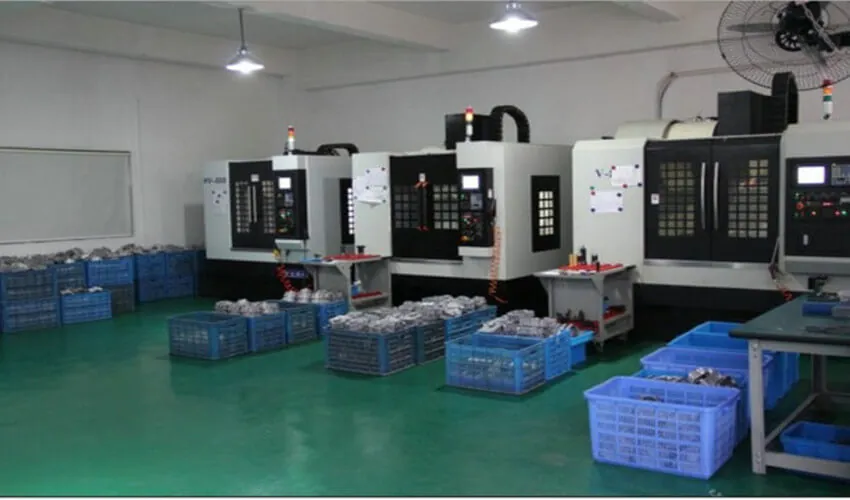
What sets Wuxi Lead Precision Machinery apart is our investment in technology and talent. Our facility in Wuxi, Jiangsu Province, is equipped with state-of-the-art CNC centers, multi-axis milling machines, and automated inspection systems. Every process is governed by ISO 9001-certified quality management protocols, ensuring repeatability, traceability, and compliance with global regulatory frameworks. We serve clients across Europe, North America, and Southeast Asia, delivering parts that meet Tier-1 supplier standards.
We recognize that in high-end manufacturing, specifications matter. Below are key capabilities that define our production excellence:
| Specification | Detail |
|---|---|
| CNC Machining Capabilities | 3-axis, 4-axis, 5-axis milling; turning; grinding |
| Maximum Work Envelope | 1200 mm × 800 mm × 650 mm |
| Tolerance Range | ±0.005 mm |
| Surface Finish | Ra 0.4 µm to Ra 3.2 µm (custom finishes available) |
| Materials Processed | Aluminum alloys, stainless steel, carbon steel, brass, titanium, PEEK |
| Quality Standards | ISO 9001:2015 certified, GD&T compliant, First Article Inspection (FAI) reports |
| Lead Times | Prototype: 7–10 days; Production: 15–25 days (varies by complexity) |
| Packaging & Shipping | Export-standard packaging, DDP and FOB terms available, global logistics support |
Choosing the right manufacturing partner is a strategic decision that impacts product performance, time-to-market, and total cost of ownership. At Wuxi Lead Precision Machinery, we combine technical precision with responsive service to become a seamless extension of your engineering team.
Take the next step toward precision manufacturing excellence. Contact us today at [email protected] to discuss your project requirements, request a quote, or schedule a virtual factory tour. Let Lead Precision be your trusted partner in building the future—one high-tolerance component at a time.
⚙️ Precision Cost Estimator
Estimate relative manufacturing effort based on tolerance.