3D Printing Stainless Steel Manufacturer | Precision CNC Guide

Engineering Guide: 3D Printing Stainless Steel

Engineering Insight: 3D Printing Stainless Steel – The Role of Precision in High-Performance Manufacturing

In the evolving landscape of advanced manufacturing, 3D printing stainless steel has emerged as a transformative capability, enabling complex geometries, rapid prototyping, and low-volume production with material efficiency. However, the true value of metal additive manufacturing lies not just in its ability to produce intricate parts, but in its capacity to maintain precision across every micron of the build. At Wuxi Lead Precision Machinery, we recognize that precision is not an outcome—it is engineered into every process, from design validation to final post-processing.

Stainless steel, with its excellent corrosion resistance, mechanical strength, and thermal stability, is a preferred material across aerospace, medical, defense, and high-performance industrial applications. When 3D printed, these properties must be preserved through tightly controlled thermal management, powder quality, and layer consistency. Even minor deviations in laser power, scan speed, or chamber atmosphere can result in microstructural anomalies, residual stress, or dimensional inaccuracies that compromise part integrity. This is where precision becomes non-negotiable.

Our engineering team at Wuxi Lead applies decades of metallurgical and CNC machining expertise to the additive domain, ensuring that each printed component meets exacting tolerances. We utilize state-of-the-art laser powder bed fusion (LPBF) systems calibrated to maintain layer thickness within ±10 microns, supported by in-situ monitoring and real-time thermal feedback. Every build undergoes rigorous pre-print simulation to predict distortion and optimize support structures, minimizing post-machining while ensuring geometric accuracy.

Our commitment to precision is validated through applications that demand zero margin for error. Wuxi Lead has successfully delivered mission-critical components for Olympic-grade equipment, where performance consistency under dynamic load is paramount. Similarly, our work with defense and military suppliers requires adherence to MIL-STD and ISO 13485 standards, reinforcing our capability to meet the highest regulatory and functional benchmarks.

Post-processing is equally critical. Printed stainless steel parts are subjected to stress-relief annealing, precision CNC machining, and surface finishing techniques such as micro-milling or electropolishing, all performed in-house to maintain process continuity and dimensional control. This integrated approach—combining additive fabrication with subtractive precision—defines our manufacturing philosophy.

The table below outlines key technical specifications for our 3D printing stainless steel process:

Parameter Specification
Material 316L, 17-4 PH, 304L Stainless Steel
Build Volume Up to 250 x 250 x 300 mm
Layer Thickness 20–50 μm
Dimensional Accuracy ±0.05 mm (typical)
Surface Roughness (as-printed) Ra 10–15 μm
Post-Processing Options CNC Machining, Heat Treatment, Polishing
Certifications ISO 9001, ISO 13485, MIL-STD compliant

At Wuxi Lead Precision Machinery, we do not simply print metal parts—we engineer performance. Our experience in high-stakes industries underscores our ability to deliver not just components, but precision-engineered solutions that perform under real-world demands.


Precision Specs & Tolerances

Technical Capabilities: Precision Integration for Stainless Steel Additive Manufacturing

Wuxi Lead Precision Machinery delivers uncompromising precision for demanding stainless steel 3D printed components through a vertically integrated manufacturing ecosystem. We bridge the gap between additive design freedom and stringent industrial requirements by combining advanced metal additive systems with high-accuracy subtractive and inspection technologies. Our core strength lies in the seamless transition from complex as-printed geometries to fully functional, mission-critical parts meeting aerospace, medical, and energy sector specifications. This integration ensures dimensional stability, surface integrity, and material properties that standalone additive processes cannot consistently achieve.

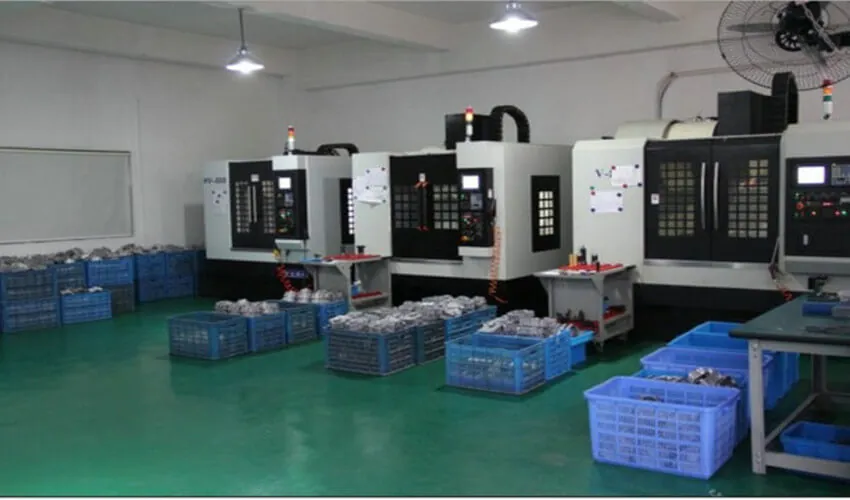
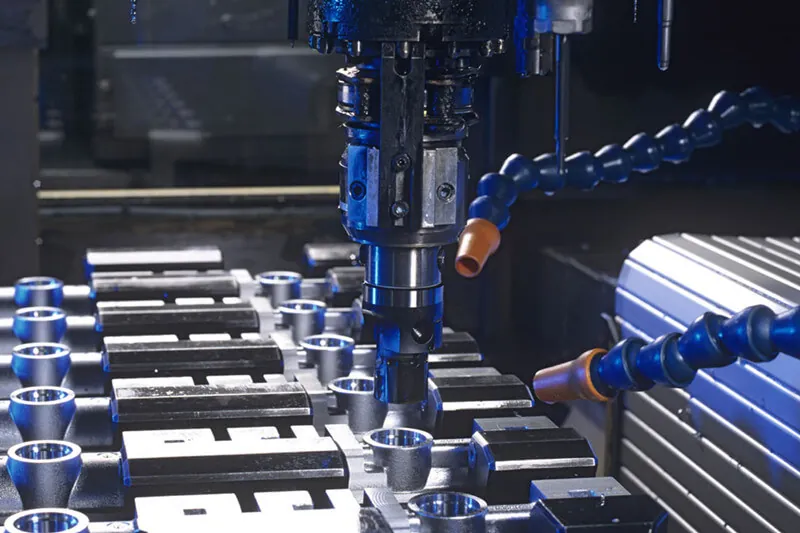
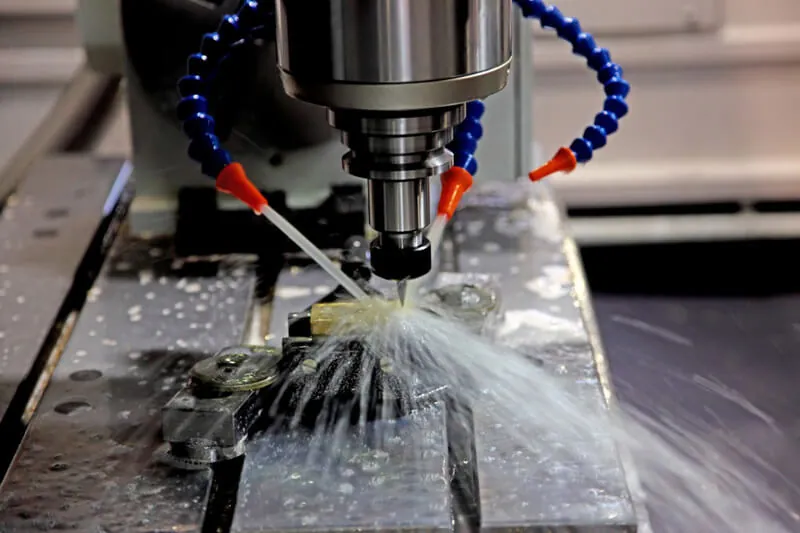
Central to our capability is a fleet of state-of-the-art 5-axis CNC machining centers. These systems are essential for post-processing intricate stainless steel AM builds, enabling precise feature machining, critical surface finishing, and tight tolerance attainment on complex organic shapes. Our engineers program and operate these machines with deep understanding of metal AM microstructure and residual stress behavior, minimizing distortion during fixturing and cutting. This expertise allows us to machine delicate lattice structures, internal channels, and thin-walled sections inherent in optimized AM designs without compromising part integrity. The 5-axis capability eliminates multiple setups, ensuring superior geometric accuracy and reducing cumulative error for components with compound angles and deep cavities.

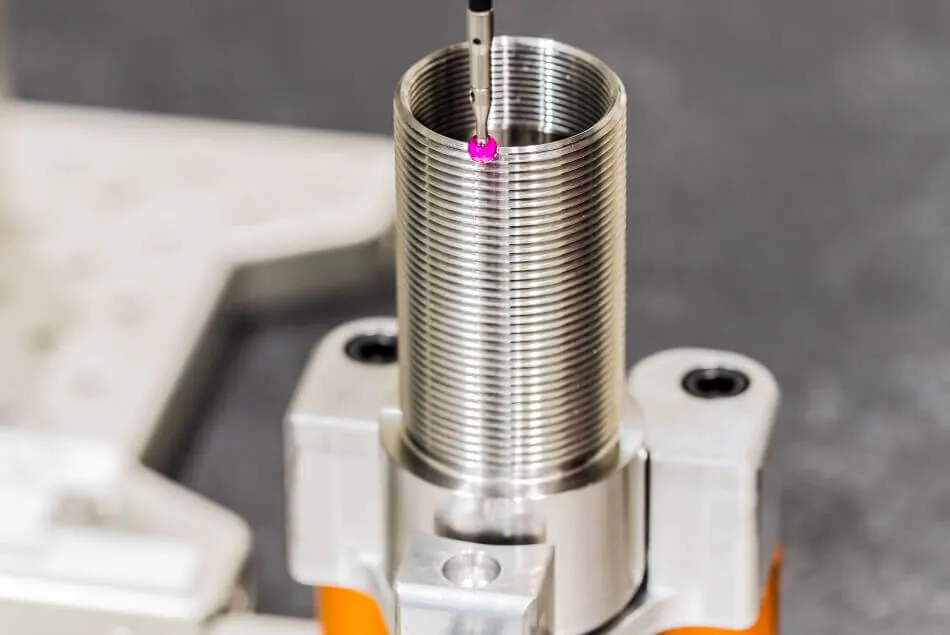
Quality control is non-negotiable. Every critical stainless steel component undergoes comprehensive verification using calibrated Coordinate Measuring Machines (CMM). Our Zeiss and Hexagon CMM systems perform full 3D dimensional analysis against the original CAD model, validating complex profiles, positional tolerances, and form accuracy impossible to verify with manual methods. This metrology-driven approach provides objective data for first-article inspection reports and in-process verification, ensuring traceability and compliance with AS9100, ISO 13485, and customer-specific quality standards. CMM data directly informs process adjustments, creating a closed-loop system for continuous capability improvement.

Achievable tolerances are material and geometry-dependent, but our integrated process delivers consistently high precision. The following table outlines typical capabilities for common stainless steel alloys after full post-processing, including stress relief, precision machining, and surface treatment:

Feature Type Typical Tolerance Range (mm) Common Stainless Steel Alloys
General Dimensions ±0.05 to ±0.10 316L, 17-4PH, 304L
Critical Machined Holes ±0.01 to ±0.03 17-4PH, 316L
Geometric Position ±0.02 to ±0.05 316L, 17-4PH
Surface Roughness (Ra) 0.8 µm to 3.2 µm (machined) All
As-Built Feature Size ±0.10 to ±0.20 316L, 304L

Our commitment extends beyond equipment. Wuxi Lead engineers collaborate early in the design phase, applying Design for Additive Manufacturing (DfAM) principles specific to stainless steel alloys. We optimize support structures, build orientation, and thermal management strategies to minimize post-processing burden while maximizing as-printed accuracy. This holistic approach, combining advanced 5-axis CNC, rigorous CMM validation, and deep material science knowledge, ensures your stainless steel AM parts meet the highest functional and regulatory demands. We transform additive potential into certified, production-ready reality.


Material & Finish Options

Material Selection for High-Performance 3D Printed Metal Components

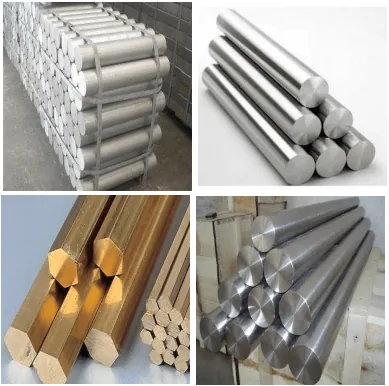
When selecting materials for industrial 3D printing, particularly in mission-critical applications, understanding the mechanical, thermal, and environmental performance of aluminum, steel, and titanium is essential. At Wuxi Lead Precision Machinery, we specialize in custom metal manufacturing using advanced additive technologies, enabling complex geometries and high-strength performance across aerospace, automotive, medical, and energy sectors.

Stainless steel remains one of the most widely used materials in metal 3D printing due to its excellent strength-to-density ratio, corrosion resistance, and thermal stability. Common grades such as 316L and 17-4 PH are ideal for components exposed to harsh environments, including marine or chemical processing equipment. These alloys exhibit high yield strength and can be post-processed to achieve tight tolerances and superior surface integrity. Stainless steel parts are also well-suited for applications requiring sterilization or prolonged exposure to moisture.

Aluminum alloys, particularly AlSi10Mg, offer significant advantages in weight-sensitive industries such as aerospace and electric mobility. With a density approximately one-third that of steel, aluminum provides excellent thermal conductivity and good fatigue resistance. While not as strong as steel or titanium, aluminum’s performance can be optimized through heat treatment and precision finishing. It is especially effective in heat exchangers, lightweight structural frames, and drone components where minimizing mass is critical.

Titanium, specifically Grade 5 (Ti-6Al-4V), delivers exceptional strength-to-weight performance and outstanding biocompatibility, making it the material of choice for medical implants and high-performance aerospace systems. Its resistance to oxidation at elevated temperatures and low thermal expansion coefficient allow for reliable operation in extreme environments. Though more costly and challenging to process, titanium’s durability and corrosion resistance justify its use in critical load-bearing applications.

Post-Processing and Surface Finishes

Surface finish plays a crucial role in the functional performance of 3D printed metal parts. As-printed surfaces typically exhibit moderate roughness due to layer-by-layer deposition. For enhanced corrosion resistance, wear performance, or aesthetic requirements, post-processing techniques such as CNC machining, polishing, sandblasting, and coating are recommended.

Anodizing, while primarily associated with aluminum, is a key surface treatment that increases surface hardness, improves corrosion resistance, and allows for color coding in assembly environments. However, anodizing is not applicable to stainless steel or titanium in the traditional sense, though titanium can be anodized electrochemically to produce decorative interference colors without compromising biocompatibility.

Below is a comparative overview of key material properties for 3D printed metals commonly used in industrial applications.

Material Density (g/cm³) Tensile Strength (MPa) Yield Strength (MPa) Elongation (%) Common Applications
Stainless Steel 316L 8.0 550–650 250–300 30–50 Chemical valves, marine hardware, medical tools
17-4 PH Stainless Steel 7.8 1000–1300 850–1000 10–15 Aerospace actuators, tooling, high-strength fittings
Aluminum AlSi10Mg 2.7 400–500 250–350 8–12 Heat sinks, drone parts, lightweight enclosures
Titanium Ti-6Al-4V 4.4 900–1000 830–880 10–12 Aircraft components, orthopedic implants, racing parts

Selecting the right material and finish requires a comprehensive understanding of operational demands. Wuxi Lead Precision Machinery supports clients in material qualification, process optimization, and full post-processing integration to ensure every component meets stringent industrial standards.


Manufacturing Process & QC

Design Phase: Precision Engineering Foundation
Our stainless steel 3D printing process begins with rigorous design validation. We collaborate with clients to optimize geometries for additive manufacturing, ensuring structural integrity while minimizing material waste. Critical factors include thermal stress simulation, support structure planning, and overhang angle analysis. Every model undergoes automated defect prediction using proprietary software, identifying potential porosity or warpage risks before physical production. This phase enforces strict adherence to ISO 13485 and AS9100 standards, with all design files digitally signed and version-controlled to prevent errors.

Prototyping: Validated Performance
Prototyping transforms digital models into functional test articles. Using EOS M 400-4 quad-laser systems, we produce 316L or 17-4PH stainless steel parts with layer resolution down to 20μm. Each prototype undergoes non-destructive testing (NDT) including CT scanning and dye penetrant inspection to verify internal integrity. Mechanical properties are validated against ASTM F75 standards, with tensile strength and hardness tested per batch. Client feedback is integrated within 72 hours, and design iterations are executed without remobilizing production equipment—reducing validation cycles by 40% versus conventional methods.

Mass Production: Zero-Defect Execution
Full-scale production leverages our automated factory ecosystem. Twelve synchronized metal printers operate under climate-controlled conditions (22±1°C, 45% humidity), with real-time melt pool monitoring via coaxial cameras and spectrometers. Every layer is analyzed for dimensional accuracy against CAD data; deviations beyond 50μm trigger immediate corrective action. Post-processing includes HIP (Hot Isostatic Pressing) for 99.95% density and precision CNC machining to achieve ±0.025mm tolerances. Final inspection employs AI-powered optical comparators and batch traceability via blockchain-secured QR codes.

Critical Stainless Steel 3D Printing Specifications

Parameter Typical Industry Standard Wuxi Lead Precision Standard
Material Density 99.5% 99.95% (HIP-treated)
Surface Roughness Ra 12-25 μm Ra 3.2-6.3 μm (as-built)
Tensile Strength 550-650 MPa (316L) 620-700 MPa (316L)
Dimensional Accuracy ±0.1-0.2% ±0.05% (with in-process correction)
Lead Time (100 units) 15-20 days 8-12 days (with parallel workflows)

Zero-Defect Assurance Protocol
Defect prevention is systemic. Our closed-loop quality system correlates machine sensor data (oxygen levels, laser power stability) with final part certifications. Every production run includes sacrificial witness samples tested to destruction, with results logged in our cloud-based quality dashboard accessible to clients. Statistical process control (SPC) charts monitor 32 critical parameters per build, ensuring Cpk ≥1.67. This integrated approach delivers 0 PPM defect rates across aerospace, medical, and energy sector projects—proven by 200+ consecutive zero-rejection batches in 2023. Partner with us for stainless steel components where failure is never an option.


Why Choose Wuxi Lead Precision

Partner with Lead Precision for Advanced 3D Printing in Stainless Steel

At Wuxi Lead Precision Machinery, we specialize in delivering high-precision metal manufacturing solutions tailored to the evolving demands of modern industry. As a trusted leader in custom metal fabrication, we integrate cutting-edge 3D printing technology with decades of engineering expertise to provide stainless steel components that meet the most stringent performance and quality standards. Whether you are developing aerospace systems, medical devices, or high-stress industrial equipment, partnering with Lead Precision ensures your project benefits from unmatched technical capability and operational reliability.

Our metal additive manufacturing processes are built around selective laser melting (SLM) technology, enabling the production of complex, lightweight, and functionally optimized stainless steel parts that traditional machining methods cannot achieve. We work primarily with high-grade stainless steel alloys, including 316L and 17-4 PH, known for their excellent corrosion resistance, mechanical strength, and thermal stability. Each component is manufactured under tightly controlled conditions, adhering to ISO 9001 quality management standards and full traceability protocols.

What sets Lead Precision apart is our end-to-end service model. From initial design consultation and DfAM (Design for Additive Manufacturing) optimization to post-processing, precision machining, and final inspection, we manage every stage in-house. This vertical integration allows us to maintain strict quality control, reduce lead times, and deliver components that consistently meet or exceed client expectations. Our engineering team collaborates directly with your design and R&D personnel to ensure manufacturability, cost efficiency, and performance integrity.

We understand that in high-end manufacturing, specifications matter. Below are key technical capabilities of our stainless steel 3D printing services:

Parameter Specification
Material Options 316L Stainless Steel, 17-4 PH Stainless Steel
Build Envelope Up to 250 x 250 x 300 mm
Layer Thickness 20–50 μm
Typical Surface Roughness Ra 10–15 μm (as-built), Ra <4 μm (polished)
Dimensional Accuracy ±0.05 mm per 100 mm
Post-Processing Options Heat Treatment, HIP, CNC Machining, Polishing, Passivation
Certifications ISO 9001:2015, Material Test Reports (MTRs), Full Inspection Reports

Our facility in Wuxi, China, is equipped with state-of-the-art SLM machines and metrology systems, including CMM and 3D scanning, ensuring every part is verified for geometric accuracy and material integrity. We serve clients across Europe, North America, and Asia, supporting industries where failure is not an option.

When you partner with Wuxi Lead Precision Machinery, you gain more than a supplier—you gain a precision engineering ally committed to innovation, quality, and long-term collaboration. To discuss your next stainless steel 3D printing project, contact us today at [email protected]. Let us help you turn advanced design concepts into high-performance reality.


⚙️ Precision Cost Estimator

Estimate relative manufacturing effort based on tolerance.

3D Printing Stainless Steel Manufacturer | Precision CNC Guide

Contents of Table

Contact [email protected] Whatsapp 86 15951276160