Technical Contents
Engineering Guide: Small Sheet Metal

Engineering Insight: Precision Imperatives in Small Sheet Metal Fabrication
In small sheet metal fabrication, precision transcends specification sheets—it defines functional integrity. Components under 300mm in critical dimensions demand micron-level accuracy where thermal expansion, tool deflection, and material grain behavior become dominant variables. A 0.05mm deviation in a 0.8mm-thick aerospace bracket can induce catastrophic stress concentrations; in medical device housings, it compromises hermetic sealing. At Wuxi Lead Precision Machinery, we treat sub-1mm tolerances as non-negotiable baselines, not aspirational targets. Our approach integrates predictive modeling of material springback and real-time thermal compensation, ensuring first-article conformity even for 0.3mm stainless steel enclosures.
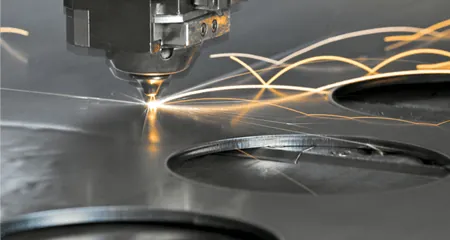
The physics of thin-gauge metal amplifies error propagation. Laser cutting kerf variance of ±0.02mm at 0.5mm thickness alters bend allowances by 0.15°, cascading into assembly misalignment. Our CNC press brakes employ dual-linear encoders and closed-loop force feedback to maintain ±0.25° angular repeatability—critical for satellite communication chassis where signal integrity hinges on electromagnetic shielding continuity. This rigor stems from direct experience: our production lines delivered 12,000+ precision brackets for Beijing Winter Olympics venue structural sensors, where thermal cycling from -30°C to 40°C demanded zero-failure performance. Similarly, military-grade RF shielding components for naval systems required 0.005mm flatness tolerance across 250mm panels—achieved through stress-relieved annealing and diamond-hone leveling.
Material behavior dictates process architecture. Aluminum 5052-H32 at 0.4mm thickness exhibits 37% greater springback than 1.0mm stock; our proprietary bending algorithms dynamically adjust dwell time and punch penetration based on real-time strain gauges. For copper alloys in micro-electronics, we deploy nitrogen-purged laser cutting to prevent oxidation-induced dimensional drift. Every micron saved in burr control directly extends the service life of surgical instrument housings—our deburring cells maintain edge radii under 0.01mm through electro-chemical finishing.
Wuxi Lead Precision Capability Matrix
| Parameter | Standard Capability | Olympic/Military Tier | Verification Method |
|---|---|---|---|
| Thickness Range | 0.1mm – 3.0mm | 0.05mm – 2.5mm | Laser micrometer (0.1μm res) |
| Linear Tolerance | ±0.02mm | ±0.005mm | CMM with 22°C thermal lock |
| Angular Repeatability | ±0.5° | ±0.15° | Optical comparator (0.001°) |
| Surface Flatness | 0.05mm/m | 0.005mm/m | Interferometry |
| Burr Height | <0.03mm | <0.008mm | Profilometer (ISO 1302) |
Small sheet metal success hinges on treating physics as the primary constraint—not machine capability. Our military projects taught us that a 0.01mm flatness deviation in radar waveguide flanges causes 18dB signal loss; Olympic infrastructure demanded vibration-resistant joints surviving 10 million fatigue cycles. At Wuxi Lead Precision Machinery, we engineer solutions where material science, thermal dynamics, and metrology converge. When your application operates at the edge of manufacturability, precision isn’t a feature—it’s the foundation. Contact our engineering team to transform your thin-gauge challenges into certified deliverables.
Precision Specs & Tolerances

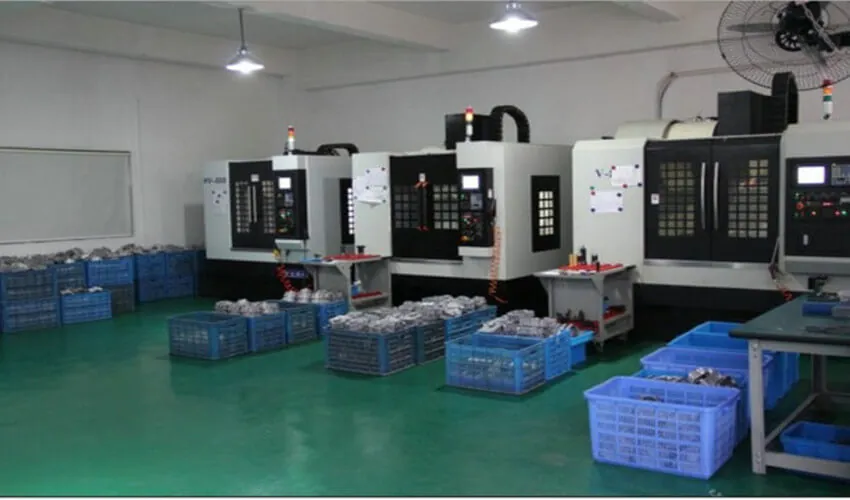
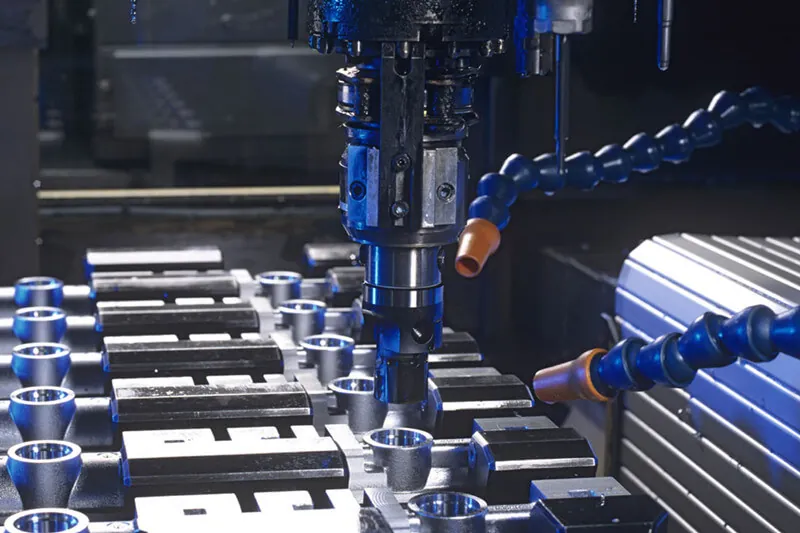
Wuxi Lead Precision Machinery delivers advanced sheet metal fabrication solutions tailored for high-precision industrial applications. Our technical capabilities are engineered to meet the stringent demands of aerospace, medical, automation, and high-end equipment manufacturing sectors. Central to our operations is a fully integrated 5-axis CNC machining platform, which enables complex forming, cutting, and milling operations on small sheet metal components with exceptional accuracy and repeatability.
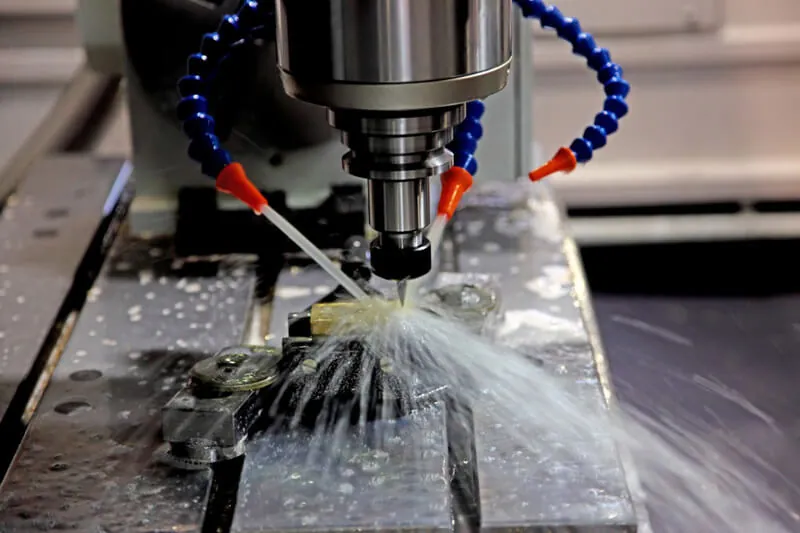
The integration of 5-axis CNC technology allows for simultaneous multi-directional machining, reducing the need for multiple setups and minimizing cumulative tolerances. This capability is particularly critical when working with small sheet metal parts, where dimensional stability and geometric complexity are paramount. Our machines are calibrated for micron-level precision and are operated by certified CNC engineers with over a decade of experience in precision metalwork. Materials commonly processed include stainless steel, aluminum alloys, cold-rolled steel, and specialty alloys such as titanium and inconel, all handled with material-specific tooling and feed strategies to ensure edge quality and structural integrity.
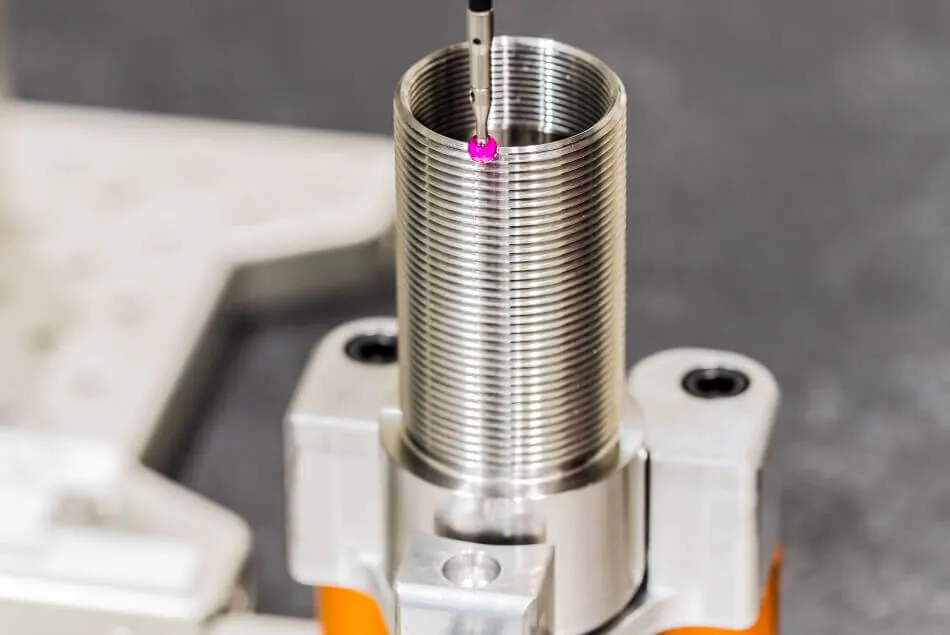
Quality control is embedded throughout the manufacturing workflow. Every component undergoes rigorous inspection using a Zeiss DuraMax Bridge-type Coordinate Measuring Machine (CMM), ensuring full compliance with ISO 10360 standards. Our CMM system provides traceable, 3D geometric verification of critical features, including flatness, positional tolerances, hole alignment, and contour accuracy. All inspection data is documented and available with shipment, supporting full production traceability for regulated industries.
We maintain tight control over environmental variables in the metrology lab and production floor, including temperature stabilization and dust mitigation, to eliminate external influences on measurement accuracy. In addition to CMM inspection, we employ optical comparators and surface roughness testers to validate edge finish and surface integrity—key factors in small sheet metal components where burrs or micro-deformations can compromise performance.
The following table outlines our standard technical specifications and achievable tolerances for small sheet metal fabrication:
| Parameter | Standard Tolerance | High-Precision Option | Notes |
|---|---|---|---|
| Linear Dimensions (mm) | ±0.05 mm | ±0.02 mm | Up to 300 mm length |
| Hole Position Tolerance | ±0.05 mm | ±0.03 mm | Measured from datum |
| Flatness | 0.1 mm per 100 mm | 0.05 mm per 100 mm | For sheets < 2 mm thickness |
| Edge Straightness | ±0.05 mm | ±0.03 mm | Over 50 mm length |
| Angular Tolerance | ±0.2° | ±0.1° | For formed or machined angles |
| Surface Roughness (Ra) | Ra 3.2 µm | Ra 0.8 µm | Machined surfaces |
| Feature Repeatability (CpK) | CpK ≥ 1.33 | CpK ≥ 1.67 | Under SPC monitoring |
Our technical capabilities are reinforced by a continuous improvement framework, ensuring that process parameters are optimized through real-time data analysis and feedback loops. This systematic approach enables Wuxi Lead Precision Machinery to deliver small sheet metal components that meet the highest standards of precision, consistency, and quality in global manufacturing.
Material & Finish Options

Material Selection for Precision Small Sheet Metal Fabrication
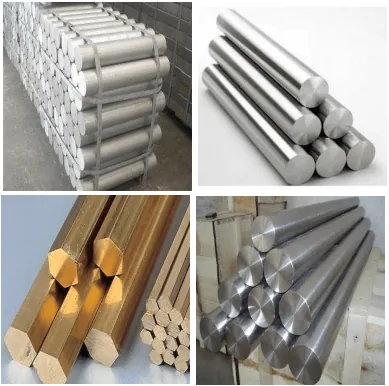
Selecting the optimal material for small sheet metal components is critical for performance, manufacturability, and cost efficiency. At Wuxi Lead Precision Machinery, we prioritize materials that balance dimensional stability during high-precision CNC punching, laser cutting, and bending. Below we detail key considerations for aluminum, steel, and titanium, alongside essential finishing guidance.
Aluminum
Aluminum alloys dominate lightweight applications requiring corrosion resistance and thermal conductivity. Grade 6061-T6 offers excellent weldability and moderate strength for enclosures and brackets, while 7075-T6 delivers superior strength for aerospace components but requires careful handling due to reduced corrosion resistance. Aluminum’s low density minimizes thermal distortion during laser processing, though its softness demands precise tool calibration to prevent burring on thin sheets under 1.0mm.
Steel
Cold-rolled steel (CRS) provides high strength and cost-effectiveness for structural parts but necessitates protective finishes. Stainless steel grades 304 and 316 are preferred for medical or marine environments due to inherent corrosion resistance. Note that 316’s molybdenum content enhances pitting resistance but increases tool wear during CNC machining compared to 304. For parts under 0.8mm, avoid high-carbon steels to prevent cracking during tight-radius bending.
Titanium
Titanium Grade 2 is indispensable for extreme environments—think aerospace or biomedical implants—where strength-to-weight ratio and biocompatibility are non-negotiable. Its exceptional corrosion resistance comes with challenges: low thermal conductivity causes heat buildup during cutting, requiring slower feed rates and specialized tooling. Titanium’s high cost is justified only when alternatives fail under stress or chemical exposure.
Critical Material Properties Comparison
| Material | Key Properties | Best Applications | Processing Notes |
|---|---|---|---|
| Aluminum 6061-T6 | Density: 2.7 g/cm³; Tensile: 310 MPa | Enclosures, brackets, heat sinks | Prone to burring; use sharp tools |
| Stainless 304 | Density: 8.0 g/cm³; Tensile: 515 MPa | Medical devices, food processing | Moderate tool wear; avoid high speeds |
| Titanium Grade 2 | Density: 4.5 g/cm³; Tensile: 345 MPa | Aerospace, implants, chemical plants | High heat buildup; strict coolant control |
Finishing: Anodizing Essentials
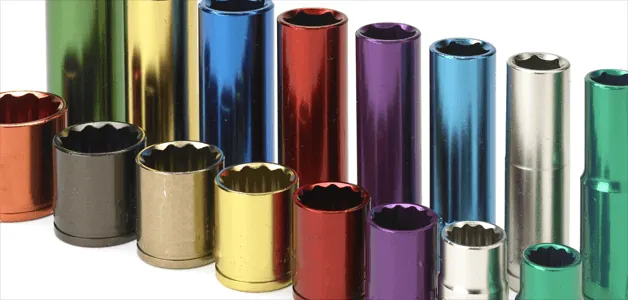
Anodizing is the gold standard for aluminum, enhancing wear resistance and enabling color coding. Type II (sulfuric acid) anodizing suits general use with dye options, while Type III (hard coat) delivers 50–100μm thickness for high-abrasion parts. Crucially, anodizing after fabrication ensures uniform coating on complex geometries. For small parts, specify rack masking to protect critical interfaces from coating buildup. Avoid anodizing on assemblies with steel inserts—galvanic corrosion risks outweigh benefits.
Material choice directly impacts yield rates and part longevity. Consult Wuxi Lead’s engineering team early to align material properties with your design tolerances and operational demands. We validate selections through FEA simulations and prototyping to eliminate downstream fabrication surprises.
Manufacturing Process & QC

Design: The Foundation of Precision
At Wuxi Lead Precision Machinery, the production process for small sheet metal components begins with meticulous design engineering. We collaborate closely with clients to translate conceptual requirements into manufacturable designs, ensuring dimensional accuracy, material compatibility, and functional integrity. Our engineering team leverages advanced CAD software—SolidWorks, AutoCAD, and Siemens NX—to develop 3D models and 2D technical drawings with tight tolerances down to ±0.05 mm. Design for Manufacturability (DFM) analysis is conducted at this stage to identify potential issues related to bending, punching, or welding, minimizing rework and optimizing production efficiency. Thermal deformation, stress distribution, and material grain direction are evaluated to ensure long-term performance under operational loads. All designs undergo internal review and client approval before transitioning to prototyping.
Prototyping: Validating Performance and Fit
Prototyping serves as a critical validation phase, allowing us to verify design functionality, assembly compatibility, and aesthetic specifications. Using CNC punching, laser cutting, and precision bending techniques, we produce small-batch prototypes from the same materials intended for mass production—commonly stainless steel (SUS304, SUS316), aluminum (AL5052, AL6061), and galvanized steel (SECC). Surface treatments such as powder coating, anodizing, or passivation are applied as required. Each prototype undergoes rigorous inspection using Coordinate Measuring Machines (CMM), optical comparators, and first-article inspection reports (FAIR) to confirm adherence to specifications. Feedback from functional testing and client evaluation is incorporated into final design refinements, ensuring zero defects are carried forward into full-scale production.
Mass Production: Precision, Consistency, and Quality Assurance
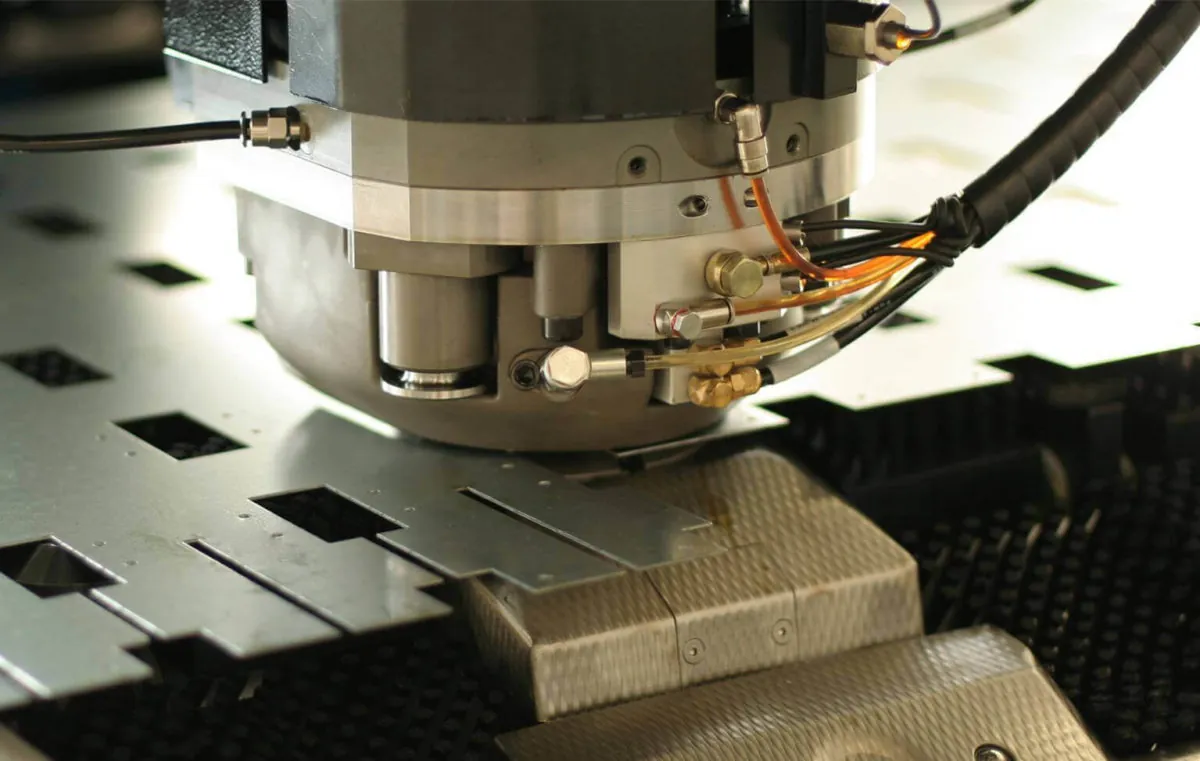
Once design and prototyping are validated, we initiate mass production under a zero-defect manufacturing framework. Our automated production lines integrate robotic material handling, CNC turret presses, and fiber laser cutting systems with real-time monitoring to maintain repeatability and throughput. Each process step is governed by standardized work instructions and statistical process control (SPC) protocols. In-process inspections occur at critical control points, including post-cutting, post-bending, and post-welding stages. Final products are subjected to 100% visual inspection and抽 spot metrology checks, with full traceability maintained through batch numbering and digital quality records.
| Parameter | Specification |
|---|---|
| Material Thickness Range | 0.3 – 3.0 mm |
| Tolerance (Standard) | ±0.05 mm |
| Minimum Bend Radius | 0.5× material thickness |
| Common Materials | SUS304, SUS316, AL5052, AL6061, SECC, SPCC |
| Surface Treatments | Powder Coating, Anodizing, Passivation, Zinc Plating |
| Production Capacity | Up to 50,000 units/month (depending on complexity) |
| Quality Standards | ISO 9001:2015, IATF 16949 compliant |
Through integrated design validation, precision prototyping, and disciplined mass production, Wuxi Lead Precision Machinery delivers small sheet metal components with uncompromised quality, ensuring reliability and performance in demanding industrial applications.
Why Choose Wuxi Lead Precision
Partner with Lead Precision for Uncompromising Small Sheet Metal Fabrication
In the demanding landscape of precision engineering, small sheet metal components demand more than standard fabrication. Tolerances shrink, material behaviors intensify, and geometric complexity escalates—turning minor process deviations into critical failures. Wuxi Lead Precision Machinery exists to resolve these challenges. We engineer solutions where conventional shops reach their limits, transforming intricate small-scale sheet metal designs into flawless, high-reliability production outcomes. Our integrated approach merges advanced CNC capabilities with deep material science expertise, ensuring every micron matters.
Our dedicated production cells specialize exclusively in small-format sheet metal work, from prototyping to high-volume runs. We deploy state-of-the-art fiber laser cutters with 0.01mm positional accuracy, precision press brakes capable of ±0.02mm bend tolerances, and automated welding systems for sub-millimeter joints. This focus eliminates cross-contamination risks from larger parts and guarantees consistent process control. Every component undergoes rigorous in-process metrology using Zeiss CMMs and optical comparators, validating conformance before shipment. Below are core capabilities defining our small sheet metal excellence:
| Specification Category | Technical Capability |
|---|---|
| Material Thickness Range | 0.05mm to 1.5mm (Stainless Steel, Aluminum, Copper Alloys) |
| Minimum Feature Size | 0.3mm holes, 0.5mm bend radii |
| Geometric Tolerance | ±0.02mm (flatness, positional) |
| Surface Finish | Ra 0.4μm (milled), Ra 0.8μm (laser cut edges) |
| Secondary Operations | Micro-TIG welding, precision polishing, selective plating |
Beyond machinery, our value lies in proactive engineering collaboration. Our team engages during your design phase to optimize manufacturability—identifying stress points in thin-gauge bends, recommending material substitutions for thermal stability, or refining tooling strategies for micro-features. This DFM partnership prevents costly revisions and accelerates time-to-market. All processes operate under ISO 9001:2015 and IATF 16949 frameworks, with full traceability from raw material certs to final inspection reports.
The cost of precision failure in small sheet metal applications extends far beyond scrap rates—it risks assembly line halts, product recalls, and reputational damage. Wuxi Lead Precision Machinery delivers not just parts, but engineered confidence. We become your technical extension, solving problems others cannot see.
Initiate your project with certainty. Contact our engineering team directly at [email protected] to request a confidential design review and process capability analysis. Include your CAD files and tolerance requirements for a tailored fabrication strategy within 24 business hours. Let us demonstrate how precision small sheet metal fabrication should perform—where exacting standards are non-negotiable and every micron is accounted for. Your next breakthrough component starts with a single email.
⚙️ Precision Cost Estimator
Estimate relative manufacturing effort based on tolerance.