Silicone Rubber Mould Making Kit Manufacturer | Precision CNC Guide

Engineering Guide: Silicone Rubber Mould Making Kit

silicone rubber mould making kit manufacturing

Engineering Insight: The Critical Role of Precision in Silicone Rubber Mould Making Kits

In high-end manufacturing, the silicone rubber mould making kit is more than a collection of tools—it is a precision system engineered to replicate complex geometries with exacting fidelity. At Wuxi Lead Precision Machinery, we understand that the success of any casting or replication process hinges on the dimensional accuracy, material consistency, and structural integrity of the mould. This is especially critical in industries such as aerospace, defense, and medical device manufacturing, where tolerances are measured in microns and failure is not an option.

Silicone rubber moulds are widely used for their flexibility, thermal stability, and ability to capture fine surface details. However, the performance of these moulds is only as good as the precision with which they are produced. A poorly manufactured mould, even when made from high-grade silicone, can introduce warpage, shrinkage variation, or parting line mismatch—defects that compromise downstream production. The key to avoiding these issues lies in the integration of precision tooling, controlled curing environments, and metrology-grade master patterns.

At Lead Precision, our expertise in custom metal manufacturing directly informs our approach to silicone rubber mould systems. With over a decade of experience supplying components for Olympic-standard equipment and military-grade applications, we apply the same rigorous engineering standards to every stage of mould kit development. Our CNC-machined mould bases, laser-aligned parting surfaces, and temperature-regulated curing chambers ensure that each kit delivers repeatable, high-fidelity results. This level of control is essential when replicating intricate textures, undercuts, or multi-cavity configurations.

Our silicone rubber mould making kits are designed for professionals who demand consistency in low-volume prototyping, artistic casting, or rapid tooling. Each system is built around a modular steel or aluminum frame, allowing for easy disassembly and long-term durability. We use only medical- and aerospace-grade silicone materials, tested for tensile strength, elongation, and Shore A hardness, ensuring optimal performance across a range of casting media—from polyurethane resins to low-melt metals.

The integration of precision metal components within the mould kit—such as alignment pins, vent channels, and base plates—is what sets our systems apart. These elements are manufactured in-house using 5-axis CNC machining centers, calibrated daily to maintain ±0.005 mm accuracy. This ensures perfect alignment across multiple casting cycles, minimizing flash and reducing post-processing labor.

Below are the technical specifications of our standard silicone rubber mould making kit:

Specification Detail
Frame Material 6061-T6 Aluminum or 420 Stainless Steel
Machining Tolerance ±0.005 mm
Surface Finish Ra 0.8 µm (polished options to Ra 0.2 µm)
Compatible Silicones Platinum-cure, Tin-cure (Shore A 10–40)
Maximum Mould Size 600 × 400 × 200 mm
Alignment System Hardened steel dowel pins with interference fit
Curing Support Optional integrated heating plate (25–80°C)
Reusability >200 cycles (depending on casting material)

Backed by our heritage in precision engineering for mission-critical applications, Wuxi Lead Precision Machinery delivers silicone rubber mould making kits that combine industrial durability with micron-level accuracy—ensuring your prototypes and production parts meet the highest standards of quality and repeatability.


Precision Specs & Tolerances

silicone rubber mould making kit manufacturing

Technical Capabilities: Precision Foundation for Silicone Rubber Mould Performance

At Wuxi Lead Precision Machinery, we recognize that the ultimate performance and longevity of a silicone rubber mould are fundamentally determined by the precision and integrity of its metal tooling components. Our custom metal manufacturing capabilities are engineered specifically to meet the demanding requirements of high-performance silicone moulding applications across aerospace, medical, and automotive sectors. We provide the critical dimensional stability and surface finish necessary for consistent part replication, optimal material flow, and extended mould life, directly impacting your production yield and part quality.

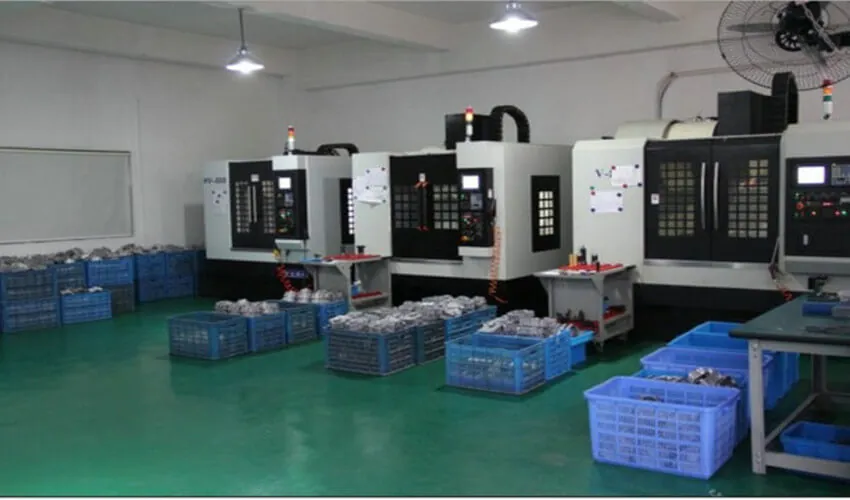
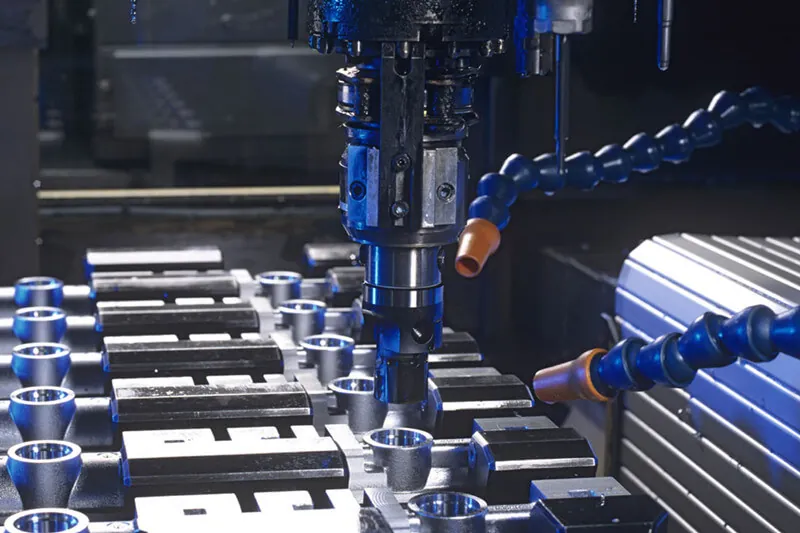
Our core manufacturing strength resides in advanced 5-axis CNC machining centers. Utilizing state-of-the-art equipment from leading OEMs like DMG MORI and Haas, we achieve complex geometries and tight tolerances unattainable with conventional 3-axis methods. This capability is essential for producing intricate mould cavities, cores, and precision alignment features found in multi-cavity or family moulds for silicone. Simultaneous 5-axis movement ensures superior surface integrity, minimizes secondary operations, and maintains exceptional geometric accuracy throughout the entire mould structure. Material removal strategies are optimized for hardened tool steels (such as H13, S7, and stainless variants) commonly used in silicone mould bases and inserts, ensuring thermal stability and resistance to the high temperatures and pressures of the liquid silicone rubber (LSR) injection process.

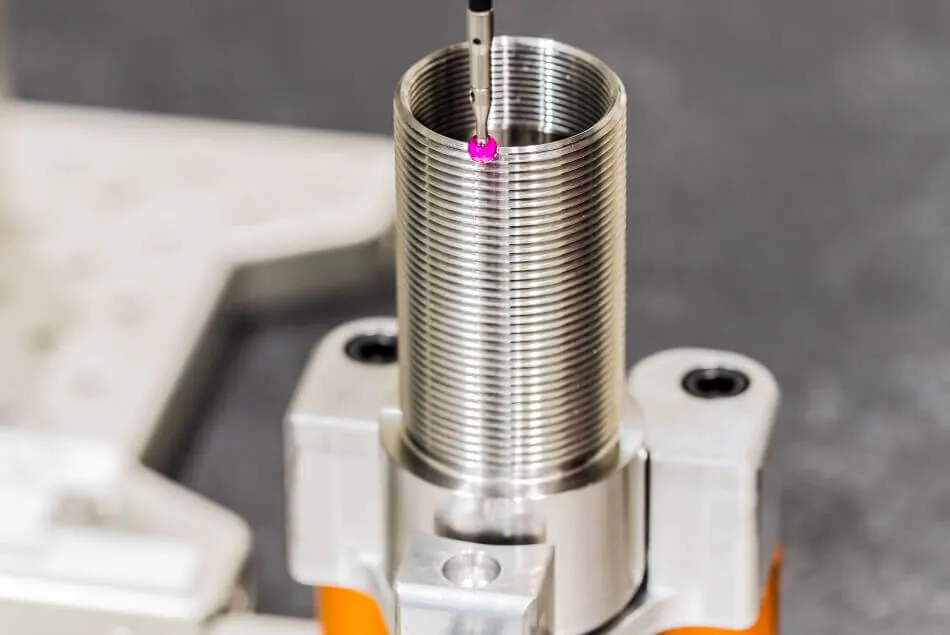
Rigorous quality control is non-negotiable. Every critical dimension and feature on mould components undergoes comprehensive verification using calibrated Coordinate Measuring Machines (CMM). Our Zeiss and Hexagon CMM systems provide metrology-grade validation against the original CAD model, confirming positional accuracy, form tolerances, and critical fit dimensions. This systematic inspection process guarantees that components meet the exacting specifications required for seamless mould assembly and flawless silicone part production, eliminating costly trial-and-error during mould commissioning.

The following table details the achievable geometric tolerances and surface finishes for critical mould features, reflecting our standard production capabilities under controlled environmental conditions:

Feature Type Dimensional Tolerance Geometric Tolerance (e.g., Flatness, Position) Surface Roughness (Ra)
Mould Base Plates ±0.010 mm 0.015 mm 0.8 µm
Cavity/Core Features ±0.005 mm 0.010 mm 0.4 µm
Alignment Pins/Bushings ±0.003 mm 0.005 mm (Position) 0.2 µm
Cooling Channels ±0.015 mm 0.020 mm (Straightness) 1.6 µm
Parting Line Surfaces ±0.005 mm 0.008 mm (Flatness) 0.4 µm

These capabilities translate directly into tangible benefits for your silicone moulding operation. Precise metal tooling ensures consistent cavity dimensions, minimizing flash and part variation. Optimized surface finishes promote clean part release and reduce silicone adhesion. Accurate alignment and thermal management features contribute to stable cycle times and extended mould service life. Partnering with Wuxi Lead Precision Machinery means your silicone rubber mould making kit is built on a foundation of verifiable, industrial-grade precision engineering. Contact our engineering team to discuss how our technical capabilities can be tailored to your specific moulding challenges and quality targets.


Material & Finish Options

silicone rubber mould making kit manufacturing

Material Selection for High-Performance Silicone Rubber Mould Making Kits

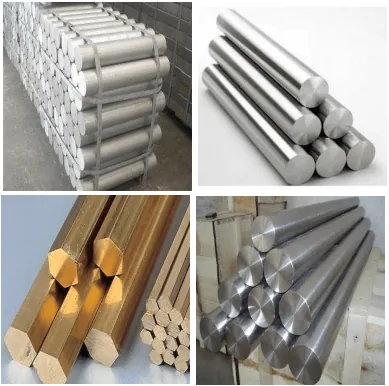
Selecting the appropriate base material for silicone rubber mould making kits is critical to ensuring long-term durability, dimensional accuracy, and production efficiency. At Wuxi Lead Precision Machinery, we specialize in custom metal manufacturing solutions tailored to high-precision industrial applications. Our expertise enables us to guide clients through optimal material choices—aluminum, steel, and titanium—each offering distinct advantages depending on production volume, part complexity, and environmental conditions.

Aluminum is widely preferred for prototyping and low-to-medium volume production due to its excellent machinability, lightweight nature, and superior thermal conductivity. These properties allow for faster cycle times and reduced energy consumption during curing processes. Grade 6061-T6 and 7075-T6 are commonly used for mould bases and inserts, providing a balanced combination of strength and corrosion resistance. When enhanced surface durability is required, aluminum components are often treated with hard anodizing, which increases surface hardness up to 60 HRC and improves wear resistance while maintaining dimensional stability.

Steel, particularly tool steels such as P20, H13, and S136, is the material of choice for high-volume silicone moulding operations. These alloys offer exceptional hardness, wear resistance, and longevity under repeated thermal cycling. Stainless steel variants like 1.2316 (S136) also provide superior resistance to corrosion—essential when processing silicone compounds that may release acidic byproducts during vulcanization. While steel moulds require longer machining times and higher tooling costs, their extended service life justifies the investment in large-scale manufacturing environments.

Titanium, though less common, is utilized in specialized applications where extreme corrosion resistance, high strength-to-density ratio, and biocompatibility are paramount. Grade 5 titanium (Ti-6Al-4V) is particularly suitable for medical-grade silicone moulding or aerospace components exposed to aggressive environments. Despite higher raw material and machining costs, titanium’s performance in critical applications makes it a strategic option for niche industrial sectors.

Surface finishing plays a crucial role in demoulding efficiency and final part quality. Anodizing, especially Type III (hard anodizing), is a standard post-processing treatment for aluminum moulds. It creates a dense, non-conductive oxide layer that resists galling and facilitates release without compromising tight tolerances.

The following table outlines key mechanical and thermal properties of commonly used materials in silicone rubber mould fabrication:

Material Hardness (HB) Tensile Strength (MPa) Thermal Conductivity (W/m·K) Common Applications Surface Treatment Options
Aluminum 6061-T6 95 310 167 Prototypes, low-volume production Hard anodizing, chromate conversion
Steel P20 290 980 30 High-volume moulds Nitriding, polishing, chrome plating
Steel H13 230 1,550 28 Hot-runner systems, inserts PVD coating, mirror polishing
Steel S136 250 1,200 22 Corrosion-resistant moulds Electropolishing, passivation
Titanium Ti-6Al-4V 360 900 7 Medical, aerospace components Anodizing, plasma nitriding

At Wuxi Lead Precision Machinery, we integrate material science with precision engineering to deliver silicone rubber mould making kits that meet the highest industrial standards. Our technical team supports clients in selecting the optimal material and finish based on application requirements, ensuring reliability, repeatability, and cost-efficiency across production cycles.


Manufacturing Process & QC

silicone rubber mould making kit manufacturing

Silicone Rubber Mold Production Process: Zero Defects Execution

Wuxi Lead Precision Machinery implements a rigorously controlled production sequence for custom silicone rubber mold making kits, ensuring absolute dimensional fidelity and process reliability from concept to volume output. Our integrated workflow eliminates defects through systematic validation at each critical phase, leveraging advanced CNC capabilities and metrology.

The Design phase begins with comprehensive client requirement analysis, translating part geometry and material specifications into optimized mold architecture. Our engineering team utilizes Siemens NX CAD/CAM software to model core/cavity inserts, cooling channels, and ejection systems, performing virtual flow analysis and thermal simulation. Critical factors like parting line placement, venting strategy, and gate design are finalized to prevent weld lines, incomplete fills, or excessive flash. All design outputs undergo stringent DFM review against ISO 2768-mK tolerances before release, ensuring manufacturability and eliminating downstream rework triggers.

Prototyping transitions the validated design into physical reality using our HAAS UMC-750 5-axis machining centers. Mold bases are precision milled from pre-hardened H13 tool steel (40-44 HRC), while cavity inserts utilize S136 stainless steel for superior corrosion resistance and polishability. Each prototype undergoes rigorous functional testing on our in-house 100T hydraulic press, replicating production parameters. Silicone material flow, cure cycles, and ejection dynamics are meticulously measured. Any deviations from CAD nominal values exceeding ±0.02mm trigger immediate design iteration. This closed-loop validation guarantees the prototype achieves >99.5% first-pass yield before mass production sign-off.

Mass Production deployment utilizes our standardized, error-proofed manufacturing cells. CNC programs are locked post-prototype approval, with automated tool length compensation and in-process probing on DMG MORI CTX beta 1250 machines ensuring consistent feature accuracy. Every mold component undergoes 100% CMM inspection against the approved prototype, with critical dimensions like cavity depth and runner diameter verified to ±0.01mm. Final assembly includes pressure decay testing of cooling circuits and surface roughness validation (Ra ≤ 0.05µm on cavity faces). Kits ship with full traceability documentation, including material certs and first-article inspection reports compliant with AS9100D standards.

Critical Mold Specification Parameters

Parameter Standard Production Premium Production
Cavity Tolerance ±0.025 mm ±0.010 mm
Surface Finish (Ra) 0.10 µm 0.05 µm
Tool Steel Grade H13 (40-44 HRC) S136 ESR (50-52 HRC)
Max Cavity Count 16 32
Thermal Stability 200°C continuous 250°C continuous
Lead Time (Prototyping) 15 working days 10 working days

This disciplined progression from virtual design through validated prototyping to defect-immune mass production forms the cornerstone of Wuxi Lead’s zero-defect commitment. Each mold kit delivers repeatable part quality, maximizing client uptime and minimizing total cost of ownership in high-integrity silicone manufacturing applications.


Why Choose Wuxi Lead Precision

Partner with Lead Precision for Advanced Silicone Rubber Mould Making Solutions

At Wuxi Lead Precision Machinery, we specialize in delivering high-performance, custom-engineered solutions for precision manufacturing industries worldwide. As a trusted leader in custom metal manufacturing, we extend our expertise into the development of advanced silicone rubber mould making kits—engineered for accuracy, durability, and repeatable performance. Whether you are producing intricate prototypes, low-volume production parts, or complex industrial components, our integrated systems and technical support ensure you achieve optimal results from the first pour to final production.

Our silicone rubber mould making kits are not off-the-shelf solutions. They are precision-tailored systems developed in collaboration with your engineering team, incorporating high-grade materials, CNC-machined mould bases, temperature-stable housings, and compatibility with a wide range of silicone formulations. Designed for use in aerospace, medical device manufacturing, automotive R&D, and electronics, our kits support tight-tolerance applications where consistency and material integrity are non-negotiable.

What sets Lead Precision apart is our end-to-end engineering partnership. From initial design consultation to final validation, our team of CNC specialists, tooling engineers, and materials experts work alongside yours to optimize every phase of the mould making process. We integrate advanced simulation software to predict material flow and curing behavior, minimizing defects and reducing time-to-market. Our in-house manufacturing capabilities, including 5-axis CNC machining and precision EDM, ensure that every component of your mould kit meets stringent quality standards.

We understand that reliability in silicone moulding begins with precision engineering. That’s why every kit we deliver is backed by rigorous quality control, dimensional inspection reports, and full traceability of materials. Our systems are designed for seamless integration into existing production workflows, supporting automation-ready setups and repeatable cycle performance under demanding conditions.

Below are the key technical specifications of our standard silicone rubber mould making kit configurations. Custom modifications are available based on project requirements.

Specification Standard Range Custom Options
Mould Base Material H13, P20, or 420 Stainless Steel Tool Steel Alloys, Hardened to 52 HRC
Tolerance ±0.005 mm ±0.002 mm with CMM Certification
Surface Finish Ra 0.4 µm (Polished) Mirror Finish (Ra 0.05 µm)
Heating System Cartridge Heaters, PID Controlled Integrated Thermal Channels
Cooling Channels CNC-Drilled, Interlocked Design Conformal Cooling with CFD Validation
Compatibility HTV, LSR, Fluorosilicone High-Tear-Strength & Medical-Grade
Frame Type Modular, Quick-Change Fully Automated Clamp System

Partnering with Wuxi Lead Precision Machinery means gaining more than a supplier—you gain a strategic manufacturing ally. We are committed to supporting your innovation with scalable, precision-driven solutions that meet the highest global standards.

For technical inquiries, project consultation, or to request a custom quote, contact us today at [email protected]. Let Lead Precision power your next breakthrough in silicone moulding technology.


⚙️ Precision Cost Estimator

Estimate relative manufacturing effort based on tolerance.

Silicone Rubber Mould Making Kit Manufacturer | Precision CNC Guide

Contents of Table

Contact [email protected] Whatsapp 86 15951276160