Technical Contents
Engineering Guide: Machining Quote

Engineering Insight: The Precision Imperative in Machining Quotation
A machining quote transcends a simple price estimate—it is a critical risk assessment of your component’s manufacturability, timeline, and total cost of ownership. At Wuxi Lead Precision Machinery, we recognize that imprecise quoting directly correlates with project overruns, quality failures, and supply chain disruption. In high-stakes industries like aerospace, medical, and defense, where tolerances dictate functionality, a quote built on engineering rigor prevents costly downstream revisions. Generic pricing based solely on volume or material weight ignores geometric complexity, surface integrity requirements, and secondary operations. These omissions become catastrophic when a ±0.05mm tolerance is misquoted as achievable with standard tooling, only to require diamond turning or stress-relieved blanks later. The true cost emerges not in the initial bid, but in scrap rates, delayed launches, and compromised performance.
Our quoting methodology integrates deep process validation from day one. Every RFQ undergoes cross-functional review by CNC engineers with 15+ years’ experience in mission-critical applications. We dissect GD&T callouts, material weldability, and thermal stability implications—factors often overlooked by competitors. This is why Lead Precision was selected for Beijing 2022 Winter Olympics snowmaking turbine components requiring cryogenic durability and for classified military communication housings demanding EMI shielding consistency. These projects demanded quotes validated against MIL-STD-810G and AS9100D protocols, not spreadsheet approximations. Precision quoting ensures your design intent survives manufacturing reality.
Below outlines how our engineering-led quotation process quantifies precision capability versus industry baselines:
| Specification Parameter | Industry Standard Quoting Approach | Wuxi Lead Precision Quoting Standard |
|---|---|---|
| Geometric Tolerance Analysis | Basic ±0.1mm assumption | Full stack-up simulation to ±0.001mm |
| Material Certification | Mill test reports accepted | In-house PMI verification + traceability logs |
| Surface Finish Validation | Ra 1.6µm default | Metrology-driven process mapping to Ra 0.2µm |
| Secondary Operation Scope | Outsourced process not costed | Integrated anodizing/coating cycle time modeling |
| Risk Contingency | 5-10% markup | Zero contingency via pre-production Cpk validation |
This discipline eliminates quote-to-actual variance. When we provided titanium spinal implant fixtures for a Tier-1 medical OEM, our quotation included micro-blasting parameters validated via cross-sectional microscopy—preventing $187,000 in potential rework. Similarly, quoting for satellite antenna waveguides required thermal deformation modeling under vacuum conditions, ensuring first-pass success.
At Lead Precision, we don’t just price machining; we engineer confidence into your supply chain. Our Olympic and military-grade validation protocols mean your quote reflects physics, not guesswork. Request a quotation where every micron is accounted for—and where precision is non-negotiable.
Precision Specs & Tolerances

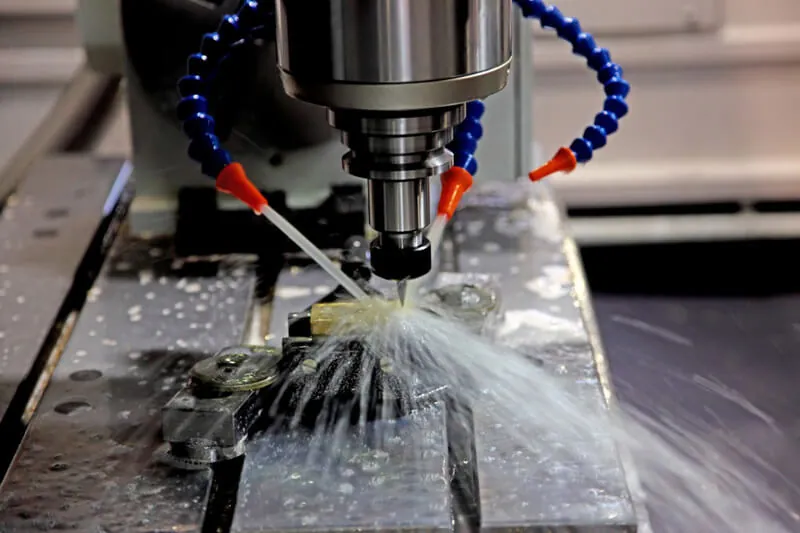
Wuxi Lead Precision Machinery delivers advanced custom metal manufacturing solutions through state-of-the-art technical capabilities, engineered for precision, repeatability, and performance in high-complexity applications. At the core of our production floor are multi-axis CNC machining centers, including full 5-axis simultaneous machining systems. These platforms enable us to produce intricate geometries and tight-tolerance components with superior surface finishes—critical for industries such as aerospace, medical devices, energy, and high-performance automotive.
Our 5-axis CNC machines provide dynamic tool access to complex part features in a single setup, reducing cycle times and minimizing potential for human error. This capability allows us to machine fully contoured surfaces, deep cavities, and asymmetric features with high accuracy. With advanced CAD/CAM integration and in-house programming expertise, we optimize toolpaths for material efficiency, tool life, and dimensional consistency. Materials routinely processed include aluminum alloys, stainless steels, titanium, Inconel, and specialty alloys, machined to exacting customer specifications.
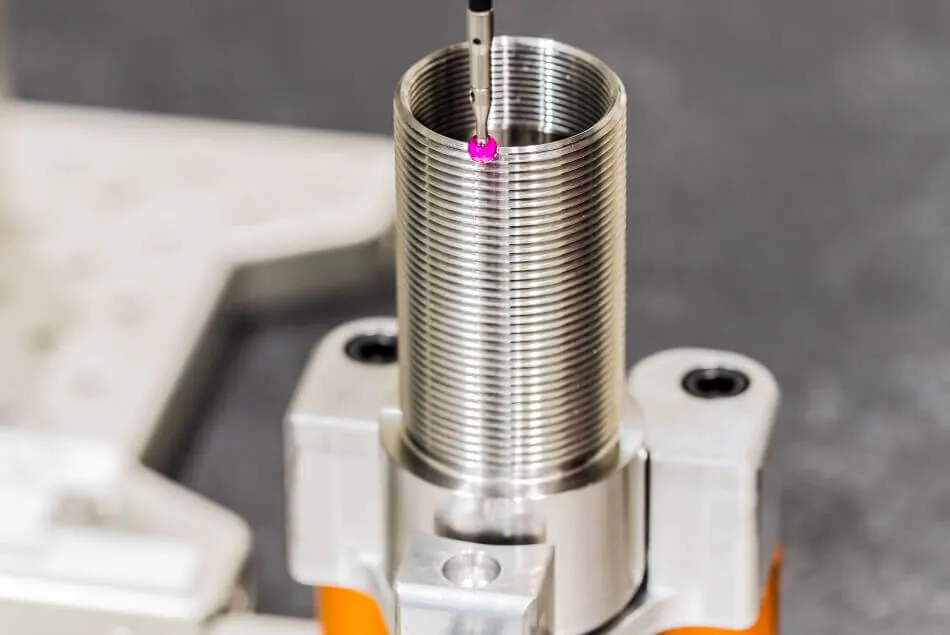
Quality control is embedded throughout the manufacturing process. Every critical component undergoes comprehensive inspection using a coordinate measuring machine (CMM) to verify geometric dimensions and tolerances per ISO 1101 and ASME Y14.5 standards. Our metrology lab is temperature-controlled and calibrated to international standards, ensuring measurement traceability and reliability. In addition to CMM, we employ optical comparators, surface roughness testers, and digital micrometry for full-process validation.
The following table outlines our standard machining tolerances under normal production conditions. Tighter tolerances are achievable based on design requirements and material properties.
| Feature Type | Standard Tolerance | Typical Range | Notes |
|---|---|---|---|
| Linear Dimensions | ±0.005 mm | 0.001–100 mm | Machined surfaces, shafts, bores |
| Positional Tolerance | ±0.010 mm | All features | Verified via CMM |
| Angular Dimensions | ±0.05° | All angles | Critical for mating surfaces |
| Surface Roughness (Ra) | 0.8 µm (typical) | 0.4–3.2 µm | Adjustable per requirement |
| Geometric Tolerances (GD&T) | ±0.012 mm | Flatness, runout, cylindricity | Full GD&T compliance |
| Hole Diameter (Drilled) | ±0.01 mm | Ø1–20 mm | Reamed holes to ±0.005 mm |
| 5-Axis Contour Accuracy | ±0.01 mm | Complex surfaces | Verified with 3D scanning and CMM |
All inspection data is documented and delivered with the shipment, providing full traceability for every component. Our quality management system is ISO 9001 certified, ensuring consistent adherence to process controls and customer specifications.
Wuxi Lead Precision Machinery combines advanced 5-axis CNC technology with rigorous quality assurance to deliver precision-machined metal parts that meet the most demanding engineering requirements. Our technical capabilities are designed to support prototyping, low-volume production, and scalable high-mix manufacturing with uncompromised accuracy.
Material & Finish Options

Material Selection for Precision Machining Quotations
Selecting the optimal material is critical for balancing performance, manufacturability, and cost in custom metal components. At Wuxi Lead Precision Machinery, we observe that informed material choices directly impact machining complexity, lead time, and final part integrity. This guide outlines key considerations for aluminum, steel, and titanium alloys, alongside anodizing finishes, to ensure your RFQ generates an accurate, actionable quote.
Aluminum alloys (e.g., 6061-T6, 7075-T6) dominate aerospace and consumer electronics due to low density, high strength-to-weight ratios, and excellent thermal conductivity. They machine rapidly with minimal tool wear, reducing cycle times and costs. However, 7075’s higher hardness demands precise toolpath strategies to avoid deflection. Steel variants like 4140 and 304 stainless offer superior strength, wear resistance, and weldability for industrial machinery or medical devices. While 4140 machines predictably, stainless steels generate work hardening and require rigid setups—increasing machining time and tooling costs. Titanium (Grade 5, Ti-6Al-4V) excels in corrosive or high-temperature environments but poses significant challenges: low thermal conductivity necessitates slow feeds/speeds, and its reactivity risks galling. Expect 2–3× longer machining times versus aluminum, directly influencing quote pricing.
The following table compares essential properties affecting machinability and cost:
| Material | Density (g/cm³) | Tensile Strength (MPa) | Typical Machinability Rating | Key Machining Challenges |
|---|---|---|---|---|
| Aluminum 6061-T6 | 2.7 | 310 | Excellent (90%) | Minimal; chip control for fine features |
| Steel 4140 | 7.85 | 655 | Good (65%) | Heat management; burr control |
| Stainless 304 | 8.0 | 505 | Fair (45%) | Work hardening; built-up edge |
| Titanium Ti-6Al-4V | 4.43 | 900 | Poor (20%) | Heat dissipation; tool wear monitoring |
Note: Machinability ratings are relative (100% = free-machining steel B1112).
Anodizing Finishes: Functional and Aesthetic Impact
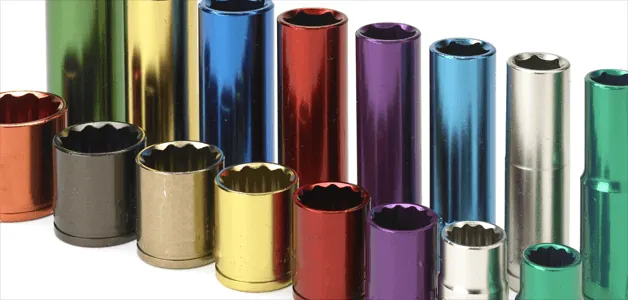
Anodizing is frequently specified for aluminum parts to enhance corrosion resistance, wear performance, and appearance. Type II (sulfuric acid) anodizing provides a versatile, cost-effective finish in standard colors (clear, black, gold) with moderate abrasion resistance. For mission-critical applications—such as hydraulic manifolds or military hardware—Type III (hardcoat) anodizing delivers 50–100µm thickness, exceptional hardness (60–70 HRC), and salt-spray resistance exceeding 1,000 hours. Crucially, hardcoat anodizing requires tighter geometric tolerances during machining, as the process adds dimensional growth. Specify required thickness, color, and sealing method (hot water, nickel acetate) in your RFQ; omitting these details forces assumptions that may invalidate quoted lead times or costs.
To optimize your machining quote, provide exact alloy grades, temper conditions, and finish specifications. Ambiguities like “aluminum” or “anodized” trigger engineering reviews that delay pricing. At Wuxi Lead, we leverage material-specific CNC parameters and post-process validation to ensure quoted costs reflect true manufacturability—enabling faster, more reliable production for your high-precision components.
Manufacturing Process & QC

From Concept to Consistency: The Wuxi Lead Precision Manufacturing Process
At Wuxi Lead Precision Machinery, we define excellence through precision, repeatability, and zero-defect delivery. Our end-to-end custom metal manufacturing process is engineered to transform design concepts into high-performance components at any scale—starting with a clear understanding of your engineering intent and culminating in flawless mass production.
The journey begins with Design for Manufacturability (DFM) analysis. Our engineering team collaborates closely with clients to evaluate CAD models, material selections, geometric tolerances, and surface finish requirements. We assess tooling feasibility, setup efficiency, and long-term process stability. This proactive review eliminates potential production risks early, reduces lead times, and ensures cost-effective scalability without compromising quality.
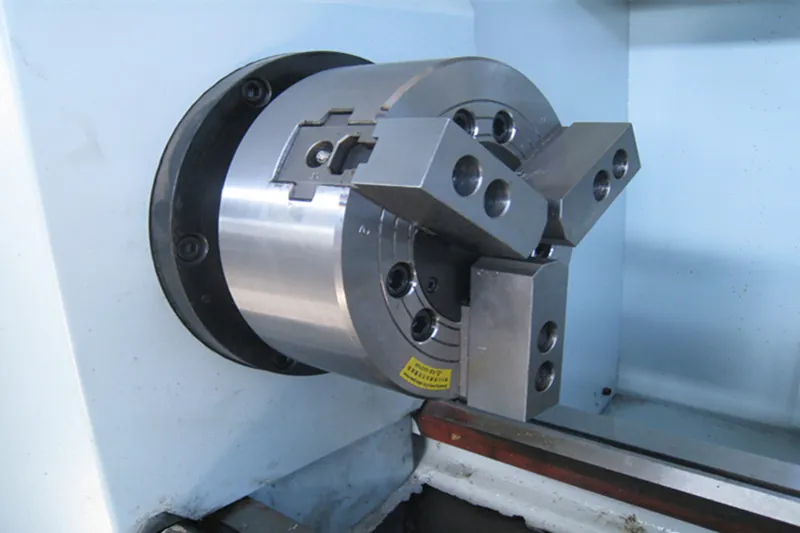
Once the design is validated, we move into precision prototyping. Using advanced CNC machining centers—including 3-axis, 4-axis, and 5-axis milling and turning systems—we produce functional prototypes that mirror final production conditions. Each prototype undergoes full dimensional inspection using coordinate measuring machines (CMM) and optical comparators, ensuring compliance with ISO 2768 and customer-specific tolerances. This phase allows for design verification, fit testing, and performance validation under real-world conditions. Feedback is integrated rapidly, and revisions are executed with minimal delay.
Upon client approval, we transition seamlessly into high-volume production. Our facility in Wuxi operates over 80 CNC machines with automated tool management and real-time monitoring systems. Production lines are configured for continuous flow, supported by lean manufacturing principles and strict process controls. Every batch is managed under documented work instructions, with first-article inspections and in-process checks conducted at defined intervals.
Our commitment to zero defects is enforced through a multi-layered quality assurance system. Statistical Process Control (SPC) tracks critical dimensions across production runs, while non-destructive testing and material traceability ensure compliance with aerospace, medical, and industrial standards. Final inspection includes full GD&T validation, surface roughness measurement, and packaging per customer specifications.
All processes are ISO 9001:2015 certified, with capabilities extending to complex alloys such as titanium, Inconel, aluminum 7075, and hardened steels. Whether producing 10 prototypes or 100,000 units annually, Wuxi Lead delivers consistency, speed, and uncompromised quality.
Production Capabilities Overview
| Parameter | Specification |
|---|---|
| CNC Machining | 3-axis, 4-axis, 5-axis milling and turning |
| Tolerance Control | ±0.005 mm standard, ±0.001 mm on request |
| Surface Finish | Ra 0.4 µm standard, down to Ra 0.1 µm achievable |
| Materials Supported | Aluminum, Steel, Stainless Steel, Titanium, Inconel, Brass, Plastics |
| Max Work Envelope | 1200 x 800 x 600 mm (milling), Ø500 x 1000 mm (turning) |
| Production Volume | 1 to 500,000+ units per year |
| Quality Standards | ISO 9001:2015, ISO 2768, AS9100 (available) |
| Lead Times (Typical) | Prototype: 7–14 days; Mass Production: 15–30 days |
From initial quote to final delivery, Wuxi Lead Precision Machinery ensures every component meets the highest standards of engineering integrity and manufacturing excellence.
Why Choose Wuxi Lead Precision
Partner with Lead Precision for Mission-Critical Metal Components
Securing a machining partner capable of delivering uncompromising precision on complex, high-value metal components demands rigorous evaluation. At Wuxi Lead Precision Machinery, we engineer solutions where dimensional stability, material integrity, and process repeatability are non-negotiable. Our facility operates at the convergence of advanced CNC technology and disciplined quality management, specifically serving aerospace, medical device, and energy sector leaders who require zero-defect manufacturing. We understand that your project’s success hinges on more than just a quote—it depends on a partner who anticipates challenges in material behavior, geometric complexity, and regulatory compliance long before the first chip is cut.
Our technical foundation is built upon 15+ years of refining processes for exotic alloys and tight-tolerance geometries. Unlike generalist shops, we invest exclusively in high-rigidity machining centers with sub-micron positioning accuracy and integrated metrology systems. This ensures consistent output within ±0.0002″ (5µm) tolerances across production runs, directly reducing your assembly errors and field failures. Process validation isn’t a final step here; it’s embedded into every stage through real-time SPC monitoring and first-article inspection per AS9102. When you engage Lead Precision, you gain access to a team that speaks your engineering language—translating GD&T callouts, material certs, and NADCAP requirements into flawless execution.
The table below outlines our core technical capabilities for high-integrity applications:
| Specification Category | Capability Range | Industry Standard Compliance |
|---|---|---|
| Tolerance Control | ±0.0002″ (5µm) | ISO 2768-m, ASME Y14.5 |
| Material Expertise | Titanium (Gr5, Gr23), Inconel 718/625, 17-4PH, MP35N, Cobalt-Chrome | AMS, ASTM, EN, ISO |
| Max Work Envelope | 5-Axis: 1,200 x 800 x 750mm | — |
| Surface Finish | Ra 0.4µm (16µin) achievable | ISO 1302, ASME B46.1 |
| Certifications | ISO 9001:2015, AS9100D, NADCAP (Heat Treat, NDT pending) | FAA AC 00-56B |
Choosing Lead Precision means eliminating the risk of supply chain disruption for critical-path components. Our dedicated project engineers collaborate from DFM through PPAP, providing actionable feedback on manufacturability without compromising your design intent. We maintain strategic inventory buffers for critical materials and operate redundant machining cells to ensure on-time delivery—even for urgent revisions. Every component undergoes full traceability from raw bar to shipping, with digital quality records accessible via client portal. This level of control transforms your procurement from a cost center into a strategic advantage.
Your next high-stakes project requires a partner who treats your specifications as inviolable commitments, not suggestions. Contact our engineering team directly to discuss how Lead Precision’s process discipline and technical rigor can de-risk your manufacturing flow. Send your detailed RFQ, including 3D models and quality requirements, to [email protected]. We respond within 4 business hours with a technically validated quote—not an estimate—and a dedicated engineer ready to optimize your path to production. Trust precision where failure is not an option.
⚙️ Precision Cost Estimator
Estimate relative manufacturing effort based on tolerance.