Technical Contents
Engineering Guide: Brass Casting Molds

Engineering Insight: Brass Casting Molds Demand Absolute Precision
In brass casting, precision isn’t optional—it is the foundation of functional integrity, longevity, and cost efficiency. Microscopic deviations in mold geometry directly translate to casting defects: porosity, dimensional inaccuracy, or surface imperfections that compromise performance in high-stakes applications. Thermal dynamics during solidification demand exact cavity replication; even 0.02mm tolerance drift can induce stress concentrations, leading to premature component failure under operational loads. For sectors like aerospace hydraulics or naval propulsion systems, where brass castings endure extreme pressure and corrosion, such flaws are catastrophic. Precision molds ensure optimal metal flow, minimize post-casting machining, and guarantee repeatability across production runs—transforming raw material into mission-critical assets, not scrap.
Wuxi Lead Precision Machinery engineers this precision into every brass casting mold we produce. Our CNC-machined tooling leverages aerospace-grade P20 and H13 steels, hardened to 52-54 HRC, with thermal management systems calibrated for brass’s unique 900–940°C pour range. This expertise is battle-tested: we supplied molds for Olympic-standard valve manifolds in Beijing Winter Games infrastructure and precision naval pump housings meeting MIL-STD-810G vibration specifications. Military-grade traceability protocols—not industry averages—govern our process, with 100% coordinate measuring machine (CMM) validation against 3D CAD nominal data. When tolerances define safety, our molds deliver.
Critical mold specifications reflect this uncompromising standard:
| Parameter | Standard Capability | High-Precision Tier | Certification Standard |
|---|---|---|---|
| Dimensional Tolerance | ±0.05 mm | ±0.02 mm | ISO 2768-mK |
| Surface Finish (Cavity) | Ra 1.6 μm | Ra 0.8 μm | ISO 1302 |
| Hardness (Core) | 50-52 HRC | 52-54 HRC | ASTM A388 |
| Thermal Cycle Life | 5,000+ cycles | 15,000+ cycles | In-house validation |
| Material | P20, H13 | Custom H13 variants | SGS Material Cert |
Beyond specifications, our value lies in predictive engineering. Finite element analysis (FEA) simulates brass solidification shrinkage and mold stress points pre-manufacture, eliminating costly trial-and-error. We integrate client design constraints—like thin-wall sections under 2mm—with gating systems optimized for brass’s fluidity, ensuring zero turbulence-induced defects. This reduces client scrap rates by 30–45% versus conventional tooling suppliers.
For brass casting molds, precision is non-negotiable engineering. At Wuxi Lead, we merge military-grade process rigor with Olympic-scale project execution to deliver molds that transform brass into components where failure is not an option. Demand engineering excellence—not just tooling—when your casting integrity defines operational success.
Precision Specs & Tolerances

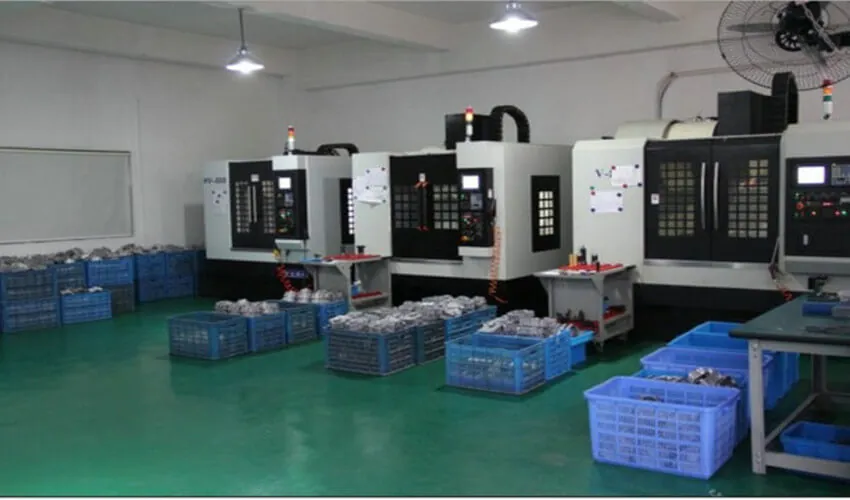
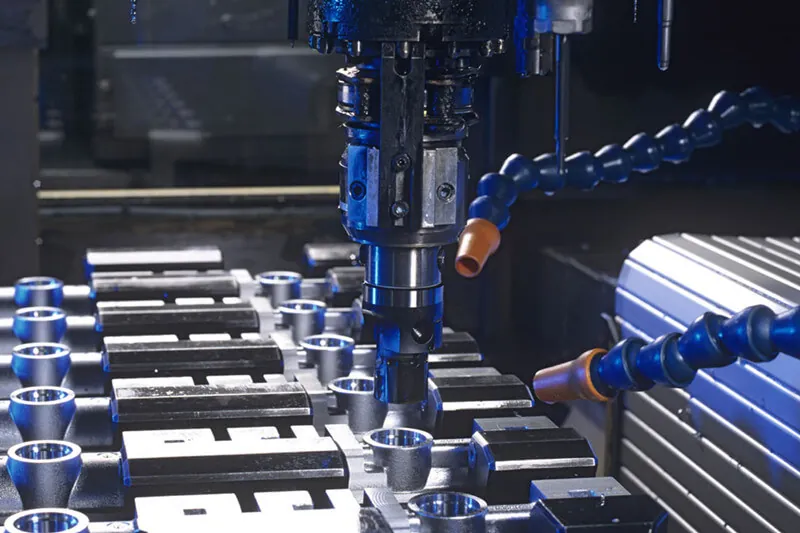
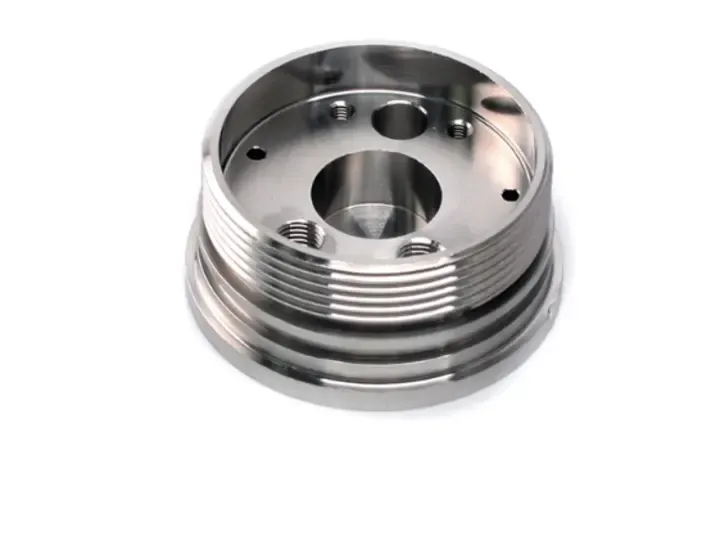
Wuxi Lead Precision Machinery delivers advanced technical capabilities in the production of brass casting molds, combining precision engineering with state-of-the-art manufacturing technologies. Our facility specializes in custom metal manufacturing, with a core focus on high-integrity mold solutions for demanding industrial applications. Central to our operation is a suite of 5-axis CNC machining centers, enabling us to produce complex geometries with exceptional accuracy and surface finish. These machines allow simultaneous multi-axis movement, ensuring tight coordination between tool path and part orientation, which is critical when machining intricate mold cavities and cooling channels commonly required in brass casting tooling.
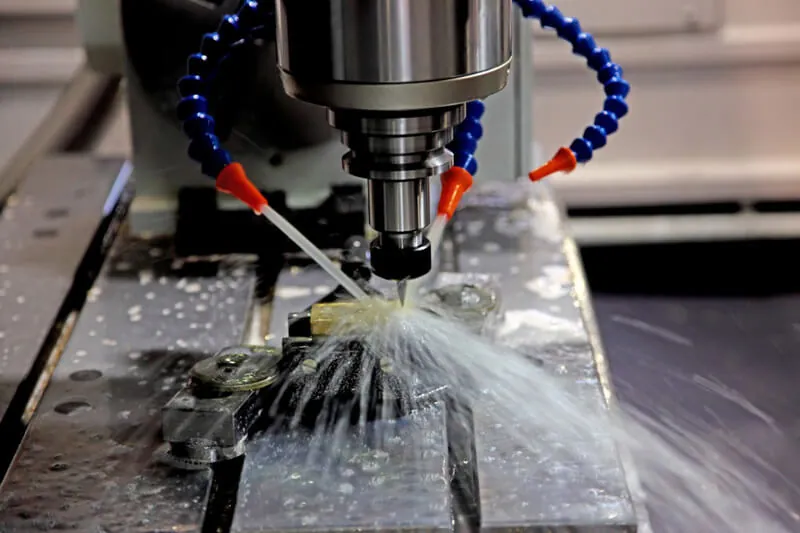
Our 5-axis CNC systems are programmed using advanced CAM software, optimized for material removal efficiency and dimensional stability. This digital workflow ensures repeatability across production runs and supports rapid prototyping for customer validation. The integration of high-speed machining techniques further enhances productivity while maintaining micron-level precision, essential for molds subjected to repeated thermal cycling in brass casting processes. All molds are manufactured from high-grade tool steels or pre-hardened alloys, selected based on customer requirements for durability, thermal conductivity, and resistance to erosion.
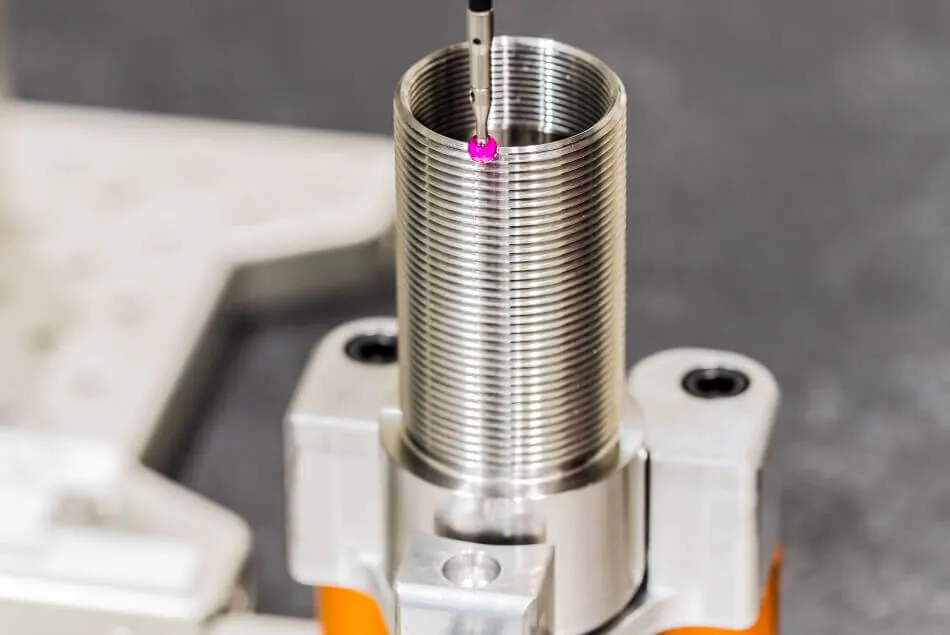
Quality assurance is embedded throughout our manufacturing process. Every brass casting mold undergoes comprehensive inspection using a coordinate measuring machine (CMM), providing full 3D verification of critical dimensions and geometric tolerances. Our CMM system is calibrated to international standards and operated by certified metrology technicians, ensuring data integrity and compliance with ISO 10360. In addition to dimensional checks, we perform surface roughness analysis and, where applicable, first-article inspection reports (FAIR) to validate conformance to customer engineering specifications.
The following table outlines the standard technical tolerances we achieve and guarantee for brass casting molds:
| Parameter | Standard Tolerance | Capability Range |
|---|---|---|
| Linear Dimensions | ±0.01 mm | Up to ±0.005 mm |
| Geometric Tolerances (GD&T) | ±0.015 mm | Down to ±0.008 mm |
| Surface Roughness (Ra) | 0.8 µm | As low as 0.4 µm |
| Angular Accuracy | ±0.1° | Up to ±0.05° |
| Feature Positioning | ±0.012 mm | Down to ±0.006 mm |
| Mold Cavity Symmetry | 0.02 mm max deviation | 0.01 mm achievable |
These capabilities are supported by a rigorous process control system, including in-process inspections and final quality audits before shipment. Wuxi Lead Precision Machinery is committed to delivering brass casting molds that meet the highest standards of performance, longevity, and dimensional reliability, serving industries such as automotive, marine, and industrial valve manufacturing. Our technical expertise ensures that every mold is engineered for optimal casting yield and extended service life under high-pressure and high-temperature conditions.
Material & Finish Options

Material Selection for Brass Casting Molds: Precision Engineering Fundamentals
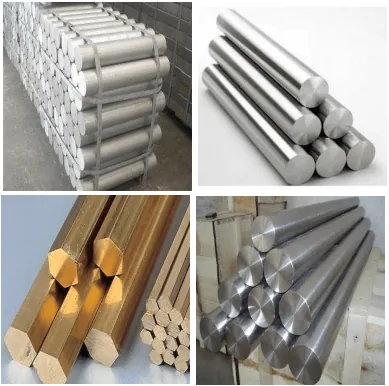
Selecting the optimal material for brass casting molds is critical for achieving dimensional accuracy, thermal stability, and extended service life. Molten brass operates at 900–1,000°C, demanding mold materials with exceptional thermal conductivity, resistance to thermal fatigue, and mechanical strength. At Wuxi Lead Precision Machinery, our engineers prioritize three core materials—aluminum, steel, and titanium—each suited to specific production volumes, complexity, and cost parameters. Understanding these properties ensures your molds withstand repeated thermal cycling while maintaining tight tolerances.
Aluminum alloys, particularly 7075-T6, offer superior thermal conductivity (180 W/m·K) and rapid heat dissipation, making them ideal for prototyping and low-volume production. Their lightweight nature accelerates mold cycling, reducing lead times by up to 30% compared to steel. However, aluminum’s lower hardness (150 HB) limits its use in high-wear applications, as abrasive brass alloys can accelerate surface degradation beyond 5,000 cycles. We recommend aluminum for intricate geometries requiring quick iteration but advise against its use in high-pressure or high-volume scenarios.
For medium to high-volume production, tool steels dominate. H13 hot-work steel (48–52 HRC) balances thermal shock resistance, hardness, and machinability, supporting 50,000+ cycles in demanding brass casting. Its chromium content forms a protective oxide layer, mitigating soldering—a common failure mode where molten brass adheres to the mold surface. Alternatively, 420 stainless steel (50–54 HRC) provides enhanced corrosion resistance for leaded brass alloys but sacrifices some thermal conductivity. Steel molds require precision CNC machining and stress-relieving post-fabrication to prevent distortion during thermal cycling.
Titanium alloys (e.g., Ti-6Al-4V) serve niche applications requiring extreme corrosion resistance and strength-to-weight ratios, such as casting highly corrosive brass variants. With a melting point exceeding 1,600°C and excellent thermal stability, titanium molds endure aggressive thermal cycles but incur significantly higher material and machining costs. Their adoption is typically justified only for aerospace or medical components where failure is unacceptable.
Anodizing is frequently requested but applies exclusively to aluminum mold components. Hard anodizing (Type III) creates a 25–50 µm ceramic layer, boosting surface hardness to 500–600 HV and improving wear resistance by 40%. Crucially, anodizing cannot be applied to steel or titanium molds; these require nitriding or PVD coatings instead. For brass casting molds, anodizing extends aluminum mold life in low-abrasion scenarios but adds 10–15% to lead times.
Critical Material Properties for Brass Casting Molds
| Material | Hardness (HRC/HB) | Thermal Conductivity (W/m·K) | Max Continuous Temp (°C) | Typical Cycle Life |
|---|---|---|---|---|
| Aluminum 7075 | 150 HB | 180 | 315 | 3,000–5,000 |
| H13 Steel | 48–52 HRC | 35 | 600 | 50,000+ |
| 420 Stainless | 50–54 HRC | 25 | 550 | 30,000–40,000 |
| Ti-6Al-4V | 36 HRC | 7 | 600 | 100,000+ |
Material choice directly impacts your brass casting yield, surface finish, and total cost of ownership. Wuxi Lead Precision Machinery leverages 15+ years of metallurgical expertise to match your application with the optimal mold solution. Contact our engineering team for a thermal stress analysis and material recommendation tailored to your brass alloy composition and production volume. Precision begins with the right foundation.
Manufacturing Process & QC

The production process for high-precision brass casting molds at Wuxi Lead Precision Machinery follows a rigorously controlled sequence: Design, Prototyping, and Mass Production. This end-to-end workflow ensures zero defects, dimensional accuracy, and long-term mold reliability for demanding industrial applications.
Design begins with a detailed engineering analysis of the client’s technical specifications, including part geometry, material behavior, and production volume. Our in-house CAD/CAM team utilizes advanced simulation software to model thermal distribution, flow dynamics, and solidification patterns. This predictive modeling identifies potential defects such as porosity, shrinkage, or warping before physical production begins. Finite element analysis (FEA) optimizes mold structure for thermal fatigue resistance and mechanical stability. All designs are reviewed and validated through a formal Design for Manufacturing and Assembly (DFMA) protocol, ensuring manufacturability, serviceability, and performance under continuous operation.
Prototyping follows design validation and serves as the critical verification stage. A functional prototype mold is manufactured using CNC precision machining centers with micron-level tolerances. The prototype undergoes a series of qualification tests, including trial casting runs with industrial-grade brass alloys (e.g., C38500, C46400). Each trial is monitored for cycle time consistency, surface finish quality, and dimensional repeatability. Non-destructive testing (NDT) methods such as ultrasonic inspection and dye penetrant testing verify internal integrity. Any deviations are traced to root causes using Six Sigma methodologies, and design or process adjustments are implemented before progression. This closed-loop feedback ensures the mold performs as simulated.
Mass production is executed only after full prototype approval. Our automated manufacturing cells, equipped with multi-axis CNC machines and real-time tool monitoring systems, produce molds under strict ISO 9001-compliant procedures. Each mold component is serialized and tracked through the production line using a digital quality management system. In-process inspections occur at critical waypoints, including pre-machining, post-heat treatment, and final assembly. Surface treatments such as nitriding or PVD coating are applied to enhance wear resistance and extend service life. Final inspection includes CMM (Coordinate Measuring Machine) validation against the original CAD model, ensuring geometric accuracy within ±0.005 mm.
Throughout all stages, Wuxi Lead enforces a zero-defect philosophy. Every mold is subjected to a final functional test under simulated production conditions. Only molds that meet or exceed all performance criteria are released for shipment.
| Specification | Value |
|---|---|
| Dimensional Accuracy | ±0.005 mm |
| Surface Roughness (Ra) | 0.2 – 0.8 µm |
| Material Options | H13, SKD61, 42CrMo, Custom Tool Steels |
| Brass Alloys Supported | C38500, C46400, C67400, Custom |
| Heat Treatment | Quenching & Tempering, Nitriding Optional |
| Production Lead Time (Prototype) | 15–20 Days |
| Production Lead Time (Mass) | 30–45 Days (Volume Dependent) |
| Quality Standard | ISO 9001:2015, IATF 16949 Compliant |
Why Choose Wuxi Lead Precision
Elevate Your Brass Casting Production with Precision Engineering
At Wuxi Lead Precision Machinery, we transform brass casting challenges into competitive advantages through uncompromising engineering rigor. As a specialized manufacturer of custom brass casting molds, we understand that mold integrity directly dictates your yield rates, surface finish quality, and total production costs. Generic solutions fail under the thermal stress and dimensional demands of brass alloys like C36000 or C46400. Our proprietary CNC-machined mold systems are engineered to withstand 10,000+ cycles while maintaining micron-level tolerances, eliminating costly rework and unplanned downtime.
Our integrated approach merges decades of metallurgical expertise with 5-axis precision manufacturing. Every mold undergoes rigorous thermal stress simulation and flow analysis to ensure optimal heat dissipation and cavity filling. This prevents common failures such as hot tearing, porosity, or dimensional drift—critical for aerospace fittings, marine hardware, or hydraulic components where brass’s corrosion resistance is non-negotiable. Unlike offshore vendors relying on manual finishing, our molds achieve ±0.005mm tolerances straight from the machine, verified through in-house CMM and XRF material certification.
Technical Specifications for Brass Casting Molds
| Parameter | Capability | Industry Standard |
|---|---|---|
| Tolerance Range | ±0.005 mm to ±0.02 mm | ±0.05 mm |
| Mold Life Cycle | 10,000 – 50,000 cycles | 3,000 – 8,000 |
| Material Compatibility | C36000, C46400, C63000, DZR brass | Basic brass grades |
| Surface Finish (Ra) | 0.4 µm – 1.6 µm | 3.2 µm – 6.3 µm |
| Lead Time (Complex) | 22 – 35 days | 45+ days |
Partnering with Lead Precision means accessing a dedicated engineering cell—not a sales desk. Your project receives direct oversight from our CNC specialists who optimize gating systems, cooling channels, and ejection sequences for your specific alloy and geometry. We prioritize rapid iteration; 85% of first-article molds achieve approval within two trials, slashing time-to-market. Our clients in automotive and industrial valve manufacturing consistently report 22% higher yield rates and 30% reduced secondary machining costs after switching to our molds.
Do not let substandard tooling erode your brass casting profitability. Contact our engineering team today to discuss how we can tailor a mold solution for your next production cycle. Email [email protected] with your alloy specifications, part drawings, and volume requirements. We guarantee a technical consultation within 4 business hours—including a feasibility assessment and timeline proposal. For urgent projects, reference “BRASS-URGENT” in your subject line to activate our 72-hour rapid-response protocol. Your precision advantage starts with a single email.
Wuxi Lead Precision Machinery: Where Brass Casting Meets Uncompromised Accuracy.
⚙️ Precision Cost Estimator
Estimate relative manufacturing effort based on tolerance.