

Technical Contents
Engineering Guide: 304 Stainless Steel Precision Machined Parts
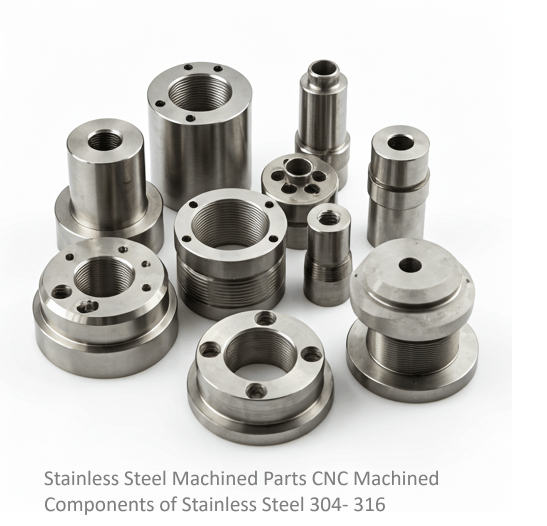
Engineering Insight Precision Imperatives for 304 Stainless Steel Machined Components
Achieving true precision in 304 stainless steel machined parts demands far more than standard CNC capabilities. This ubiquitous austenitic alloy presents unique challenges inherent to its composition and behavior under machining forces. Its high ductility and work-hardening tendency significantly increase cutting resistance, generating substantial heat that can distort thin features or compromise dimensional stability if not meticulously managed. Thermal expansion characteristics further complicate maintaining tight tolerances, especially during extended operations or when transitioning between machining stages. Surface integrity is equally critical; improper tool selection or parameters can induce micro-cracks or residual stresses, severely degrading fatigue life and corrosion resistance – properties fundamental to 304 stainless steel’s value proposition. Consequently, precision transcends mere dimensional accuracy; it encompasses consistent metallurgical integrity, optimal surface finish, and guaranteed performance in the end application. Failure to address these nuances results in parts prone to premature failure, assembly issues, or accelerated corrosion, negating the material’s inherent benefits.
Understanding the core material properties is essential for developing robust machining strategies. Key specifications directly influencing precision outcomes include:
| Property | Value (Annealed Condition) | Relevance to Precision Machining |
|---|---|---|
| Tensile Strength (min) | 515 MPa | High strength increases cutting forces & tool wear |
| Yield Strength (0.2% offset) | 205 MPa | Dictates feed rates to avoid plastic deformation |
| Elongation (min) | 40% | High ductility causes built-up edge & galling |
| Hardness (max) | 79 HRB | Affects tool life & surface finish consistency |
| Density | 8.0 g/cm³ | Influences chip evacuation & coolant effectiveness |
| Coefficient of Thermal Expansion | 17.3 μm/m°C | Critical for thermal compensation in tight tolerances |
Wuxi Lead Precision Machinery leverages deep metallurgical expertise and advanced process engineering to overcome these inherent 304 stainless steel challenges. Our approach integrates proprietary toolpath strategies minimizing heat generation, specialized high-pressure coolant delivery ensuring effective chip evacuation and thermal control, and rigorous in-process metrology with real-time thermal compensation. We employ rigorously calibrated multi-axis CNC centers operating under strict environmental controls, coupled with material-specific tooling geometries and coatings proven to combat work hardening and galling. This systematic methodology ensures consistent achievement of tolerances down to ±0.001mm and surface finishes meeting Ra 0.4μm or finer, while preserving the material’s essential corrosion resistance.
Our commitment to precision engineering for critical 304 stainless steel components is validated through demanding applications. We have successfully manufactured mission-critical parts for infrastructure supporting the Olympic Games, where absolute reliability under extreme conditions was non-negotiable. Furthermore, our processes meet stringent military specifications for components requiring exceptional dimensional stability and longevity in harsh environments. This proven experience underscores our capability to deliver precision-machined 304 stainless steel parts that perform flawlessly in the most exacting industrial, aerospace, and medical applications. Partner with Lead Precision to transform the challenges of 304 stainless steel into components defined by uncompromising quality and performance.
Precision Specs & Tolerances
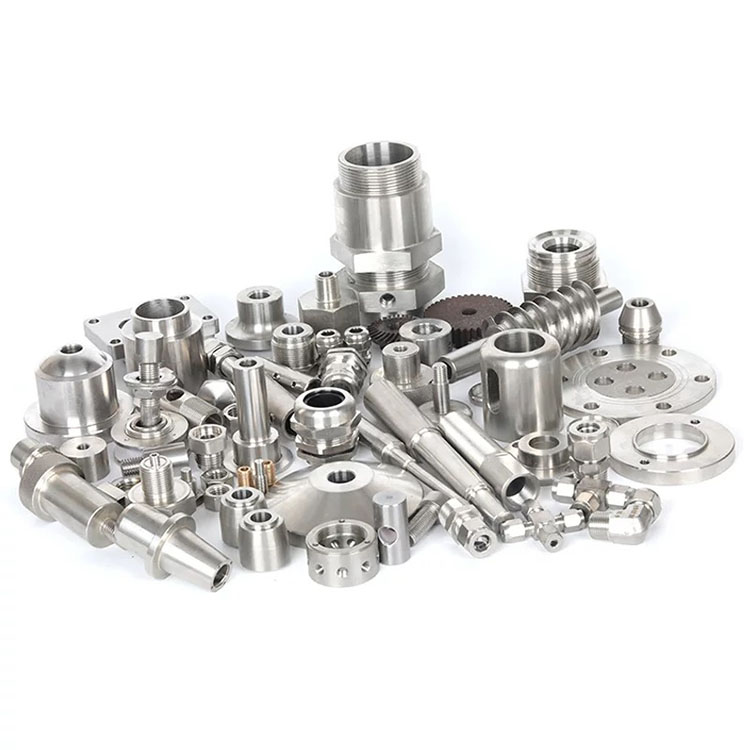
Wuxi Lead Precision Machinery delivers advanced precision CNC machining services specializing in 304 stainless steel components for high-performance industrial applications. Our technical capabilities are engineered to meet the stringent demands of aerospace, medical, semiconductor, and automation industries, where material integrity, dimensional accuracy, and surface finish are critical. At the core of our production infrastructure is a fully integrated fleet of 5-axis CNC machining centers, enabling us to execute complex geometries with superior efficiency and repeatability.
Our 5-axis CNC systems provide simultaneous multi-directional tool movement, allowing for intricate part features to be machined in a single setup. This reduces cumulative error, improves positional accuracy, and significantly cuts down production cycle times. The use of high-rigidity machines with thermal compensation systems ensures long-term stability and micron-level consistency, particularly vital when working with 304 stainless steel—a material known for its excellent corrosion resistance and mechanical properties, but also for work hardening and challenging chip control during machining. Our programming team employs advanced CAM software to optimize toolpaths, minimize tool wear, and maintain surface quality across high-volume and prototype runs.
Quality control is embedded at every stage of the manufacturing process. All 304 stainless steel precision machined parts undergo comprehensive inspection using state-of-the-art Coordinate Measuring Machines (CMM). These high-precision metrology systems provide full 3D validation of critical dimensions, geometric tolerances, and surface characteristics in accordance with ISO 10360 standards. In addition to CMM, we utilize optical comparators, surface roughness testers, and hardness gauges to ensure complete conformance to customer specifications and international quality benchmarks such as ISO 9001:2015.
We maintain strict material traceability, with certified mill test reports provided for every batch of 304 stainless steel processed. Our facility supports bar stock machining up to Ø300 mm and part weights up to 50 kg, with full turnkey capabilities including deburring, passivation, and precision cleaning upon request.
The following table outlines the standard technical specifications and achievable tolerances for 304 stainless steel precision machined components:
| Parameter | Specification |
|---|---|
| Material | AISI 304 / 304L Stainless Steel |
| Machining Process | 5-Axis CNC Milling and Turning |
| Maximum Work Envelope | 1200 x 800 x 600 mm (X-Y-Z) |
| Maximum Part Diameter | Ø300 mm (Turning) |
| Maximum Part Weight | 50 kg |
| Dimensional Tolerance (Machined) | ±0.005 mm (standard), down to ±0.002 mm (tight tolerance) |
| Geometric Tolerance (GD&T) | ±0.01 mm (position, flatness, runout) |
| Surface Roughness (Ra) | As low as 0.4 µm (typical: 1.6–3.2 µm) |
| Inspection Equipment | Zeiss CMM, Optical Comparator, Surface Tester |
| Quality Standard | ISO 9001:2015, Full First Article Inspection (FAI) Reports |
Wuxi Lead Precision Machinery combines cutting-edge equipment, rigorous quality assurance, and deep material expertise to deliver mission-critical 304 stainless steel components with unmatched precision and reliability.
Material & Finish Options
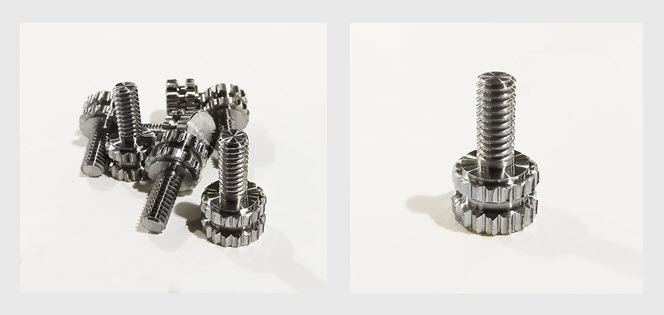
Material Selection for Precision Machined Components: Beyond 304 Stainless Steel
Selecting the optimal material for precision machined parts is a critical engineering decision directly impacting performance, longevity, and total cost of ownership. While 304 stainless steel remains a dominant choice in demanding applications due to its excellent corrosion resistance, weldability, and good mechanical properties in a wide range of environments, it is not universally ideal. Understanding the specific operational requirements – including load, temperature, exposure to chemicals, weight constraints, and required surface finish – is paramount. At Wuxi Lead Precision Machinery, our CNC engineering expertise ensures material selection aligns precisely with your functional and economic objectives, avoiding over-engineering or premature failure.
304 stainless steel excels in atmospheric, food processing, and mildly corrosive chemical environments. Its austenitic structure provides good formability and toughness down to cryogenic temperatures. However, for applications requiring significantly higher strength, materials like 17-4 PH precipitation hardening stainless steel or specific alloy steels may be necessary, though often at increased material and machining cost. Aluminum alloys, such as 6061-T6 or 7075-T6, offer substantial weight savings and excellent thermal/electrical conductivity, making them ideal for aerospace, automotive, and heat sink applications where strength-to-weight ratio is critical. Titanium alloys (e.g., Ti-6Al-4V) provide the ultimate strength-to-weight ratio and exceptional corrosion resistance in highly aggressive environments like seawater or chemical processing, but present significant machining challenges and higher raw material costs. Material choice fundamentally dictates CNC machining parameters, tooling selection, and achievable tolerances.
Surface finish requirements further refine material selection. Anodizing, a common and beneficial finish for aluminum parts, enhances corrosion resistance, wear resistance, and allows for color coding. It is crucial to note that anodizing is not applicable to stainless steel or titanium; these materials rely on alternative surface treatments. For stainless steel components, passivation is the standard process to remove free iron and maximize the natural corrosion resistance of the chromium oxide layer. Electropolishing can be employed for stainless steel to further enhance corrosion resistance, remove microscopic burrs, and achieve a smooth, cleanable surface critical in medical or semiconductor applications. Titanium often benefits from specialized treatments like chemical passivation or laser texturing depending on the use case.
The following table summarizes key comparative properties to guide initial material considerations for precision machined parts:
| Material | Density (g/cm³) | Typical Tensile Strength (MPa) | Corrosion Resistance (General) | Relative Machinability |
|---|---|---|---|---|
| 304 Stainless Steel | 7.93 | 515 (Min) | Excellent (Atmospheric, Mild Chemicals) | Moderate (45% of B1112) |
| 6061-T6 Aluminum | 2.70 | 310 | Good (Poor in Saltwater without coating) | Excellent (180% of B1112) |
| Ti-6Al-4V Titanium | 4.43 | 900 | Exceptional (Seawater, Strong Acids/Bases) | Poor (22% of B1112) |
Material selection is not merely a specification box to tick; it is an integrated engineering process. Wuxi Lead Precision Machinery leverages decades of CNC machining experience across diverse materials to provide actionable recommendations. We analyze your application’s full context to determine if 304 stainless steel is the optimal solution, or if aluminum, titanium, or another alloy delivers superior performance and value. Contact our engineering team early in your design phase to ensure your precision machined components are built on the right material foundation.
Manufacturing Process & QC
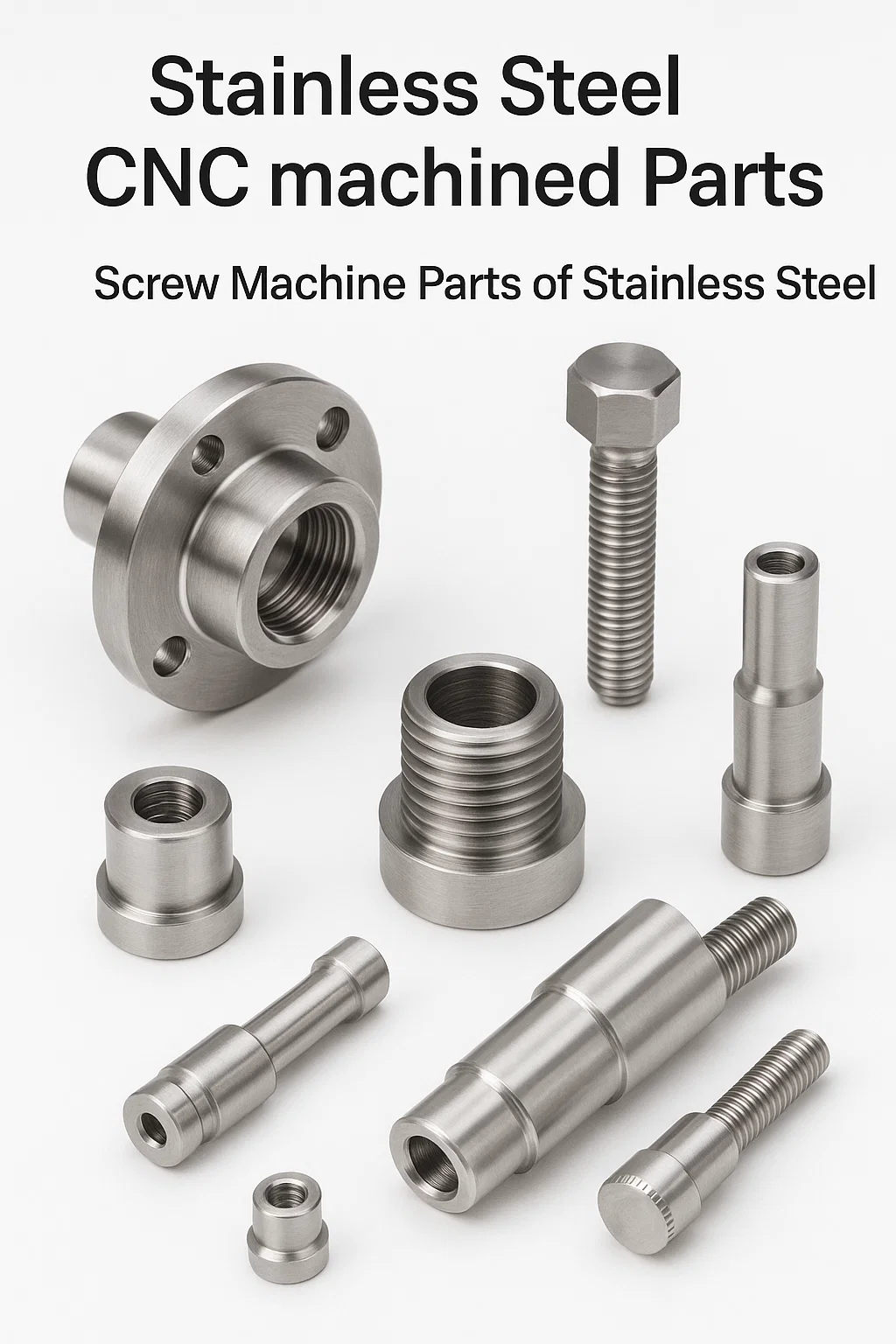
The production process for 304 stainless steel precision machined parts at Wuxi Lead Precision Machinery follows a rigorously controlled sequence designed to ensure zero defects and uncompromising quality. This process begins with design analysis and ends with full-scale mass production, integrating advanced CNC technology and stringent quality assurance at every stage.
The first phase centers on design evaluation and engineering validation. Our technical team collaborates closely with client-supplied CAD/CAM models, performing detailed design for manufacturability (DFM) reviews. This includes assessing wall thickness, tolerances, surface finish requirements, and material utilization to optimize both performance and cost-efficiency. Any potential issues related to machining complexity or structural integrity in 304 stainless steel—known for its excellent corrosion resistance and moderate machinability—are identified and resolved before proceeding. Finite element analysis (FEA) may be applied to simulate stress points and ensure long-term reliability under operational conditions.
Following design approval, the prototyping phase is initiated. Using high-precision 3-, 4-, and 5-axis CNC machining centers, we produce functional prototypes that mirror the final part’s geometry, material properties, and dimensional accuracy. This stage allows for real-world testing of fit, form, and function. Prototypes undergo comprehensive inspection using coordinate measuring machines (CMM), optical comparators, and surface roughness testers to verify conformance to specifications. Client feedback is integrated at this stage, ensuring alignment before transitioning to mass production.
Mass production is executed on automated CNC machining lines equipped with tool presetters, automatic bar feeders, and real-time process monitoring systems. Each operation—from turning and milling to drilling and threading—is performed under strict environmental and procedural controls. 304 stainless steel’s work-hardening characteristics are carefully managed through optimized cutting speeds, toolpath strategies, and coolant application to maintain dimensional stability and surface integrity. In-process inspections occur at predefined intervals to detect deviations instantly, while final inspection includes 100% critical dimension checks and batch sampling for non-critical features.
Our zero-defect philosophy is enforced through ISO 9001-certified quality management systems, statistical process control (SPC), and full traceability of materials and machining parameters. Every batch is accompanied by a detailed inspection report, including material certification and dimensional data.
Key production specifications for 304 stainless steel machined parts are summarized below:
| Parameter | Specification |
|---|---|
| Material | ASTM AISI 304 / 304L Stainless Steel |
| Tolerance Range | ±0.005 mm to ±0.025 mm (depending on feature) |
| Surface Roughness (Ra) | 0.4 μm to 3.2 μm (customizable) |
| Maximum Part Size | 500 mm × 400 mm × 300 mm |
| Minimum Wall Thickness | 0.8 mm (stable under controlled machining) |
| Production Capacity | Up to 50,000 units/month (automated lines) |
| Inspection Equipment | CMM, Optical Comparator, Roughness Tester, Micrometers |
| Certifications | ISO 9001:2015, RoHS, Material Traceability (MTR) |
This end-to-end process ensures that every 304 stainless steel precision machined part meets the highest standards of performance, reliability, and consistency required in aerospace, medical, and high-end industrial applications.
Why Choose Wuxi Lead Precision
Partner with Lead Precision for Uncompromising 304 Stainless Steel Excellence
Achieving micron-level precision in 304 stainless steel components demands more than advanced machinery—it requires deep metallurgical understanding and process mastery. At Wuxi Lead Precision Machinery, we engineer solutions for the most demanding aerospace, medical, and semiconductor applications where material consistency, corrosion resistance, and dimensional stability cannot be compromised. Our facility operates at the intersection of German-engineered CNC technology and ISO 9001:2015-certified quality systems, ensuring every part meets or exceeds ASME Y14.5 and ISO 2768 standards. We recognize that 304 stainless steel’s work-hardening tendencies and thermal sensitivity during machining often lead to dimensional drift in lesser facilities. Our proprietary toolpath strategies, cryogenic cooling protocols, and in-process metrology eliminate these risks, delivering components with repeatable tolerances under 0.005mm.
Your critical components require a partner who treats your specifications as non-negotiable. We implement full material traceability from certified mills, real-time SPC monitoring during production, and 100% post-machining CMM validation against your CAD models. Unlike standard job shops, our engineers collaborate with your team during DFM analysis to optimize part geometry for manufacturability—reducing lead times by up to 30% while enhancing functional performance. This proactive approach prevents costly redesigns and accelerates your time-to-market without sacrificing quality.
Our validated capabilities for 304 stainless steel machining are demonstrated in the table below:
| Parameter | Wuxi Lead Precision Capability | Typical Industry Standard |
|---|---|---|
| Dimensional Tolerance | ±0.005 mm | ±0.025 mm |
| Surface Finish (Ra) | 0.2–0.8 µm | 1.6–3.2 µm |
| Max Part Dimensions | Ø650 x 1,200 mm | Ø400 x 800 mm |
| Material Certification | Mill Test Reports + Full Traceability | Basic Mill Certs Only |
| Lead Time (Complex) | 10–15 Days | 20–30 Days |
When your project involves mission-critical 304 stainless steel components, settle for nothing less than engineered perfection. Our technical team stands ready to review your drawings, provide actionable DFM feedback, and establish a production workflow aligned with your quality protocols. We operate 24/7 shifts with dedicated project managers ensuring seamless communication from RFQ to delivery.
Contact us today to experience how Wuxi Lead Precision Machinery transforms material challenges into competitive advantages. Email [email protected] with your specifications and volume requirements. Our engineering team will respond within 24 business hours with a detailed capability analysis and timeline. Let us prove why global innovators trust us for their most exacting stainless steel precision machined parts—where every micron defines success.
⚙️ Precision Cost Estimator
Estimate relative manufacturing effort based on tolerance.