

Technical Contents
Engineering Guide: 1/2 Plastic Moulding
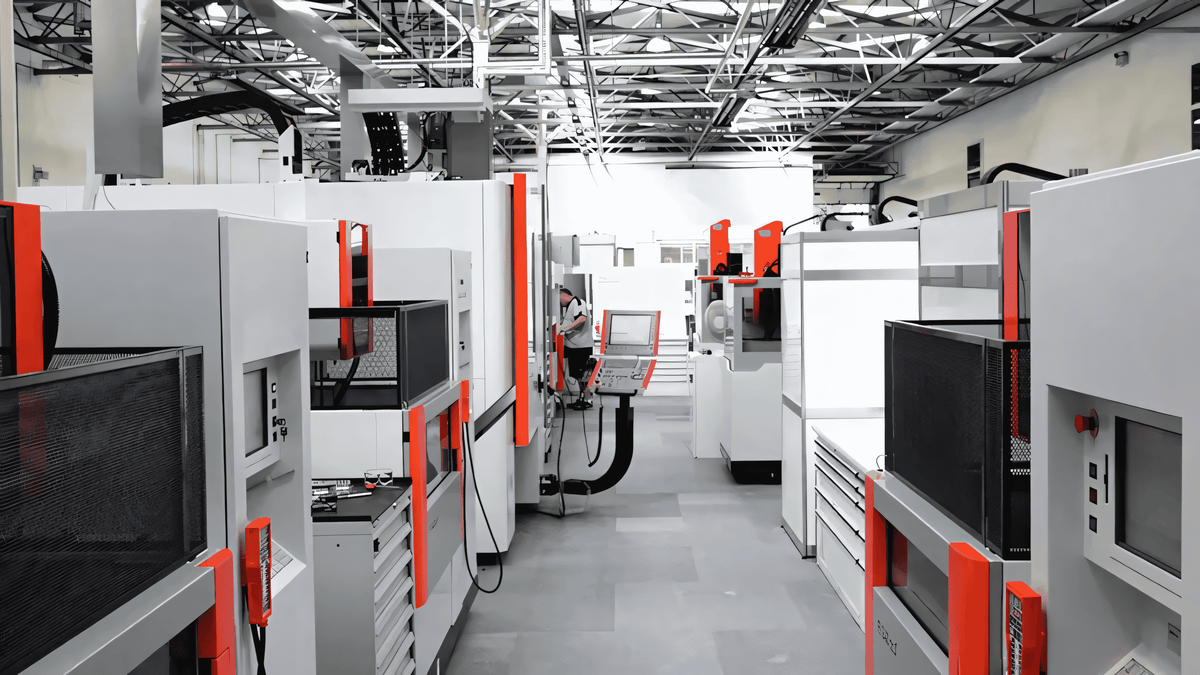
Engineering Insight: Precision Imperatives in 1/2 Plastic Moulding Tooling
The term “1/2 plastic moulding” specifically denotes two-plate mould construction, the foundational architecture for countless precision plastic components. While seemingly basic, this design places extraordinary demands on the underlying metal tooling. At Wuxi Lead Precision Machinery, we emphasize that success in high-value applications—from medical devices to aerospace components—is not determined by the plastic itself, but by the micron-level accuracy and thermal stability of the steel cavities and cores forming it. Minute deviations in the metal tool manifest as catastrophic failures in the plastic part: flash, sink marks, dimensional drift, or complete functional failure. Precision in the mould base, guide pins, bushings, and cavity/core interfaces is non-negotiable; it directly governs part consistency, cycle time, and ultimately, the client’s production yield and cost structure.
Our experience engineering tooling for Olympic Winter Games equipment components and critical military subsystems underscores this reality. A ski binding latch mould requiring ±0.01mm tolerance demanded cavity/core alignment precision exceeding standard aerospace specifications. Similarly, a military communication housing mould necessitated flawless thermal management across 50+ cycles per minute to prevent warpage in a dimensionally stable polymer. These projects succeeded only because the metal tooling achieved sub-5 micron repeatability under sustained production pressure. Plastic flow dynamics are unforgiving; inconsistent cooling channels or misaligned parting lines induce internal stresses that compromise even the highest-grade resins. The metal mould is the silent determinant of plastic part integrity.
Critical metal tooling specifications directly impacting plastic part quality include:
| Specification | Target Tolerance | Impact on Plastic Part |
|---|---|---|
| Cavity/ Core Alignment | ≤ ±0.005 mm | Eliminates flash; ensures uniform wall thickness |
| Parting Line Flatness | ≤ 0.002 mm | Prevents flash; critical for sealing surfaces |
| Cooling Channel Position | ≤ ±0.01 mm | Ensures uniform cooling; minimizes warpage |
| Surface Finish (Cavity) | Ra ≤ 0.05 µm | Directly replicates on part; affects aesthetics |
| Thermal Expansion Control | Material-Specific | Maintains dimensional stability during cycling |
Wuxi Lead Precision Machinery leverages decades of specialized expertise in hardened tool steel machining and assembly to meet these exacting demands. Our Olympic and defense project heritage provides proven methodologies for validating tooling performance under the most stringent conditions. We understand that high-cavitation 1/2 moulds for consumer goods or single-cavity tools for life-critical components share the same fundamental requirement: the metal must perform with absolute fidelity. Precision is not an incremental advantage in plastic moulding; it is the foundational prerequisite for viability in advanced manufacturing. Partnering with a tooling specialist possessing rigorous metrology protocols and deep process knowledge transforms the 1/2 mould from a simple concept into a reliable engine of high-quality production.
Precision Specs & Tolerances
Advanced Technical Capabilities in Precision Metal Manufacturing
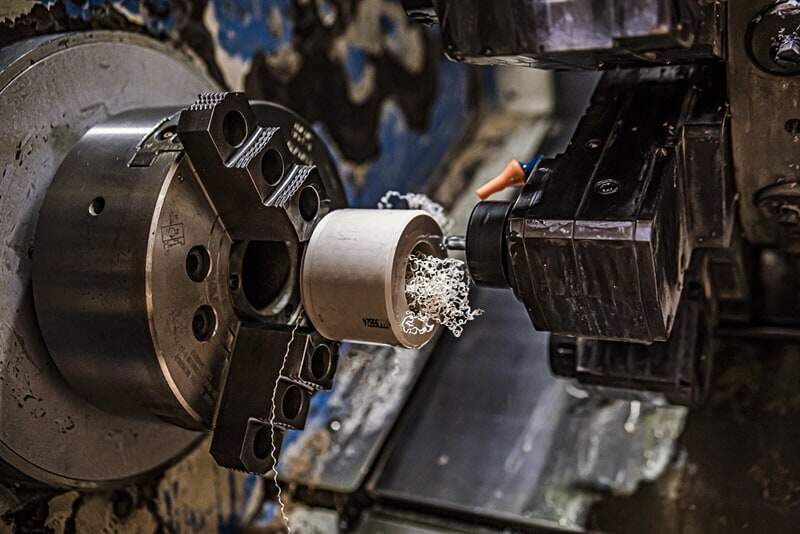
At Wuxi Lead Precision Machinery, our technical infrastructure is engineered to meet the most demanding requirements in custom metal manufacturing, particularly for high-precision applications such as 1/2 plastic moulding components. Our facility integrates cutting-edge 5-axis CNC machining centers, enabling us to produce complex geometries with exceptional accuracy and surface finish. These multi-axis systems allow simultaneous movement across five planes, providing unparalleled flexibility in contouring and feature machining. This capability is essential for manufacturing intricate mould bases, cavity and core inserts, and support structures where tight tolerances and fine detail are non-negotiable.
Our 5-axis CNC platforms are equipped with high-speed spindles, automatic tool changers, and real-time monitoring systems to ensure process stability and repeatability. By leveraging advanced CAM software and in-house programming expertise, we optimize toolpaths to minimize cycle times while maximizing material removal efficiency and part accuracy. This level of precision is critical when working with hardened steels, aluminum alloys, and specialty tooling materials commonly used in plastic moulding applications.
Quality assurance is embedded into every phase of production. We employ a structured inspection protocol anchored by a Zeiss DuraMax Bridge-type Coordinate Measuring Machine (CMM). This metrology-grade system provides full 3D dimensional verification with micron-level resolution, ensuring that every component conforms to technical drawings and international standards. Our CMM inspection process includes first-article inspection reports (FAIR), production batch sampling, and full-surface scanning for critical features such as cooling channels, parting lines, and ejector pin bores.
All inspection data is documented and traceable, supporting full compliance with ISO 9001 and customer-specific quality requirements. Our quality engineers are trained in GD&T (Geometric Dimensioning and Tolerancing) and utilize statistical process control (SPC) methods to monitor capability and drive continuous improvement.
The following table outlines the standard tolerances we achieve across key machining parameters:
| Parameter | Standard Tolerance | Capability Range |
|---|---|---|
| Linear Dimensions | ±0.005 mm | Up to ±0.002 mm |
| Hole Diameter | ±0.008 mm | ±0.005 mm (reamed) |
| Positional Tolerance | ±0.010 mm | ±0.005 mm (with datum control) |
| Surface Roughness (Ra) | 0.8 µm | As low as 0.2 µm (polished finish) |
| Flatness | 0.01 mm per 100 mm | 0.005 mm per 100 mm |
| Angular Accuracy | ±0.05° | ±0.02° (with probe alignment) |
These specifications reflect our commitment to delivering components that meet the exacting needs of precision mould makers and OEMs. By combining advanced machinery, rigorous quality control, and deep technical expertise, Wuxi Lead Precision Machinery ensures consistent performance and reliability in every custom metal part we produce.
Material & Finish Options
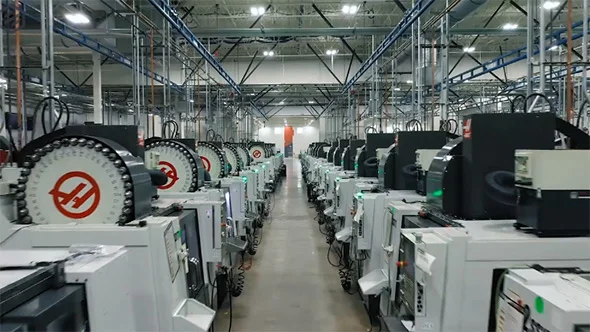
Material Selection for High-Performance Plastic Injection Molds
Selecting the optimal mold material is a critical engineering decision directly impacting part quality, production efficiency, and total cost of ownership in plastic injection molding. At Wuxi Lead Precision Machinery, our decades of experience machining precision molds dictate that material choice must align precisely with production volume, part geometry, polymer characteristics, and required surface finish. Aluminum, tool steel, and titanium each offer distinct advantages and limitations for specific applications, demanding careful technical evaluation beyond initial cost considerations.
Aluminum alloys, particularly 7075-T6 and 6061-T6, excel in rapid prototyping and low-to-medium volume production. Their superior machinability significantly reduces lead times and CNC programming complexity, allowing faster time-to-market. Aluminum’s high thermal conductivity promotes efficient cooling cycles, enhancing productivity for simpler geometries. However, aluminum’s lower hardness and wear resistance limit its use for abrasive polymers, high-cavity-pressure applications, or extended production runs exceeding 100,000 cycles. Surface treatments like hard anodizing become essential to improve wear and corrosion resistance for these scenarios.
Tool steels, such as P20, H13, and S136 stainless, are the industry standard for high-volume, demanding production. Offering exceptional hardness (typically 28-52 HRC after heat treatment), wear resistance, and thermal stability, they withstand the abrasive nature of filled polymers and high injection pressures over millions of cycles. Stainless variants like S136 provide superior corrosion resistance for PVC or other corrosive materials. While initial machining costs and lead times are higher due to material hardness, the extended mold life and reduced maintenance downtime deliver superior long-term value for large-scale manufacturing. Proper heat treatment and meticulous surface finishing are non-negotiable for performance.
Titanium alloys represent a specialized solution for extreme conditions, such as highly corrosive environments or applications requiring exceptional strength-to-weight ratio. While offering outstanding corrosion resistance and biocompatibility, titanium’s high cost, challenging machinability, and lower thermal conductivity make it impractical for most standard molding applications. Its use is typically confined to niche medical or aerospace components where its unique properties justify the significant investment.
Anodizing is a vital surface enhancement process exclusively applicable to aluminum molds. This electrochemical treatment creates a hard, wear-resistant aluminum oxide layer integral to the substrate. Type III (Hard Anodizing) is standard for molds, significantly improving surface hardness (up to 60-70 Rockwell C equivalent), abrasion resistance against glass-filled resins, and corrosion protection. Crucially, it reduces galling during part ejection and provides an excellent base for subsequent coatings. Anodizing thickness and sealing must be precisely controlled to maintain critical mold tolerances.
The following table summarizes key comparative specifications for common mold materials:
| Material Property | Aluminum 7075-T6 | P20 Tool Steel | H13 Tool Steel | Titanium Grade 5 |
|---|---|---|---|---|
| Typical Hardness (HRC) | 15-20 (Base) | 28-32 | 40-48 | 30-36 |
| Hardness (Anodized) | 50-70 (equiv) | N/A | N/A | N/A |
| Thermal Conductivity | Very High | Moderate | Moderate | Low |
| Wear Resistance | Low (Good w/ Anod) | High | Very High | Moderate |
| Corrosion Resistance | Moderate | Low | Moderate | Excellent |
| Machinability | Excellent | Good | Fair | Poor |
| Typical Use Case Cycles | < 100,000 | 100k – 500k+ | 500k – 1M+ | Specialized |
Wuxi Lead Precision Machinery leverages advanced CNC capabilities and material science expertise to optimize your mold material selection and surface treatment strategy. We prioritize technical suitability over simplistic cost metrics, ensuring your mold delivers maximum performance, longevity, and return on investment. Consult our engineering team for a tailored analysis based on your specific polymer, part requirements, and production goals.
Manufacturing Process & QC
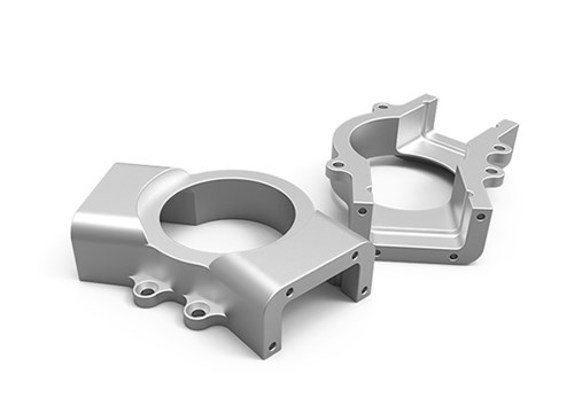
Design Phase: Engineering Precision from the Start
At Wuxi Lead Precision Machinery, the foundation of flawless 1/2 plastic moulding production begins with a rigorous design phase. Our engineering team collaborates closely with clients to interpret technical drawings, 3D CAD models, and performance requirements. Utilizing advanced simulation software such as Moldflow, we analyze mold flow, cooling efficiency, and potential stress points to preemptively resolve defects like warping, sink marks, or incomplete fills. Material compatibility, shrinkage rates, and parting line optimization are evaluated to ensure dimensional accuracy and structural integrity. Every design is validated through finite element analysis (FEA), guaranteeing that the mold geometry aligns with both functional demands and manufacturability standards. This proactive engineering approach eliminates conceptual flaws before physical production begins.
Prototyping: Validating Performance Under Real Conditions
Following design approval, we transition into precision prototyping. Using CNC-machined or EDM-fabricated molds, we produce small-batch samples that mirror final production conditions. These prototypes undergo comprehensive testing, including dimensional inspection via coordinate measuring machines (CMM), mechanical stress evaluation, and fit-checks with mating components. Our in-house metrology lab ensures tolerances are maintained within ±0.005 mm, meeting ISO 2768-mK standards. Feedback from prototype testing is integrated into mold adjustments, enabling iterative refinement. This stage is critical for verifying gate locations, ejection systems, and cooling channel performance—key factors in achieving zero-defect mass production. Client sign-off is obtained only after all performance and aesthetic criteria are met.
Mass Production: Consistency Through Automation and Control
With a validated mold, we initiate high-volume manufacturing under a fully controlled environment. Our production lines integrate robotic part handling, real-time process monitoring, and automated quality gates to maintain consistency. Each molding cycle is tracked through a centralized SCADA system, logging parameters such as injection pressure, melt temperature, and cycle time. Statistical process control (SPC) charts are used to detect deviations before they affect output quality. Every 100th part undergoes inline inspection, while full FAI (First Article Inspection) reports are generated per production batch. Our cleanroom-compliant facilities and preventive maintenance protocols ensure mold longevity and repeatability across runs exceeding 500,000 cycles.
Key Production Specifications
| Parameter | Specification |
|---|---|
| Tolerance Range | ±0.005 mm to ±0.02 mm |
| Material Compatibility | ABS, PC, POM, PA6, PBT, PP, PE, and LCP |
| Mold Lifespan | Up to 1,000,000 cycles (hardened steel) |
| Surface Finish Options | SPI-SPE, texture, mirror polish, matte |
| Production Capacity | 10,000 – 500,000 units/month per mold |
| Quality Standards | ISO 9001:2015, IATF 16949, RoHS compliant |
| Lead Time (Prototype) | 15–25 days from CAD approval |
| Lead Time (Mass Production) | 45–60 days after prototype sign-off |
At Wuxi Lead Precision Machinery, the integration of precision engineering, empirical validation, and closed-loop manufacturing ensures zero-defect outcomes across every stage of 1/2 plastic moulding production.
Why Choose Wuxi Lead Precision
Partner with Lead Precision for Uncompromising Plastic Injection Moulding Performance
Achieving peak efficiency and longevity in plastic injection moulding demands metal components engineered beyond standard tolerances. Generic parts introduce hidden costs through premature wear, inconsistent cycle times, and unplanned downtime. At Wuxi Lead Precision Machinery, we specialize in mission-critical metal components that form the backbone of high-performance moulding systems. Our decades of focused expertise in custom metal manufacturing for the plastics industry ensure your machinery operates at its absolute potential, delivering consistent part quality and maximizing uptime. We understand that the thermal stability, dimensional accuracy, and surface integrity of cores, cavities, ejector systems, and bushings directly dictate your production yield and profitability.
Our engineering-driven approach begins with a deep analysis of your specific application requirements and machine dynamics. We leverage advanced CNC milling, turning, grinding, and EDM capabilities alongside stringent ISO 9001-certified processes to transform premium tool steels, stainless alloys, and specialized composites into components that withstand extreme pressure, temperature cycling, and corrosive environments. Every part undergoes rigorous in-process and final inspection using CMMs, optical comparators, and surface roughness testers, guaranteeing adherence to the most demanding specifications. This commitment to precision engineering translates directly into reduced scrap rates, extended mould life, and lower total cost of ownership for your operation.
The table below outlines the core capabilities we apply to your critical moulding components:
| Parameter | Capability | Application Impact |
|---|---|---|
| Tolerance Range | ±0.002 mm to ±0.0001 mm | Ensures perfect cavity/core alignment, eliminating flash and part distortion |
| Surface Finish | Ra 0.05 µm to Ra 0.8 µm (micro-burr free) | Reduces part sticking, improves ejection, enhances final part aesthetics |
| Material Mastery | P20, H13, S136, 420SS, Titanium, Inconel | Optimized for wear resistance, thermal conductivity, and corrosion protection |
| Max Component Size | 1200 x 800 x 600 mm | Supports large, complex mould bases and platen assemblies |
| Process Validation | Full GD&T reporting, material certs | Guarantees traceability and compliance with global standards |
Partnering with Lead Precision means moving beyond simple part supply. We function as an extension of your engineering team, offering collaborative design for manufacturability (DFM) reviews to optimize component geometry for both performance and cost-effectiveness. Our rapid prototyping capabilities allow you to validate designs before full production, mitigating risk and accelerating time-to-market. When unexpected challenges arise, our responsive technical support team provides actionable solutions, minimizing production disruptions. We are committed to being your reliable, high-precision manufacturing partner for the long term.
Elevate your plastic injection moulding output with components engineered for zero compromise. Contact our engineering sales team today to discuss your specific requirements and discover how Lead Precision can enhance your machinery’s performance and reliability. Email us at [email protected] for a detailed technical consultation and precision manufacturing quote. Let us prove why global leaders in moulding technology trust Wuxi Lead Precision Machinery for their most critical metal components. Your path to superior moulding performance starts with a single email.
⚙️ Precision Cost Estimator
Estimate relative manufacturing effort based on tolerance.