

Technical Contents
Engineering Guide: 1018 Cd Steel Properties
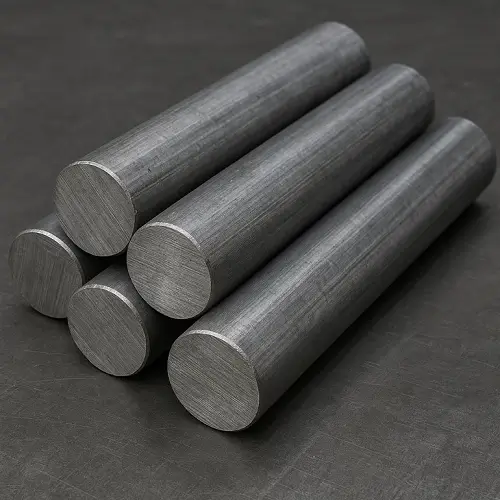
Engineering Insight: Precision Imperatives in 1018 Cold Drawn Steel Machining
Understanding the nuanced properties of 1018 cold drawn (CD) steel is non-negotiable for achieving micron-level tolerances in mission-critical components. This low-carbon alloy is ubiquitous in custom manufacturing due to its machinability and weldability, yet its performance hinges entirely on precise process control. The cold drawing operation imparts critical dimensional stability and surface integrity—eliminating the scale and warpage inherent in hot-rolled variants. However, this very process introduces directional grain flow and residual stresses that demand sophisticated CNC strategies. At Wuxi Lead Precision Machinery, we treat 1018 CD not as a commodity material but as a precision engineering substrate. Our decades of refining feed rates, tool geometries, and thermal management protocols ensure these stresses do not manifest as part distortion during high-speed milling or turning. A deviation of mere 0.005mm in toolpath compensation can trigger micro-cracking in load-bearing interfaces, rendering aerospace or medical components unusable. This is why our ISO 9001-certified workflows begin with material lot traceability and in-house metallurgical verification—long before the first chip is produced.
The table below details key properties governing 1018 CD steel’s machinability:
| Property | Specification Range | Engineering Significance |
|---|---|---|
| Carbon Content | 0.15–0.20% | Optimizes chip formation; lower carbon reduces tool wear |
| Yield Strength | 44,000–54,000 psi | Dictates clamping force to prevent workpiece shift |
| Tensile Strength | 53,000–63,000 psi | Determines maximum feed rates without edge chipping |
| Elongation (in 2″) | ≥ 15% | Critical for deep-draw forming operations |
| Surface Hardness (HRB) | 71–78 | Directly correlates to achievable Ra finish (0.4–0.8µm) |
| Cold Draw Tolerance | ±0.005″ (diameter) | Foundation for tight-tolerance machining (±0.0002″) |
Precision transcends dimensional accuracy—it encompasses repeatability across 10,000+ part runs. 1018 CD’s consistent chemistry allows predictable tool life, but only when machining parameters align with its specific thermal conductivity (62 BTU/hr·ft·°F) and shear strength. At Lead Precision, our CNC cells dynamically adjust spindle loads based on real-time thermal imaging, preventing localized overheating that alters the material’s microstructure. This capability was rigorously proven in our production of Olympic-grade timing system components, where sub-micron surface finishes ensured zero friction variance in high-velocity mechanisms. Similarly, military contract work demanded 100% first-pass yield on hydraulic manifolds—achievable only through our proprietary stress-relieving cycles post-machining.
We engineer 1018 CD steel to perform where failure is not an option. Partner with Lead Precision to transform this versatile alloy into components that meet AS9100 and MIL-STD-883 standards, backed by 15+ years of precision manufacturing excellence. Your tolerance stack-up analysis starts here.
Precision Specs & Tolerances
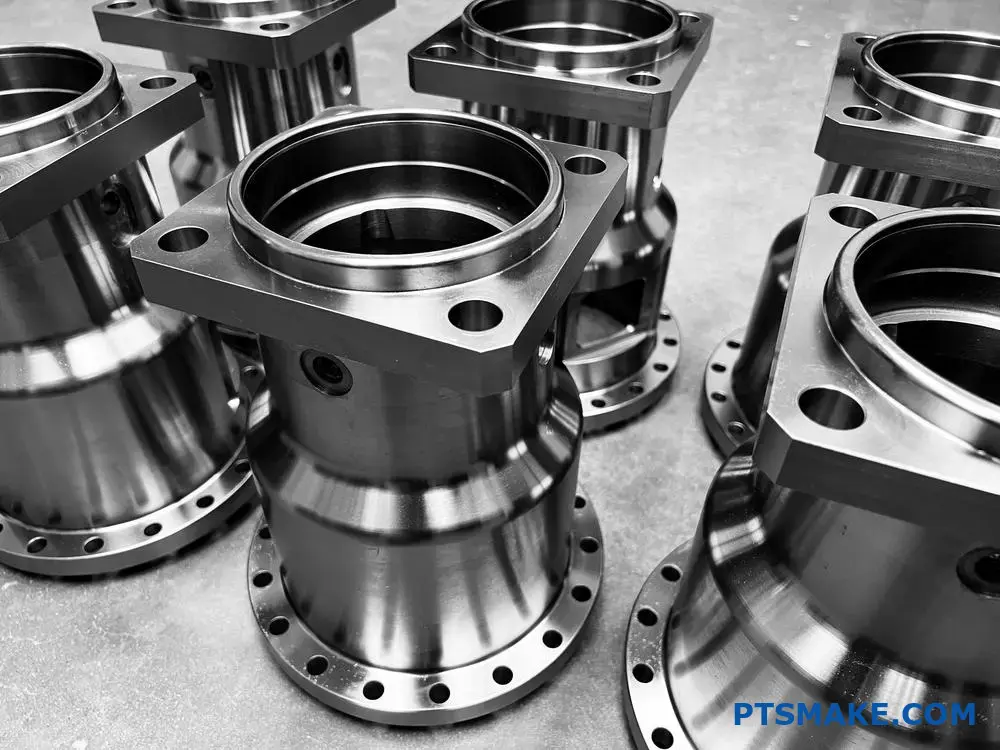
Wuxi Lead Precision Machinery delivers advanced manufacturing solutions for high-performance applications, specializing in precision components produced from engineering-grade materials such as 1018 cold-drawn (CD) steel. Our technical capabilities are built around state-of-the-art 5-axis CNC machining centers, enabling us to execute complex geometries with exceptional accuracy and surface finish. These multi-axis systems allow simultaneous cutting from five different directions, minimizing setup changes and ensuring tight alignment across intricate features. This level of machining sophistication is particularly advantageous when working with 1018 CD steel, a low-carbon alloy known for its excellent machinability, weldability, and uniformity—making it ideal for precision shafts, fixtures, brackets, and mechanical components in industrial automation, automotive, and equipment manufacturing sectors.
Our production floor is equipped with a full suite of 5-axis CNC machines from leading global manufacturers, all maintained to OEM specifications and operated by certified CNC engineers with over a decade of experience in high-tolerance metal fabrication. These systems support a wide range of tooling strategies, including high-speed machining and deep-hole drilling, tailored to the mechanical behavior of 1018 steel. The cold-drawn process enhances the material’s dimensional consistency and surface quality, which our CNC platforms leverage to achieve repeatable precision across both prototype and high-volume production runs.
Quality assurance is integrated at every stage of manufacturing. All critical dimensions are verified using coordinate measuring machines (CMM) in our climate-controlled inspection lab. These CMM systems provide traceable, 3D metrology data to validate geometric tolerances, positional accuracy, and surface integrity. Each inspection report is documented per ISO 9001 standards and delivered with the shipment, ensuring full transparency and compliance with customer engineering requirements.
The following table outlines the standard tolerance capabilities achievable with our 5-axis CNC machining process when working with 1018 CD steel. These values reflect both machine performance and our internal quality benchmarks, which often exceed typical industry standards.
| Feature Type | Standard Tolerance | Typical Achievable | Notes |
|---|---|---|---|
| Linear Dimensions | ±0.005 mm | ±0.002 mm | Up to 300 mm; longer lengths scaled proportionally |
| Hole Diameter | ±0.01 mm | ±0.005 mm | Reamed or precision bored |
| Positional Tolerance | ±0.01 mm | ±0.005 mm | Relative to datum |
| Flatness | 0.01 mm | 0.005 mm | Over 100 mm surface |
| Surface Finish | Ra 1.6 μm | Ra 0.8 μm | As-machined;可polished to Ra 0.4 μm |
| Angular Features | ±0.05° | ±0.02° | Between surfaces or axes |
By combining advanced 5-axis CNC technology with rigorous CMM-based quality control, Wuxi Lead Precision Machinery ensures that every component machined from 1018 CD steel meets the highest standards of dimensional accuracy and functional reliability. Our process is optimized for clients who demand precision, repeatability, and full technical traceability in their supply chain.
Material & Finish Options

Strategic Material Selection: 1018 Cold Drawn Steel in Precision Manufacturing
For demanding B2B custom metal fabrication, selecting the optimal base material is foundational to part performance, cost efficiency, and production yield. Within the critical steel category, 1018 Cold Drawn (CD) steel represents a high-value solution for applications prioritizing machinability, weldability, and consistent dimensional accuracy without requiring high strength or hardness. Understanding its specific properties relative to alternatives like aluminum alloys or titanium is essential for informed engineering decisions.
1018 CD steel is a low-carbon steel processed through cold drawing, which significantly enhances its mechanical properties and surface finish compared to hot-rolled equivalents. This process yields tighter dimensional tolerances, improved straightness, and a smoother surface inherently suitable for many finished parts. Its defining characteristic is exceptional machinability, allowing for high-speed cutting, excellent chip formation, and reduced tool wear. This translates directly to lower machining costs and faster throughput for complex geometries. Furthermore, 1018 CD exhibits good weldability using common methods and responds well to case hardening processes like carburizing for surface durability where core toughness is retained. While not suitable for high-stress structural applications due to its moderate tensile strength, it excels in components such as pins, shafts, spindles, fasteners, and non-critical machinery parts where dimensional precision and cost-effectiveness are paramount.
Comparing key specifications clarifies its strategic positioning:
| Property | 1018 Cold Drawn Steel | Typical 6061-T6 Aluminum | Typical Grade 5 Titanium |
|---|---|---|---|
| Tensile Strength (MPa) | 440 – 540 | 310 | 900 |
| Yield Strength (MPa) | 370 – 450 | 275 | 830 |
| Elongation at Break (%) | 15 – 20 | 12 | 10 |
| Brinell Hardness (HB) | 121 – 131 | 95 | 334 |
| Machinability Rating | 70% (Excellent) | 90% (Excellent) | 30% (Poor) |
| Relative Cost | Low | Medium | Very High |
The data underscores 1018 CD steel’s role as a cost-efficient workhorse. Its strength surpasses common aluminum alloys like 6061-T6, making it suitable for load-bearing components where aluminum lacks sufficient rigidity, while avoiding the significant cost and machining challenges of titanium. The excellent machinability rating is a major economic driver, particularly for high-volume production runs common in industrial equipment manufacturing.
At Wuxi Lead Precision Machinery, we leverage the predictable behavior of 1018 CD steel to deliver exceptional value. Our CNC machining expertise ensures tight tolerances are consistently achieved, minimizing waste and secondary operations. The material’s inherent weldability and formability further streamline integrated manufacturing solutions. When your application requires reliable performance, dimensional precision, and optimal cost management for medium-strength components, 1018 CD steel is often the superior strategic choice over higher-cost alternatives. Our engineering team collaborates closely with clients to confirm material suitability against specific functional requirements and production volumes, ensuring the optimal balance of performance and economics for your custom metal parts.
Manufacturing Process & QC

Design Phase: Precision Engineering for 1018 CD Steel Applications
At Wuxi Lead Precision Machinery, the production process for components made from 1018 cold-drawn (CD) steel begins with a comprehensive design phase rooted in precision engineering and material-specific analysis. Our engineering team leverages advanced CAD/CAM software to model parts that fully exploit the favorable characteristics of 1018 CD steel, including its excellent machinability, uniform grain structure, and reliable mechanical properties. Finite element analysis (FEA) is employed to simulate stress, fatigue, and thermal behavior under operational conditions, ensuring that every design meets stringent performance criteria. Dimensional tolerances, surface finish requirements, and geometric accuracy are all optimized during this stage to align with customer specifications and industry standards such as ISO 2768 and ASME Y14.5. Material selection is validated through cross-referencing chemical composition and mechanical data to guarantee consistency and compatibility with downstream processing.
Prototyping: Validating Performance and Process Integrity
Following design finalization, a functional prototype is produced using CNC turning, milling, or multi-axis machining centers calibrated for micron-level accuracy. Prototyping serves as a critical validation step, allowing us to assess form, fit, and function before initiating mass production. Each prototype undergoes rigorous metrological inspection using coordinate measuring machines (CMM), optical comparators, and surface roughness testers. In parallel, material verification is conducted via spectrometric analysis to confirm compliance with the 1018 CD steel specification. Any deviations are addressed through iterative design adjustments or process refinements. This phase not only verifies the engineering intent but also validates toolpaths, fixturing, and cycle times, forming the foundation for scalable, repeatable manufacturing.
Mass Production: Zero-Defect Manufacturing Execution
With prototype approval, we transition to high-volume production under a zero-defect manufacturing philosophy. Our CNC machining cells operate under strict process controls, with real-time monitoring of tool wear, spindle load, and dimensional drift. Statistical process control (SPC) charts are maintained for critical dimensions, enabling proactive correction before out-of-tolerance conditions occur. Every batch is subject to first-article inspection and ongoing in-process checks, with full traceability from raw material heat numbers to final inspection reports. Components are deburred, cleaned, and subjected to final quality verification before packaging.
The following table outlines the key material properties of 1018 cold-drawn steel used in our manufacturing process:
| Property | Value | Standard Test Method |
|---|---|---|
| Tensile Strength | 63,800 psi (440 MPa) | ASTM A370 |
| Yield Strength | 53,700 psi (370 MPa) | ASTM A370 |
| Elongation at Break | 15% (in 2 in) | ASTM A370 |
| Hardness (Brinell) | 121 HB | ASTM E10 |
| Carbon Content | 0.18% | ASTM E108 |
| Machinability Rating | 72% (relative to B1112) | AISI |
Through integrated design validation, precision prototyping, and disciplined mass production, Wuxi Lead ensures that every 1018 CD steel component meets the highest standards of quality, reliability, and performance.
Why Choose Wuxi Lead Precision
Partner with Lead Precision for Uncompromised 1018 CD Steel Manufacturing
Selecting the optimal material is only half the battle in precision engineering; the true differentiator lies in execution. While 1018 Cold Drawn (CD) steel offers exceptional machinability and weldability for custom components, inconsistent processing can undermine its inherent advantages. At Wuxi Lead Precision Machinery, we transform this versatile alloy into mission-critical parts with zero tolerance for variability. Our integrated CNC ecosystem—spanning multi-axis milling, turning, and grinding—ensures every 1018 CD steel component meets stringent aerospace, automotive, and industrial automation tolerances. We eliminate material-related scrap through proprietary stress-relief protocols and real-time in-process metrology, directly translating to your reduced lead times and lower total cost of ownership.
Our mastery of 1018 CD steel stems from rigorous material science alignment. Unlike generic suppliers, we validate every heat lot against ASTM A108 standards before machining, guaranteeing uniform grain structure and predictable chip formation. This discipline enables us to achieve ±0.0002″ tolerances on complex geometries while maintaining surface finishes down to Ra 8 μin. The table below details how our processing elevates baseline 1018 CD properties to precision-engineered performance:
| Property | ASTM A108 Baseline | Wuxi Lead Precision Standard | Testing Method |
|---|---|---|---|
| Yield Strength (min) | 53,700 psi | 58,000–62,000 psi | ASTM E8/E8M |
| Tensile Strength | 63,800 psi | 68,000–72,000 psi | ASTM E8/E8M |
| Elongation in 2″ (min) | 15% | 18–22% | ASTM E8/E8M |
| Hardness (HRB) | 71 max | 68–70 | ASTM E18 |
| Surface Roughness (Ra) | N/A | 8–16 μin (machined) | ISO 4287 |
This precision is not accidental. Our facility operates under ISO 9001:2015 and IATF 16949 frameworks, with dedicated 1018 CD steel production cells featuring temperature-stabilized environments and tooling calibrated to NIST-traceable standards. We implement first-article inspection (FAI) per AS9102 for critical applications and provide full material traceability from mill certificate to final part. When your design demands the weldability of low-carbon steel without sacrificing dimensional repeatability, our process control delivers what others cannot: parts that perform identically batch after batch.
Stop compromising between material cost and manufacturing yield. Wuxi Lead Precision Machinery provides the engineering partnership to maximize 1018 CD steel’s potential—from prototype to high-volume production. Our technical team will collaborate on DFM optimization, material sourcing, and process validation to ensure your components exceed functional requirements. Initiate your precision manufacturing workflow today. Contact us at [email protected] to receive a project assessment within 24 business hours, including a detailed capability analysis for your specific 1018 CD steel application. Let us prove why global leaders trust Lead Precision for components where failure is not an option.
⚙️ Precision Cost Estimator
Estimate relative manufacturing effort based on tolerance.